


Uganda
 Table of contents

Uganda is a country that occupies a unique location along the equator, in the heart of Sub-Saharan Africa, in the East African region. Uganda offers colorful wildlife — the most diverse on the continent! And in combination with the original culture and mild climate, this place becomes especially attractive. Some scientists believe that here, at the sources of the Nile, the birth of civilization took place and the first people of our planet appeared.

General information
Official name of the state — Republic of Uganda. The state occupies an area of 241 038 km² (81st in the world). The population is about 50,889 340 people (as of 2023).
Ethnic composition of Uganda — about 130 nationalities: Bantu peoples (center and south of the country) — 70% of the population; Nilotic peoples (north of the country) — about 30%. The largest ethnic group — Baganda (5.6 million people).
State languages — English and Swahili (since 2005), the Luganda language is used everywhere in communication, in the north — luo.
Religion in the country is represented by several denominations. Christianity (Ethiopian Orthodoxy, Pentecostals, Catholicism) has the largest number of followers, accounting for 62.8% of the number of believers, followed by Islam with 34.6%, folk beliefs — 2.6%.
The official currency of the country is the Ugandan shilling.
Kampala — the country's capital and largest city, located in southern Uganda, north of Lake Victoria. Kampala — a national transport hub, the railway connecting Kasese (Uganda) with Mombasa (Kenya) passes through it. Not far from the city are Port Bell, through which water communication on Lake Victoria is carried out, and Entebbe International Airport.
Kampala is home to the head offices of the nation's largest financial institutions, including the state-owned Central Bank of Uganda and the Uganda Development Bank, as well as the country's leading private commercial bank Uganda Commercial Bank, mortgage lender Housing Finance Company of Uganda and the Uganda Stock Exchange. Branches of international banks (Barclays, Citibank, Bank of Baroda) are also located here. The city is home to the headquarters of most of the most important national corporations.
Kampala has a tractor manufacturing plant, as well as enterprises in the food, furniture and metalworking industries. Because Kampala is located in the center of Uganda's most developed agricultural region, the city has become a center for the export of coffee, tea, cotton, tobacco and sugar.
Gulu — the second most populous city in the country. Also the largest cities — Lira, Mbarara, Jinja, Mbale, Entebbe.
Administrative-territorial division — 76 districts, conditionally forming 4 regions (Western, Northern, Eastern, Central). In addition, the 1995 Uganda Constitution recognizes the autonomous status of the traditional kingdoms of Buganda, Toro, Bunyoro, Busoga and Rwenzururu, which are governed by local hereditary rulers. They represent a parallel administrative system extending to the southern and central territories of Uganda, inhabited by Bantu peoples. Kingdoms have the rights of cultural autonomy.
History, geography, culture, mentality
The history of Uganda is told by its legends, chronicles of the families of the rulers of medieval states that existed on this territory, and the few archaeological finds so far.
Sites of primitive man, his tools and household items, rock paintings by primitive artists indicate a very long settlement of the country. In the vast region of Mezhozerye, long before the arrival of Europeans, state formations with a strong central government were formed. The emergence of the first state on the territory of modern Uganda, Kitara, dates back to the 10th-11th centuries of the new era. Its heyday falls on the XIV-XV centuries. In southwestern Uganda, on the banks of the Katonga River, archaeologists have discovered the remains of the country's ancient capital.
By the time the first Europeans appeared in the country in the 60s, there were four independent feudal kingdoms: Bunyoro, Buganda, Ankole and Toro. The formation of the small warlike state of Buganda, which arose on the northwestern shore of Lake Victoria, is associated with the name of one of the leaders of the Babito dynasty, which came to power in Kitara in the 16th century. Uganda was discovered by Europeans in search of the sources of the Nile River. When the news of the discovery of the sources of the Nile reached Great Britain, the editorial pages of English newspapers were full of headlines: “The Nile is Settled.” — “The riddle of the Nile has been solved!”.
Following the pioneers, missionaries appeared in Uganda and played an important role in the conquest of the country. The scheme of the English colonial strategy is known: explorer — missionary — soldier. The rivalry of missionaries representing the churches of European powers was intertwined with intrigue and power struggles between representatives of the Ugandan nobility. As a result, in the 80s of the 19th century, a wave of internecine military clashes swept across the country.
The Treaty of Heligoland, signed by Great Britain and Germany in 1890, put an end to the bitter struggle between the two powers for the possession of East Africa. According to this treaty, Uganda fell into the British sphere of influence. The English Colonial East Africa Company received a royal charter to control Uganda. In 1894, Great Britain officially declared its protectorate over the country. During the colonial period, Uganda became a major supplier of cotton and coffee.
Uganda's independence was declared on October 9, 1962, and the country became a republic in 1967.
The seventies of the twentieth century became a dark period in the modern history of Uganda. This is — during the reign of Idi Amin Dada, who came to power as a result of a military coup. Many of the country's achievements have been erased over the years. In the spring of 1979, the military dictatorship was overthrown.
In the north, Uganda borders with South Sudan, in the east — with Kenya, in the south — with Tanzania and Rwanda, in the west — with the Democratic Republic of the Congo. Uganda has no access to the sea.
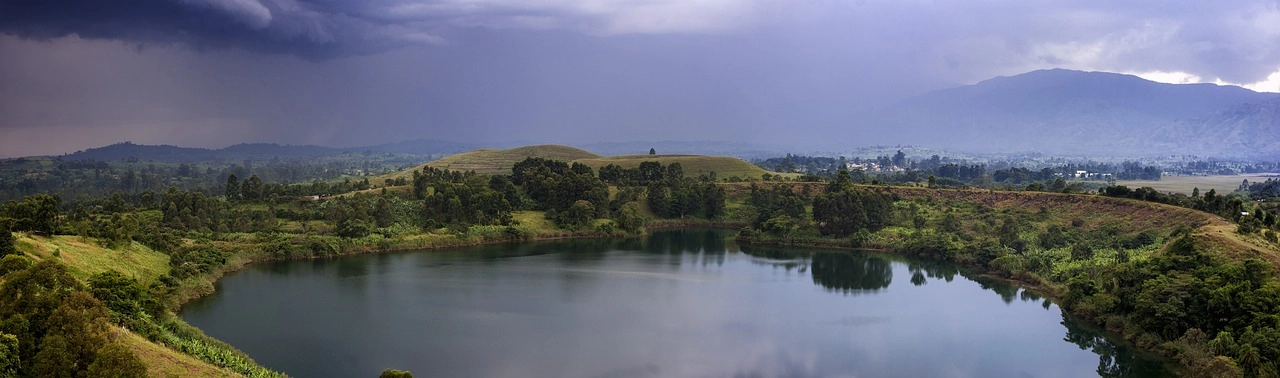
The southern part of Uganda includes a significant part of Lake Victoria, making it part of the African Great Lakes region. The republic is also located within the Nile basin, and has a varied, predominantly equatorial climate.
The name of the country comes from the kingdom of Buganda, which means “Uganda” in Swahili. The name stuck because it was the name that the British used when creating the protectorate in 1894.
Uganda's culture is defined by more than 50 tribes who are indigenous to Uganda, as well as small populations of European, Asian and Arabian origin.
The importance of Ugandan culture has been recognized for the cultural values it brings to society. In this diverse sphere, traditional dance has always been part of Uganda's identity. Each ethnic community has its own dances with different meanings and purposes, making it easy for visitors to differentiate between tribes. Local people often incorporate these dances into their daily lives to preserve and pass on cultural values to different generations.
"Gomesi" and "Kanzu" — traditional costumes in Uganda. "Gomesi" — It is the national dress of Uganda, often worn by Ugandan women to events or ceremonies, and "Kanzu" worn by Ugandan men during cultural events.
The population of Uganda is a fairly conservative society, adhering to rules based on Christian and Muslim teachings. It is considered inappropriate for a woman to wear a skirt or blouse that is too short. Many public places do not allow smoking, and there may be no notices about it. Aggressive, impolite and noisy behavior is condemned.
Power
Uganda is presidential republic. Head of State — The president, elected for 5 years, is the commander-in-chief of the armed forces and appoints the government.
Highest legislative body — unicameral Parliament. Consists of 427 deputies, of which 290 are elected by popular vote, 112 women parliamentarians are directly elected in constituencies, 25 are nominated by social groups — 10 from the army and 5 each from the disabled, youth and trade unions. Deputies may be nominated by the President or receive a mandate by virtue of their government position.
Economy
Uganda is a developing country with an appropriate level of economy. GDP growth at the end of 2021 was 3.3%, for 2022 — 3.5-4.5%.
Inflation in Uganda has fallen from double digits in 2022 to below 5%, in line with the Bank of Uganda's target. The central bank attributes the fall in inflation to lower food and fuel inflation, as well as recent policy tightening. It is worth noting that between 2017 and 2022, Uganda's GDP grew at a compound annual growth rate of 4.5% and is expected to rise to 6.5% between 2022 and 2027.
Uganda plans to begin developing hydrocarbon deposits in the west of the country in the Lake Albert basin. Proven oil reserves amount to more than 3.7 billion barrels, and proven reserves could reach 8 billion barrels. It is planned to build an oil refinery with a capacity of up to 60 thousand barrels per day near the city of Hoima, as well as lay a pipeline to the Tanzanian port of Tanga with a length of 1,445 kilometers.
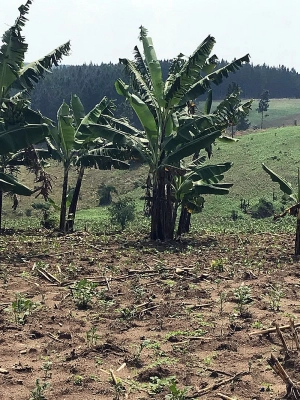
Agriculture is an important sector of the Ugandan economy and employs about 82% of the population. The agricultural sector includes the production of coffee, tea, tobacco, cotton, flowers, vegetables and fruits, as well as fishing and accounts for about 22.8% of GDP.
Industry in Uganda is represented mainly by small and medium-sized enterprises involved in the processing of raw materials, the production of textiles and building materials. The country's government is actively modernizing industrial and transport infrastructure, including the construction of hydroelectric power plants, power lines, highways and railways. The service sector also plays a significant role in the Ugandan economy and accounts for about 50% of GDP.
Uganda's foreign trade remains active. In 2018, exports amounted to about 3.1 billion US dollars, and imports — about 6 billion US dollars. The main importers of goods from Uganda are Kenya, the UAE, EU countries, South Sudan and Rwanda. The main exporters from Uganda are China, India, UAE, EU countries, Kenya, Saudi Arabia, Tanzania, South Africa, Japan and Indonesia.
Tourism is also an important source of income for the country, accounting for about 9% of GDP. Uganda attracts tourists with its national parks, protected areas, Lake Victoria, the Rwenzori Mountains and the sources of the Nile River. Uganda is rich in various mineral resources including petroleum, copper, gold, tin, magnetite ores, columbite-tantalum ores, chromium ores, tungsten, niobium, zirconium, beryllium and apatites. The country also has significant hydropower potential and raw materials for the development of nuclear energy.
Although the 2020 Index of Economic Freedom clarifies that Uganda is the 102nd freest economy in the world, it is the 10th freest economy in sub-Saharan Africa. It aims to become an upper-middle-income country by 2040. Uganda is expected to achieve this status through ambitious infrastructure spending in an economic environment where property rights are guaranteed by law and government spending and budget deficits are limited. The World Bank's Doing Business report in 2020, Uganda moved up 11 places to rank 116th out of 190 countries. The notable improvement in the rating was driven by a more aggressive regulatory regime regarding power outages, significant development of the country's financial services sector and further privatization of the banking sector. Accordingly, Uganda is a shareholder in regional institutions such as the Trade and Development Bank of Eastern and Southern Africa (TDB) and the African Trade Insurance Agency (ATI). TDB is willing to mediate both regionally and globally with its member states, and ATI provides risk mitigation services such as political risk insurance (PRI).
Of course, Uganda's strategic position in the Great Lakes region cannot be denied. In addition to the country's ability to become a regional hub for trade and investment, the "Pearl of Africa" is an integral part of the functional customs union of the East African Community. Likewise, it can be expected that when the African Continental Agreement on Free Trade Agreement (AfCFTA) is fully implemented, Uganda will play a critical role in further stimulating and facilitating intra-African trade.
Russia and Uganda
In May 2015, an agreement was signed in Kampala on the establishment of the Intergovernmental Russian-Ugandan Commission on Economic, Scientific and Technical Cooperation.
In April 2021, the business forum “Russia &mdash” was held in video conferencing mode. Uganda. New opportunities for mutually beneficial cooperation”, which resulted in the signing of a Memorandum of Understanding between the Coordinating Committee for Economic Cooperation with Sub-Saharan Africa (AFROCOM) and the Uganda Private Enterprise Fund. In November 2021, a Russian business mission headed by Senator of the Federation Council of the Federal Assembly of the Russian Federation, Chairman of AFROCOM I.N. Morozov visited Kampala, during which a Russian-Ugandan business forum and the opening of the AFROCOM Entrepreneurship Support Center took place.
In 2021, bilateral trade turnover, according to the Federal Customs Service of Russia, amounted to $431.6 million ($279.1 million in 2020). Russian exports (mainly grains) — 407.7 million US dollars, imports (primarily coffee) — US$23.9 million.
Of the companies worthy of mention with one or another Russian participation in Uganda there are JSC “Global Security” (intelligent transport monitoring system), "East African Motor Supplies" (promotion of UralAZ plant products in the region), RACUS (recruitment of contract students to study at Russian universities), "Cottfield East Africa" (production of cotton and vegetable oils), "Zone 4" (freight and passenger air transportation in sub-Saharan Africa), «Pacast Technical Services» (drilling operations), "Magnit Crop Processors" (export of agricultural products).
In November 2013, during the visit to Russia of the head of the Ministry of Energy and Mineral Resources of Uganda, memorandums of understanding were signed with the Ministry of Energy of Russia and the Rostec State Corporation. In June 2017 in Moscow during the IX International Forum "Atomexpo" State Corporation "Rosatom" and the Ministry of Energy and Mineral Resources of Uganda signed an interdepartmental Memorandum of Cooperation in the field of the use of atomic energy for peaceful purposes. In September 2019, “in the fields” The 63rd IAEA General Conference in Vienna concluded a corresponding intergovernmental agreement.
In March 2023, a delegation from the Parliament of Uganda took part in the second International Parliamentary Conference “Russia— Africa" in Moscow.
Business climate
The Ugandan economy is fully liberalized, and foreign investors have equal rights to do business with local entrepreneurs. Establishing a company in Kampala or any other city in Uganda is beneficial due to the convenient strategic location of the country. In addition, trade development is facilitated by membership in COMESA (Common Market for Eastern and Southern Africa). You can open a company in Uganda with 100% foreign capital, freely choosing your field of activity.
Main forms of legal presence and doing business:
- individual entrepreneurship (sole proprietorship);
- partnership;
- public company (PLC);
- private limited liability company (LLC);
- joint venture (JV);
- branch
Most foreign investors prefer to open a business in Uganda in the form of an LLC. Such a company can be created by one shareholder (both an individual and a legal entity), and to manage it it is necessary to attract 2 directors. There are no requirements for the minimum amount of authorized capital.
Registration procedure:
- reserve a unique company name;
- register a company in Uganda with the Registration Services Bureau;
- purchase an investment license from the Investment Department;
- obtain a taxpayer tax number from the Tax Service;
- register with the National Social Security Fund (NSSF);
- make a company seal;
- open a bank account;
- obtain additional licenses and permissions.
Legislation and regulatory environment
The main legal act governing business registration in Uganda is the Companies Act. The Law on Free Trade Zones defines such territories in the country and also establishes a special tax regime. Anti-money laundering laws require declaration of the source of funds.
The Ugandan tax system is governed by the following Laws:
- about income tax;
- about VAT;
- on the management of East African customs;
- about excise duty;
- about stamp duty.
The administration is under the Uganda Revenue Authority (URA).
Tax system:
- corporate tax — 30%;
- NDFL — 40%;
- VAT — 18%;
- tax on dividends — 15%;
- capital gains tax — missing.
Exporting firms can take advantage of a 10-year tax holiday if they sell at least 80% of finished products abroad and comply with some additional conditions. Registration of a company in Uganda is beneficial for those involved in scientific research and development of mineral resources. These firms are exempt from paying corporate tax. Developers and operators of industrial parks or free zones have a 10-year tax holiday. The conditions are to conduct activities in the designated areas, as well as to comply with the minimum investment requirements.
Investment climate
Uganda and the East African region are growing steadily in both population and GDP.
Advantages of investing in Uganda:
- Uganda is the most open country in the region to foreign direct investment (FDI).
- The country offers the cheapest labor in the region, and labor costs are projected to rise more slowly than other countries in the region.
- Uganda has several untapped mineral deposits and tourism opportunities.
- The country has the highest percentage of exports from sub-Saharan Africa (World Bank, 2017).
- All sectors of the economy are completely liberalized for investment. 100% foreign ownership of investments is allowed.
- The state ranks highly in many key indicators of the business climate for foreign investors.
- Uganda's comparatively strong public finances help create a lower risk and more stable business environment for foreign investors.
- Highly competitive labor costs. Benefit from the cheapest labor in the region. Uganda's labor costs are also projected to rise slower than other East African countries, reflecting the faster growth of Uganda's labor force and skilled workforce, the country ranks very highly for human resource potential, the ability to train the workforce and the participation of women and youth in the workforce.
- Strong natural resource base. Uganda is rich in rainfall, soils and favorable temperatures, as well as many crops grown organically.
- Uganda has been nicknamed the “Pearl of Africa” because of its strong tourism potential with many forests, lakes and rivers.
- Uganda has confirmed deposits of iron ore, phosphate, gold, tungsten, petroleum, diamond, vermiculite, silica, limestone, etc.
Assistance to investors
Uganda Investment Authority (UIA) — a government agency mandated to promote and facilitate investment in Uganda. UIA is the first point of contact for any potential investor, where he can access various services for registration, licensing, assistance and subsequent business support in a specialized One-Stop Center (OSC).
Investor licensing
A company is eligible for an investment license once it has been registered in Uganda and meets the following criteria:
- Foreign firms must have capital investments exceeding US$250,000, while domestic firms must exceed US$50,000.
- An application for an investment license from the Uganda Investment Authority can be made online.
- Once all required documentation has been provided and is satisfactory, the license will be issued within 48 hours free of charge.
One-stop center for investors
The creation of the UIA Single Center through amendments to the Investment Law of 2019 created a single point of access to information and service operations for investors. UIA also houses government and private sector institutions that are responsible for promoting investment.
UIA has a physical OSC with 14 agencies and an electronic one-stop shop (eBiz) where investors can access services online.
Industrial parks
The Uganda Investment Authority has been tasked with creating 27 industrial and business parks across the country with the aim of creating more jobs, facilitating access to land for investment, introducing new research, technology and skills development, and increasing Uganda's exports, hence increasing Uganda's revenue base.
Small and medium enterprises
The SME Unit of the Uganda Investment Authority supports and promotes the development of MSMEs, which are mainly domestic entrepreneurs. The overall goal of the SME division is to develop sustainable inward investment and SMEs.
Business and investment support structures
Uganda is also developing its economy and offering various support structures for business and investment. Here are some of them:
- Uganda Investment Authority (UIA):It is the main organization for attracting and facilitating investment in Uganda. UIA provides information on investment opportunities, assists investors with the registration process and provides business advice.
- Uganda Manufacturers Association (UMA): This is an association that brings together local manufacturers and entrepreneurs. UMA represents the interests of industry in Uganda and provides support to its members, as well as promoting local manufacturing.
- Uganda Export Promotion Board (UEPB):It promotes the export of Ugandan goods and services. UEPB provides information on export markets, helps companies participate in international exhibitions and fairs, and provides advice on export procedures.
- Uganda Revenue Authority (URA):It is responsible for collecting taxes and customs duties in Uganda. URA enforces tax laws, provides taxpayer registration services and ensures compliance with tax obligations.
- Private Sector Foundation Uganda (PSFU):It is a non-profit organization that represents the interests of the private sector in Uganda. PSFU promotes an enabling business environment, conducts research and advice on private sector development, and provides a link between business and government.
- Uganda National Chamber of Commerce and Industry (UNCCI):This is an organization that represents the interests of the commercial community in Uganda. UNCCI provides a platform for the business community to improve the business environment, exchange information and create opportunities for business development.
These structures and organizations play an important role in supporting business and investment in Uganda, contributing to economic growth and entrepreneurship development in the country.
Tags:


50,905,100 ₽

836,177,000 ₽
5,853,239,000 ₽
1,839,589,400 ₽
 New artıcles

 REAB Services
Initial business valuation
Business analysis and audit (Due Diligence)
Business pre-sale preparation
Initial assessment of the business being purchased
Audit of the purchased business (Due Diligence)
Company Registration — General Provisions
 News
News
 Useful tip
Subject tags are a convenient and quick way to find all the information on this website related to a certain topic. Such tags are under each article, news item, description of a service or country, and all the lots in the catalog.

