


Slovakia


Slovakia is a country in Central Europe. The country has a developed industrial sector, particularly in the automotive and mechanical engineering industries, and a stable, export-oriented economy. The country boasts a high level of security, a favorable geographical location, and favorable conditions for business and investment.
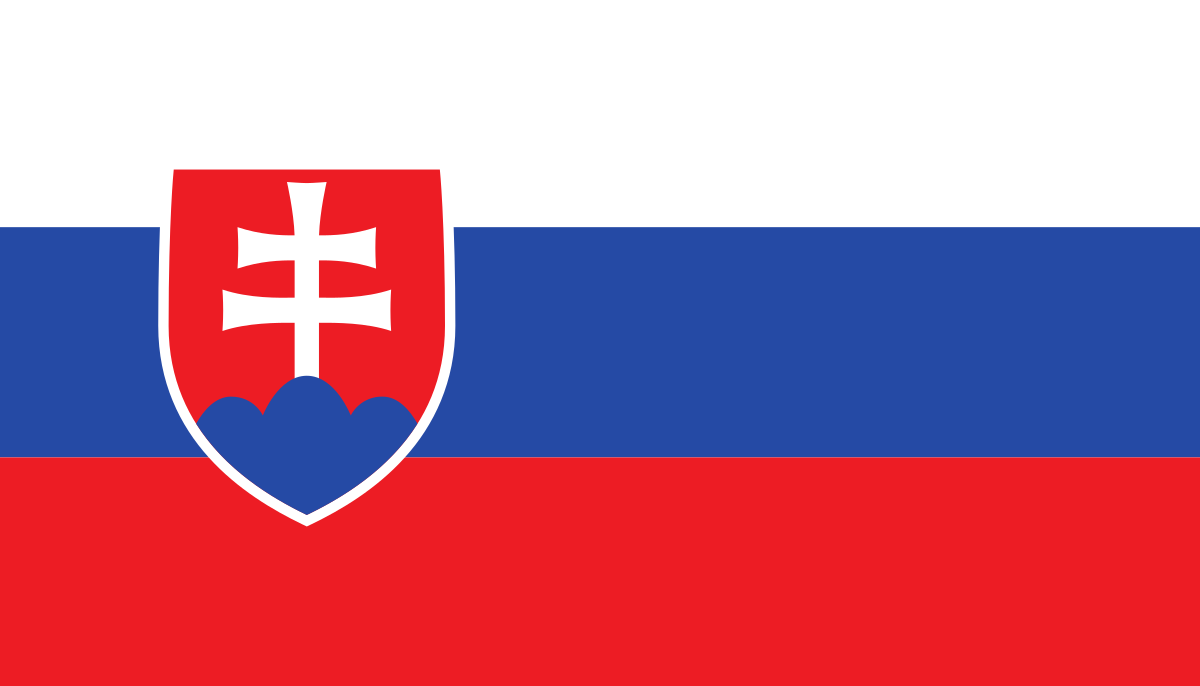
The official name of the country is the Slovak Republic. It covers an area of 49,034 km² (127th largest in the world). The population is approximately 5,481,649 (as of the end of 2025).
Ethnic composition: Slovaks (85-86%), Hungarians (9-10%), Roma (1.7%), Czechs (0.8%), Rusyns, Ukrainians, and Poles. The largest national minority in Slovakia is the Hungarians, who live in the south of the country and constitute the majority in two districts.
The main religion in Slovakia is Christianity. The Slovak Constitution guarantees freedom of religion. The majority of believers in Slovakia are Catholics (approximately 62%), with Protestants making up the second largest group. Orthodox Christianity (0.9%) is prevalent primarily among Rusyns and their descendants in the northeast of the country.
The official state language is Slovak. Hungarian is equally spoken in southern Slovakia; according to national law, it can be used as an official language alongside Slovak in regions where Hungarians constitute more than 20% of the population.
The official currency of the country is the euro.
Bratislava is the capital and largest city of the country. It is home to the residence of the Slovak President, the parliament, and the executive branch of the Slovak Republic. Bratislava is home to several universities, numerous museums, theaters, galleries, and other cultural and educational institutions. Many major Slovak companies and financial institutions are headquartered here.
Košice is the country's second-largest city, a center of science and education, and the seat of the Constitutional Court. The city is the largest border transportation hub in eastern Slovakia. The steel mill located in Košice is one of the leading enterprises in Slovakia.
Prešov is the third-largest city in the country. It is also home to Prešov University, one of Slovakia's largest.
Trenčín is an industrial city in western Slovakia. It is a center of the military industry, housing aircraft repair plants and a military repair plant.
Since 1996, Slovakia has been administratively divided into eight regions, each named after its capital. The regions are further subdivided into several districts (currently 79 districts).
The first state on the territory of present-day Slovakia was formed in the 9th century and was called the Great Moravian Principality. From the late 10th century, the Slovak lands were part of the Kingdom of Hungary, then the Austro-Hungarian Monarchy, after whose dissolution in 1918 the Czechoslovak Republic was established.
Following the Vienna Arbitration of November 1938, the southern regions of Slovakia and the Transcarpathian region were occupied by Hungary. Following the Munich Agreement and the establishment of the Protectorate of Bohemia and Moravia, a clerical-fascist regime was established in Slovakia in 1939, turning the country into a satellite of the Third Reich.
The Slovak National Uprising, supported by the Red Army in September 1944, played a key role in its defeat. The Carpathian-Dukla Offensive was the most significant event in the battles for the liberation of Slovakia. On April 4, 1945, Soviet troops liberated the Slovak capital, Bratislava. Over 60,000 Soviet soldiers and officers died in the battle for Slovakia.
Following the end of World War II, approximately 75,000 Hungarians were forcibly deported from Slovakia under orders from the Czechoslovak government, known as the "Beneš Decrees." All of them were stripped of their Czechoslovak citizenship, and their property was confiscated.
From 1948 to 1989, the National Front, led by communists, held power in the Czechoslovak state. In 1968, the Czechoslovak Republic was transformed into a federation, with the Slovak Republic becoming one of its two constituent entities.
Following the "Velvet Revolution" of November 1989, centrifugal tendencies intensified in Czechoslovakia, and on January 1, 1993, the Slovak Republic became an independent state.
Slovakia is a predominantly mountainous, landlocked country. It borders Poland to the north, the Czech Republic and Austria to the west, Hungary to the south, and Ukraine to the east. The Carpathian Mountains, with their highest peak, the Tatra Mountains, stretch across the entire western and northern parts of the country, surrounded by lowlands to the south and southeast. The Danube River flows through the southwestern edge of Slovakia, and the major rivers are the Vesov, Grozdej, Hornád, Torysa, and Ondrava, which cross the country from its mountainous center (the Carpathians divide the country into several mountainous regions) in a north-south direction. Closer to the Danube, in the area of Bratislava and Komárno, lies the Pannonian Plain, the country's breadbasket.
Forests cover almost 40% of the country's territory.
Slovakia produces oil, natural gas, and lignite, which serve the economy. Oil covers 1% of domestic energy needs, gas 3%, and lignite approximately 80%. The remainder is compensated by imports from the Czech Republic. The country has reserves of uranium, coal, and shale gas, but these are currently not being developed due to high costs. The country has large reserves of non-metallic minerals. In particular, magnesite is actively mined, exported, and accounts for approximately 6% of global production. In the past, Slovakia mined significant quantities of gold, silver, and other minerals. Currently, precious metals are mined in small quantities in the Hodruša-Homre region.
A number of Slovakia's historical and natural sites are unique and are part of the UNESCO World Heritage List. This includes the world's tallest wooden altar of St. Jacob, dating back to the 16th century, in Levoča; the largest castle complex in Europe, Spišský Hrad; and numerous castles and historic buildings, including famous wooden churches and folk architecture.
The country is known for its picturesque natural landscapes, numerous rivers and lakes rich in fish, caves, and the Slovak Paradise and Veľká Fatra national parks with an extensive network of hiking trails.
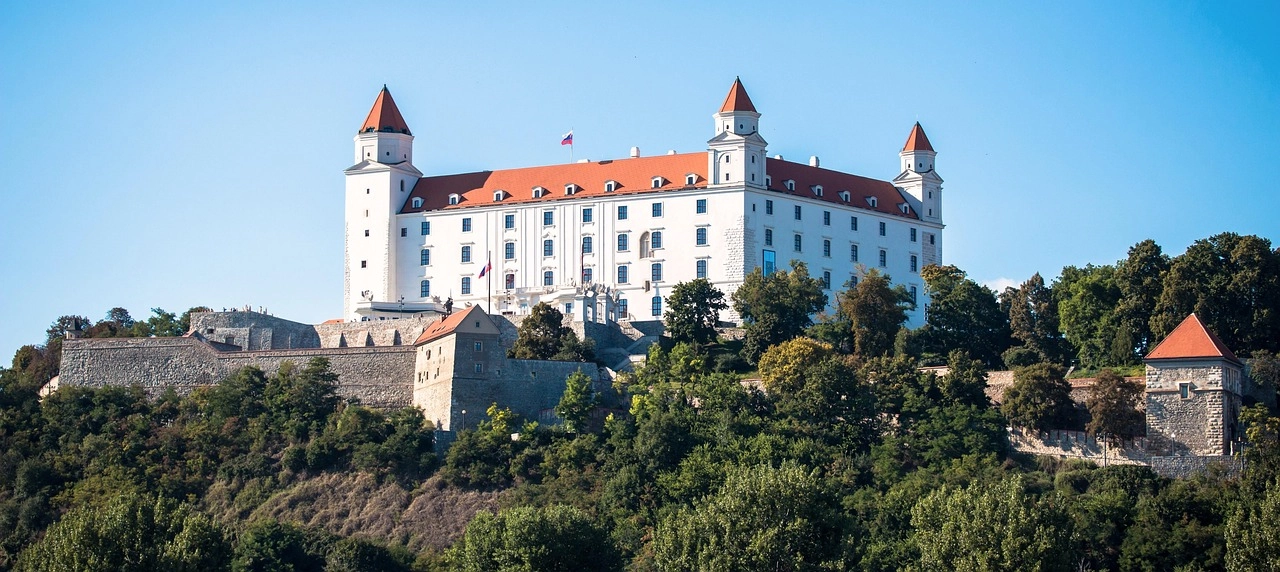
Slovakia is renowned for its numerous medieval fortresses and chateaux. In large cities, the castle (called "hrad" in Slovak) typically forms part of the historic center (Bratislava Castle). However, ruins and remains can also be found near small settlements that once stood at the crossroads of trade routes or were part of a long chain of fortifications (Devin, Spišský Hrad). Among the most popular are Červený Kamen, Bojnice Castle, Orava Castle, and others.
Slovakia rightfully occupies a leading position in spa treatments, boasting more than 1,200 underground and mineral springs. This national treasure is used for therapeutic purposes in more than 22 centers, the most famous of which are Piešťany, Trencianske Teplice, Bardejov, and others.
Slovakia's culture is a unique blend of Central European, Slavic, and neighboring influences (Hungarian, Austrian, and Czech). It is rich in folk traditions, folklore (costumes, music, and dance), Catholic holidays, and hospitality, with a strong emphasis on a connection to nature and the peasant past, reflected in crafts, songs, and rituals.
Slovaks are a mobile and sociable people, open, sincere, and welcoming. The idea of a Slavic community is strong among the general population. Slovaks are quite emotional and love song and dance. Folklore traditions play a significant role in the development of their national culture.
The head of state in Slovakia is the president, elected by direct universal suffrage for a five-year term. Most executive power is vested in the head of government, the prime minister, who is usually the leader of the party or coalition that wins a majority in parliamentary elections and is appointed by the president. The executive body is the Government of the Slovak Republic. The remainder of the cabinet is appointed by the president on the recommendation of the prime minister.
The highest legislative body in Slovakia is the 150-seat unicameral National Council of the Slovak Republic. Delegates are elected for a four-year term by proportional representation in a single electoral district.
Parliament can dismiss the president with a vote of three-fifths of all deputies. The president can dissolve parliament if it fails to approve the government's program statement three times within a month of the election.
The constitutional review body is the Constitutional Court, which has jurisdiction over constitutional matters. The 13 judges of this court are approved by the president from twice as many candidates proposed by parliament. The highest judicial authority is the Supreme Court, the courts of first instance are the regional courts, and the lowest level of the judicial system are the district courts.
The Slovak economy is a developed industrial economy with a strong focus on manufacturing (automotive, electronics, mechanical engineering, chemicals) and services. Key growth drivers are exports, particularly to the EU, and foreign investment.
The main export products are automobiles, auto parts, and electronics, and the country's main trading partners are Germany, the Czech Republic, and Poland. The services sector, particularly IT and public administration, also makes a significant contribution, and the country is classified as high-income.
Slovakia joined the OECD (Organization for Economic Co-operation and Development) in 2000, the EU and NATO in 2004, the Schengen Area in 2007, and the Eurozone in 2009. The country is attractive for investment due to its integration into global value chains, favorable geographic location, skilled workforce, and low-carbon energy mix.
The Slovak government prioritizes attracting high-value-added investment and investment in less developed regions.
Slovakia remains the world's largest automobile producer per capita, with four major automakers operating there, and another international automaker preparing to open a plant. The manufacturing sector remains attractive and has potential for further growth, including in the following areas:
- Automotive Industry. The Slovak automotive industry is characterized by a well-developed and high-quality supplier network. Slovakia has a favorable geographical position in the European center of automotive production.
- Mechanical Engineering and Technology Industry. The Slovak engineering plant MEI is not only associated with the automotive industry, but also covers many other industries, such as defense, aviation, railway, space and others.
- ITC. The majority of IT services in Slovakia consist of application support and services tailored to individual needs (such as network administration, cloud storage, etc.), as well as software development and outsourcing.
- Electronics Industry. Currently, the electronics industry includes both traditional electronics production (generators, telephones, etc.) and new trends related to the automotive industry (electric motors, microelectronics, etc.).
- Chemical Industry. Products of the Slovak The chemical industry encompasses a diverse range of products, numbering hundreds of different items, from petrochemicals to rubber and plastic products.
According to a World Bank report, registering a new company in Slovakia takes an average of 39 days, with total costs estimated at 2% of gross national income per capita. There are private business development companies that assist with the process of setting up a new business. The main authorities with which a company must register are the commercial registry, the tax office, the social security office, and, if the company has at least one employee, the health insurance company.
Slovakia is a party to the World Trade Organization (WTO) Agreement on Investment Facilitation for Development.
Since 2021, successive governments have taken measures aimed at reducing the administrative burden on businesses. The Ministry of Economy has also implemented regular compliance checks and reviews of legislation implementing EU directives to ensure that implementing laws do not create additional administrative burdens beyond those required by EU law. The central government portal provides useful information on electronic government services for starting and running a business, obtaining citizenship, registering vehicles, social security, and more. Checklists outlining the necessary steps for registration, applying for permits, and more are available on the websites of the business registry, tax office, social security agency, and insurance companies. Due to frequent criticism from stakeholders about the availability and functionality of electronic government services, the government has announced plans to simplify access to government services.
Foreigners can purchase real estate in the country without restrictions, but Slovakia controls large-scale acquisitions of agricultural land for food security reasons. Foreigners cannot own land located within military zones or border areas. Approximately 10-12% of land in Slovakia has unclear title, largely due to poor record-keeping in the 20th century, leading to cases of unknown ownership.
Slovakia also faces the problem of fragmented land ownership with multiple co-owners, dating back to the inheritance system in the former Kingdom of Hungary and collectivization under the socialist regime in Czechoslovakia. In 2019, the Ministry of Agriculture launched reforms to simplify land registration processes.
Squatter occupancy is illegal in Slovakia, and ownership of unoccupied property does not transfer to squatters or other claimants unless they have legal title to the land.
Slovakia is an ideal investment destination, primarily due to its political and economic stability underpinned by the single European currency, a simple and fair tax system, including a flat tax rate, a highly skilled and educated workforce that delivers the highest productivity in Central and Eastern Europe, favorable labor costs, and a flexible labor code. Additional advantages include a steadily developing infrastructure, a wide selection of industrial land and office space available for purchase or lease, harmonized investment incentives, and a high innovation potential for research and development projects.
The Slovak Republic provides various forms of support to both new investors and existing companies.
Regional investment incentives are available to new or existing investors, small and medium-sized enterprises, and large companies investing in new capacity through industrial production projects, shared service centers (including IT centers), and technology hubs.
The main goal is to motivate investors to locate their new projects in regions with higher unemployment and attract projects with higher added value.
The second priority is to support investors conducting research and development (R&D) in Slovakia. Therefore, since 2015, companies engaged in R&D have been able to take advantage of a preferential tax regime—the R&D super deduction. This tax regime allows these companies to additionally deduct 100% of their R&D expenses in the relevant tax period.
The Ministry of Economy coordinates efforts to improve the business environment, stimulate innovation, and attract investment. The Slovak Investment and Trade Promotion Agency (SARIO), part of the Ministry of Economy, has an agency that advises potential investors and provides detailed information on the Slovak business environment, investment incentives, the business start-up process, and also advises on choosing suitable locations and leasing real estate. The government encourages investment through tax incentives and grants to support employment, regional development, and training. Section 4 of the Regional Investment Aid Act (No. 57/2018 Coll.) defines the eligibility criteria.
Foreign and domestic investors are granted investment incentives for projects in sectors such as industrial production, technology, and resource sharing centers. Incentives include tax breaks, cash grants, contributions for the creation of new jobs, and the transfer of state or municipal property at a reduced price. Eligible expenses include the acquisition of land, the purchase and construction of buildings, the acquisition of technological equipment and machinery, as well as intangible assets (e.g., licenses, patents), and the salaries of new employees for two years.
In addition to investment support, the Ministry of Economy offers innovation and digital vouchers that companies can use to modernize their products, services, or technologies in cooperation with research institutions. The Ministry of Economy also provides special loans through the Investment Fund of the Slovak Investment Holding. Individual ministries implement EU-supported projects to stimulate investment in their respective areas of responsibility.
State aid provided by the Slovak government must comply with applicable EU regulations. According to the State Aid Act (No. 358/2015 Coll.), the Antimonopoly Office is the coordinating authority for state aid provided by individual ministries, and a dedicated web portal exists. The European Commission must approve state aid schemes that exceed a certain threshold.
Slovakia has a comprehensive system of business and investment support structures, targeting both local entrepreneurs and foreign investors. Key roles in this system are played by government bodies, specialized agencies, and organizations working in conjunction with European Union programs.
The central institution for investor relations is the Slovak Investment and Trade Promotion Agency (SARIO). This government agency reports to the Ministry of Economy of the Slovak Republic and is responsible for attracting foreign direct investment, supporting export activities, and supporting investment projects. SARIO advises investors on choosing a region, obtaining investment incentives, interacting with government agencies, and assisting in finding business partners and sites for production or service centers.
The Ministry of Economy of the Slovak Republic formulates overall state policy in the field of entrepreneurship and investment. It establishes the legislative framework for investment assistance, approves state support programs, tax incentives, and subsidies, and implements measures to develop priority economic sectors and less developed regions of the country.
The Slovak Business Agency (SBA) is an important element of support for small and medium-sized businesses. It is a specialized organization that provides consulting, educational, and financial information support to entrepreneurs. The SBA assists with business creation, development, and entry into foreign markets, as well as with the implementation of innovations and participation in European Union programs. Through the SBA, Slovak companies and startups gain access to microfinance, acceleration programs, and expert support.
Slovakia also participates in the pan-European Enterprise Europe Network, which operates through national partner organizations, including the Slovak Business Agency. This network helps companies find international partners, explore new markets, implement technologies, and navigate EU legal requirements.
Additionally, various associations and unions of investors and entrepreneurs operate in the country, such as investment support associations and chambers of commerce and industry. They facilitate dialogue between business and the government, protect investor interests, develop business contacts, and exchange experiences.
At the regional level, municipal and regional development agencies provide entrepreneurship support. They help businesses interact with local authorities, receive regional subsidies, participate in employment programs, and take advantage of the infrastructure advantages of specific regions.
Overall, the business and investment support system in Slovakia is comprehensive: from strategic public administration and investment incentives to practical assistance for entrepreneurs at the local level. This makes the country attractive for doing business, launching new projects, and long-term investment.

37,468,538 ¥
28,806,496 ¥
10,946,469 ¥
87,089,405 ¥
33,495,925 ¥
13,398,370 ¥
133,983,699 ¥


Each country has its own laws and rules for investors and business buyers. How to get around all the obstacles? Read related articles “Investor Life Hacks”.

