

News
Follow the news of the REAB Consortium and the market, stay up to date.

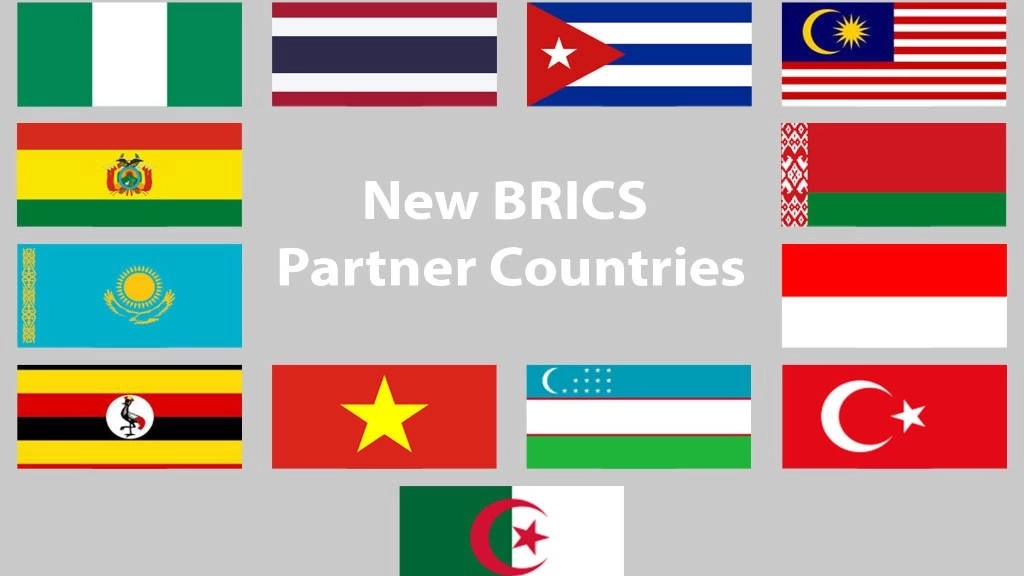
The BRICS countries have agreed to include 13 countries in the category of “Partner States” in the association. However, the entry of these countries has not yet been made official, as the newly established protocol in the procedure requires the country holding the current Chairmanship of the organisation (in this case, Russia, from 2025, Brazil) to hold consultations with the partner countries concerned.
The new bloc of countries invited to join the BRICS as “Partner States” include Algeria, Belarus, Bolivia, Cuba, Indonesia, Kazakhstan, Malaysia, Nigeria, Thailand, Turkiye, Uganda, Uzbekistan, and Vietnam.
According to diplomatic sources from the Brazilian delegation in Kazan, Venezuela was left off the list due to a veto by Brazil.
Brazilian Foreign Minister Mauro Vieira stated that the leading BRICS countries have reached a consensus on the ‘criteria and principles’ that will guide the bloc’s future expansion, stating that “Our discussion focused on the criteria and principles for future BRICS expansion. Currently, there are 10 member countries, but there will be more in the future. These principles and criteria have been discussed, approved, and agreed upon. Regarding the list of new members, consultations will begin soon. The Russian Chair will consult with each current member, and we will announce the countries, if not by the end of the year, then in 2025, when the responsibility will pass to the Brazilian Chairmanship of BRICS.”
New BRICS Demographics
These potential new ‘BRICS Partners’ would change the overall BRICS dynamics in terms of global influence. In total, this expanded BRICS would account for just under 43% of global GDP, compared with the G7’s 30%. In population terms, the new BRICS, if all the proposed BRICS Partners joined, would account for about 57% of the total global population, as opposed to 10% for the G7.
In terms of simple demographics, the emergence of what may become the world’s largest multilateral organisation will start to make multiple countries think about the developing, new geopolitical dynamics and the implications. At present, it appears the West is not aware. But with another 20 countries having also applied to join BRICS, and not yet part of the overall structure — change to global geopolitics and trade flows is almost certainly arriving. The 2025 BRICS summit will be held in Brazil, when both these developments and continuing new ones will almost certainly have manifested themselves. The world is changing faster than many people realise.
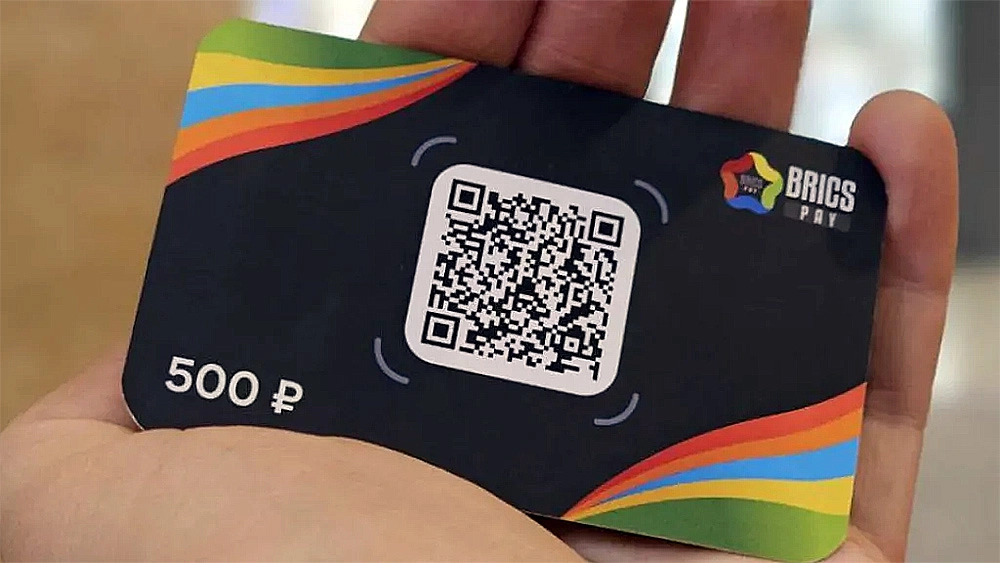
The BRICS Pay system has been launched, with immediate implications for the future role of the US dollar, and the use of financial sanctions upon other countries. The system bypasses the US controlled SWIFT payments system, disregards the US dollar as a preferred currency and allows instant settlement in sovereign currencies instead. It is likely to be followed, in time, by digital sovereign currencies.
BRICS Pay is a decentralised and independent payment messaging mechanism system under development by the BRICS member states, and is similar to the SWIFT payments interface. BRICS Pay is a joint venture between the BRICS member states to receive and make payments in their own local currencies.
It was originally launched in 2018 by the BRICS Business Council. The team that cooperatively runs BRICS Pay consists of financial, banking technology experts from the original founding nations of BRICS — Brazil, Russia, India, China and South Africa. The purpose of BRICS Pay is to make international payments less costly and complicated, encouraging international cooperation between the growing crowd of BRICS members. In January this year, the original five BRICS members were joined by Egypt, Ethiopia, Iran, and the UAE. More members — a further 30 countries have applied to join — are expected to bee announced at the 2024 BRICS summit which takes place from 22-24 October.
According to the BRICS Pay website, numerous government, and respective technological, financial, legal, and consulting firms have united to form the BRICS Pay Consortium, operating under the principles of a decentralised autonomous organisation (DAO).
“The Consortium adheres to the regulations of each country where its members operate,” the website further states. “It is a network-based entity without a central headquarters. The Consortium’s membership is not publicly disclosed.”
According to BRICS Pay, “The Bretton Woods-era global financial system is undergoing a significant transformation. We are witnessing rising global debt, increasing wealth inequality, and the fragmentation of trade and finance systems. Our goal is to ensure equal access to financial technologies and global wealth, providing everyone with the opportunity to reach their full potential. Today, we begin building a new, fair, and decentralised financial system for the future.”
The BRICS Pay project aims to facilitate seamless transactions between member states and provide an alternative to existing global financial infrastructure dominated by Western systems like SWIFT. The key objective is to foster financial cooperation among the BRICS nations and reduce dependency on the US dollar in trade settlements, thus creating a multipolar financial world order.
It means that with a decentralised, autonomous system, users can bypass the use of the US dollar and Euro and use their own currencies. Transactions will be immediately settled at the prevailing currency exchange rate, with no additional mark ups, or need for corresponding banks. It means that a buyer in China can receive a QR code for payment from a Russian vendor, accept it, and the money then auto deducted in Chinese RMB Yuan from the Chinese account and instantly deposited in Russian Rubles to the Russian users account.
BRICS Pay accounts can be set up easily on your smart phone, linked to your respective bank account or other financial platform, while payments are made via an auto-generated QR code, and shown to the recipient who scans that and completes the transaction.
This has obvious implications for the sanctions issued on countries such as Iran and Russia, who can now make payments in their respective sovereign currencies instead. These currencies — and those of most of the BRICS countries — are also based on real assets, rather than debt, which is the case in the United States. It is a parallel financial system that completely bypasses the need for U.S.-controlled financial institutions.
The ultimate vision for the system is cross-border retail support across the BRICS+ bloc. Future plans are to examine business-to-business payments and then develop the BRICS+ UNIT, being the crypto proposition for the block.
The BRICS Pay system still needs to be rolled out however, with BRICS members banks, corporate and individual accounts all requiring connectivity. That process will take time, with the BRICS pay app on your phone probably not a useable feature until 2028. However, there have been reports that in Russia, a BRICS Pay service for non-cash payments for foreigners may appear in Russia this year. BRICS Pay will make it possible to pay with Visa and MasterCard cards inside Russia and, in the future, with the MIR card beyond its borders.
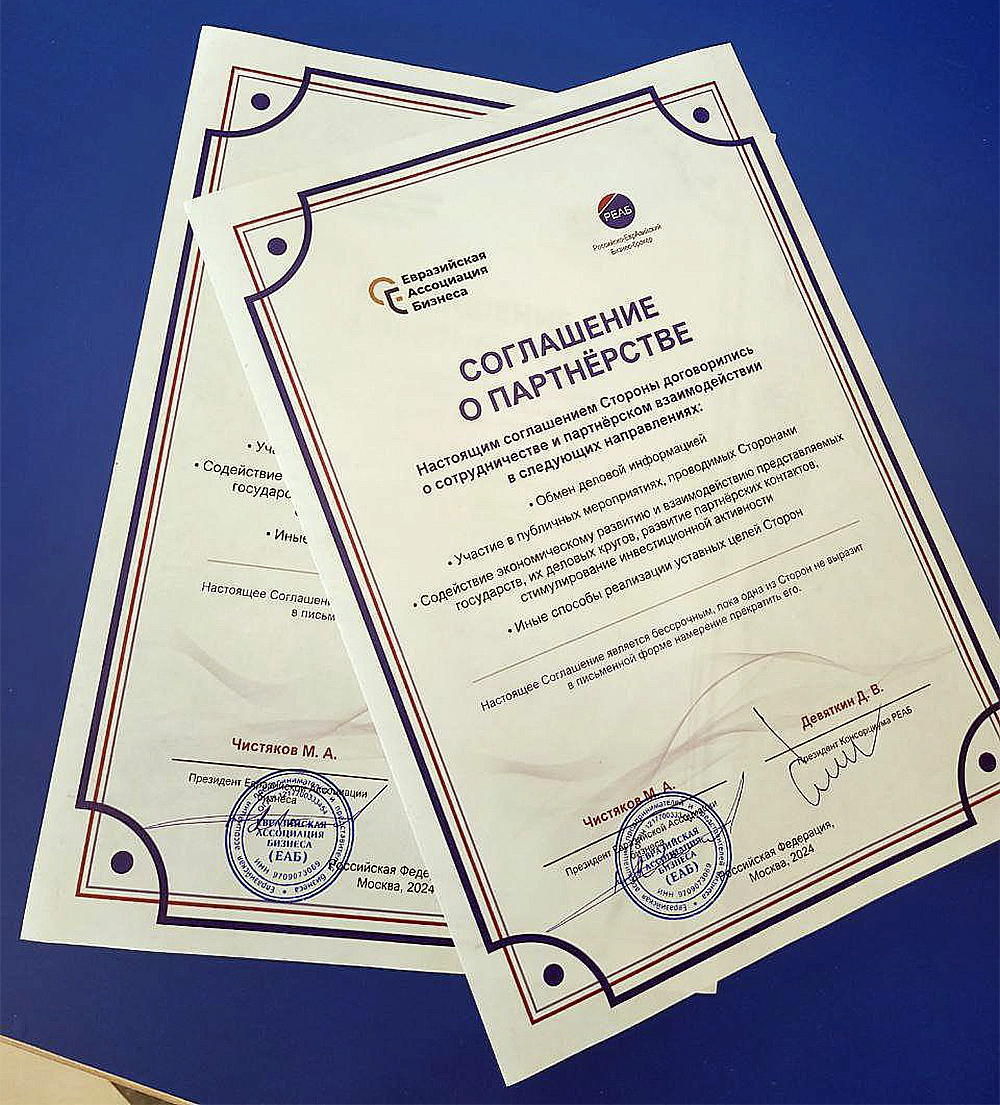
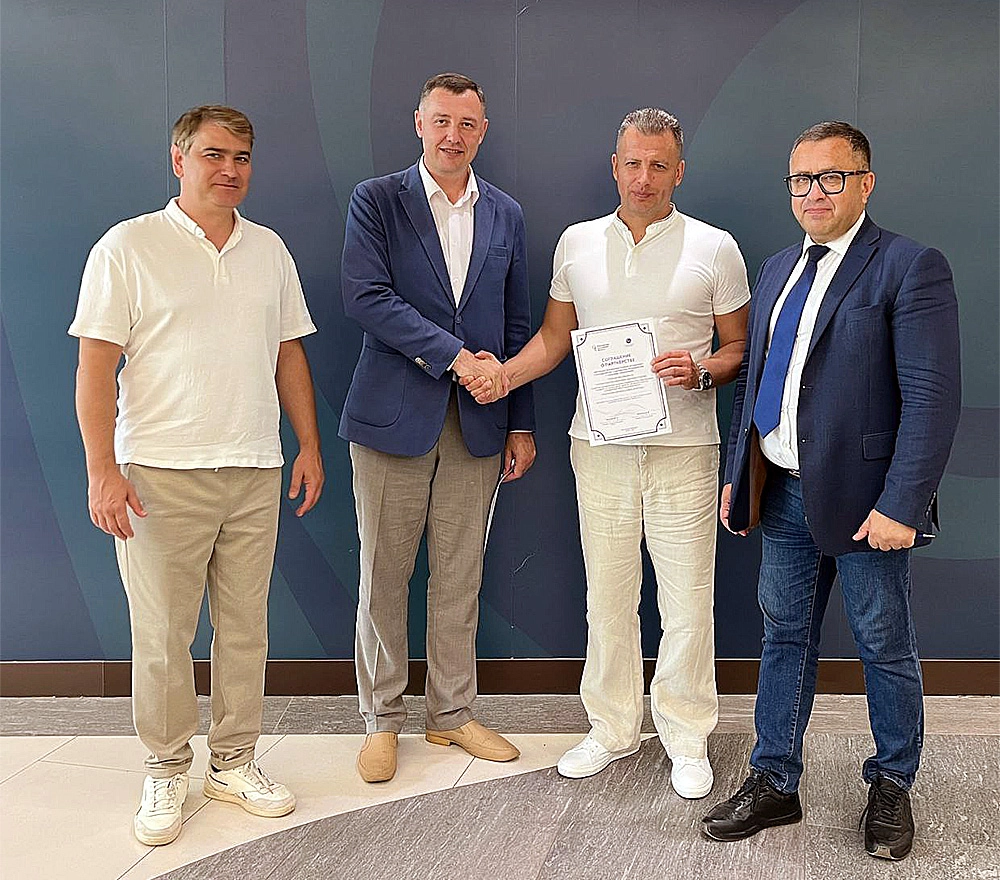
A partnership agreement was signed between the REAB Consortium and the Eurasian Business Association in Moscow in the beginning of September 2024. On behalf of the EAAB, the document was signed by the association's president, Maxim Chistyakov, and on behalf of the REAB, by the consortium's president, Denis Devyatkin.
The Eurasian Business Association is a non-profit corporate organization that unites entrepreneurs from the member states of the Eurasian Economic Union (EAEU).
The purpose of the EAAB is to develop and strengthen Eurasian economic integration, coordinate entrepreneurial activities, and represent and protect the common property interests of the association's members.
Its main objective is to comprehensive assistance to the association members in sustainable, inclusive economic development, increasing competitiveness and scientific and production potential, increasing the volume of investment and innovation activity.
The implementation of the set tasks is carried out through the expansion of areas of economic cooperation, improvement of the regulatory environment, development of effective interaction in the B2B and B2G format, as well as with the EAEU bodies, participation in the development and examination of draft acts of the EAEU bodies and national legislation, assistance in eliminating barriers, restrictions and exceptions in the internal market of the EAEU.
Representatives of the association take part in the work of various advisory committees and working groups under the EAEU bodies, executive and legislative authorities.
By signing the agreement, the parties agreed on cooperation and partnership in the following areas:
- Exchange of business information
- Participation in public events held by the Parties
- Promoting economic development and interaction of the represented states, their business circles, development of partnership contacts, stimulation of investment activity
- Other ways of implementing the statutory goals of the Parties
During the dialogue, both parties agreed that this partnership creates new opportunities for promoting the interests of Russian business on the Eurasian continent and in friendly economic unions on the territory of the countries participating in them.
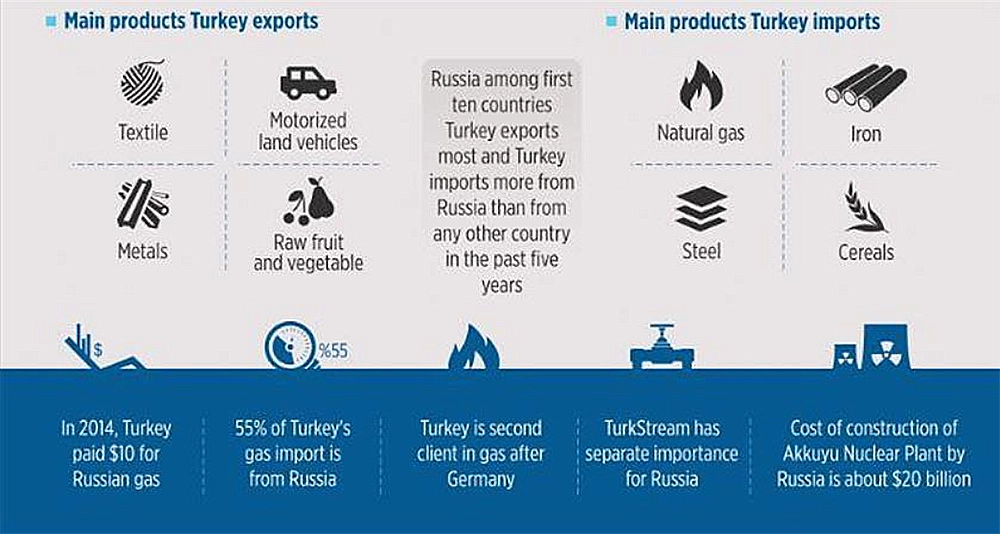
The Russian President Vladimir Putin has met with Turkish President Recep Erdogan in Astana on the sidelines of the Shanghai Cooperation Organisation annual Heads of State meetings, with both sides also engaging in trade development talks. Current bilateral trade is running at about US$55 billion, with Alexei Yerkov, the Russian Ambassador to Turkiye, also present at the discussions, later stating that “Our two countries are aiming for US$100 billion in trade, a huge, but attainable number. Turkiye is a crucial trade partner for Russia over a wide range of industries. While construction is a trade lynchpin there is still room for more.”
Putin said that “All our large bilateral projects are being implemented on schedule. There are no delays. I would like to note that in 2023 the Russian tourist flow in Turkiye reached a record high with 6.3 million of our tourists visiting Turkiye. I would like to express my gratitude for the conditions the country has created for Russian tourists.”
Erdogan stated that “I can refer to the Akkuyu Nuclear Power Plant, which we are building together. We hope to put it into operation in the nearest future. With that, we have had contacts regarding the construction of another nuclear power plant in the city of Sinop. I believe we can and we will make serious steps. I want to point out that the Turkish Ministry of Energy and Natural Resources continues its contacts with colleagues in Russia. Following their meetings, I want to note that Botas and Gazprom continue their contacts.”
Turkiye is also interested in joining the BRICS group and will almost certainly be sending a delegation to Kazan in October, where the BRICS Heads of State annual conference will be held. Interestingly, about 50% of Kazan’s population are ethnically Turkic, with Tatarstan attracting about 25% of all Turkish investment into Russia. We previously discussed Turkiye’s trade with the BRICS members here.
Erdogan also invited Putin for a state visit to Turkiye, with this likely to take place in the autumn.
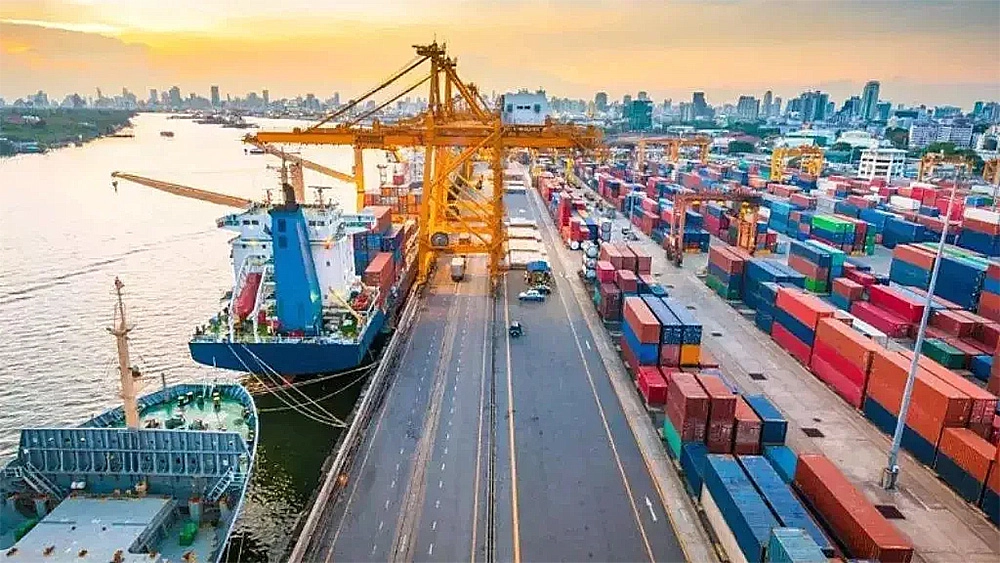
The Indian government has approved a proposal for building a large deep water port on its western coast to connect it with major global trade networks and handle trade with Russia, New Delhi has announced. The port, to be built at Vadhavan in the Maharashtra state, would aid trade flow through the International North-South Transportation Corridor (INSTC) and the India Middle East Europe Economic Corridor (IMEEC). The facility will become a vital part of the International North-South Transportation Corridor for shipping goods via Iran and onto Russia and other destinations.
During his July visit to Moscow, Indian Prime Minister Narendra Modi stressed the importance of improving connectivity with Russia, which would mean developing the INSTC. The two countries have set a trade target of US$100 billion by 2030.
An agreement for the IMEEC corridor, which aims to improve connectivity and economic integration between Asia, the Persian Gulf, and Europe, was signed last year at the G20 summit held in New Delhi. However, the project has run into delays due to the conflict between Israel and militants in Gaza.
Including the acquisition of land, the Vadhavan port would cost 76,220 rupees (US$9 billion), Indian Ports, Shipping and Waterways Minister Sarbananda Sonowal told the Indian Parliament. The port will be developed through a public-private partnership led by the Jawaharlal Nehru Port Authority and Maharashtra Maritime Board, according to Sonowal, who expects the project to create one million jobs. The location is about 10 km from India’s National Railway grid and about 35-40 Km from National Highway 8, which leads to New Delhi. Both will develop spurs to reach Vadhaven.
The facility will handle 15 million TEU (twenty equivalent unit) containers after the first phase of construction is complete and 23.2 million TEUs after the commissioning of its second phase. Once completed, the port would rank among the world’s ten biggest container ports, and is expected to be operational by 2030. The Indian government currently operates 12 major ports across the country.
The move to develop Vadhaven Port is one of the most significant investments yet made by a foreign country to specifically assist the development of trade with Russian and is indicative that the country is considered a long-term growth prospect in the Global South.
Several countries want to upgrade their relations with the Shanghai Cooperation Organization (SCO), the group’s Secretary-General Zhang Ming has stated. The SCO is a multifunctional trade, security and geopolitical alliance formed in 2001 by China, Russia, Kazakhstan, Kyrgyzstan, Tajikistan and Uzbekistan, primarily to deal with the repercussions of the United States and NATO invasion of Afghanistan, which ultimately led to 130,000 NATO troops occupying the country. NATO withdrew from Afghanistan in 2021.
Since then, the SCO has grown and accepted Belarus, India, Iran and Pakistan as additional full members. The group also has two other categories: “Observers” which include Afghanistan, and Mongolia, and “Dialogue Partners” which includes Azerbaijan, Armenia, Bahrain, Cambodia, Egypt, Kuwait, Maldives, Myanmar, Nepal, Qatar, Saudi Arabia, Sri Lanka, Türkiye and the UAE.
The SCO full members represent 40% of the world’s population, with them contributing about US$23 trillion (30%) of global GDP. Additional expansion will increase this further.
The 2024 SCO annual Heads of State meeting recently took place in Astana. At that event, Belarus was promoted to full member status. Now, Armenia, Azerbaijan Cambodia, and Sri Lanka have all applied to change their status from dialogue partner to observer. This change is usually considered a stepping stone on the way to full membership in the SCO. Bangladesh, not currently involved in the SCO, has also indicated it too wishes to become an observer.
According to Mehrdad Kiaeei, Iran’s National Coordinator at the SCO Secretariat, the organization is considering these membership status adjustments and will reach conclusions after coordination with the applicants and member states.
Full membership offers more active participation in the SCO, ensured security as well as additional opportunities for economic development.
The inclusion of Armenia and Azerbaijan, both in the Caucasus region between the Black and Caspian Seas, would positively impact the structure of the region’s security in general and the Eurasian region in particular. Georgia, the third Caucasus nation, is experiencing some political difficulties at present, while SCO full member Iran and dialogue partner Turkiye are both regionally influential, especially in trade and new logistics and transport routes such as the Middle Corridor and International North-South Transportation Corridor. These intersect at Baku, Azerbaijan.
Cambodia, Sri Lanka and Bangladesh in Southeast Asia are important regional countries and, given that the situation is unstable in Myanmar, could add to security and stability in the region. If the security component continues to expand within the SCO framework, it would also be possible to launch joint security projects, such as, for example, establishing military bases in these countries.
Bangladesh is also a member of the BRICS New Development Bank (NDB) and is expected to officially join an expanded BRICS in due course. Cambodia and Sri Lanka have also expressed interest in the BRICS. SCO members China, India, Iran and Russia are also full members.
The European Council of Foreign Affairs has stated that it regards the SCO as a rogue security alliance and NATO also regards it as a potential military rival. However, given that India is a full member of the SCO and that ten of the member states do not maintain a uniformly hostile approach to the United States or Europe, this may be scaremongering on the part of the West. The SCO requires consensus by member states to make policy decisions and therefore a divergence of views among SCO countries may hamstring the SCO’s ability to project power on behalf of China or Russia — the West’s main concern. Also, SCO security initiatives have been relegated largely to uncontroversial matters such as anti-drug trafficking and anti-terrorism.
Nevertheless, the movement of previously heavily Western-influenced countries such as Armenia, Bangladesh and Sri Lanka into SCO full member candidates does indicate that previously well-established colonial links are well and truly being severed and that these nations see their trade and security futures with their own mini-pivots to Asia.
Anton Alikhanov, the Russian Industry and Trade Minister, has stated that mutual trade between Russia and the members of the Shanghai Cooperation Organization (SCO) surged by 25% in 2023, reaching US$333 billion. The SCO completed their annual Heads of State meetings in Astana last week. This means that Russia’s trade with the SCO equates to about 40% of its annual total global trade.
Alikhanov said that in terms of mutual direct investment, Russia’s direct investment into SCO countries had reached US$10.2 billion and added that nearly the same amount came into Russia from SCO members.
The SCO includes Belarus, China, India, Iran, Kazakhstan, Russia, Kyrgyzstan, Pakistan, Tajikistan, and Uzbekistan. Afghanistan and Mongolia have an observer status with the SCO, and a further fourteen — Azerbaijan, Armenia, Bahrain, Cambodia, Egypt, Kuwait, Maldives, Myanmar, Nepal, Qatar, Saudi Arabia, Sri Lanka, Türkiye and the UAE have dialogue partner status.
The SCO represents 40% of the world’s population, with member countries contributing about US$23 trillion (30%) of global GDP.
The goals of the organization are to strengthen relations between member states and promote cooperation in the political, economic, scientific, cultural, and educational fields.
Last week, speaking at the SCO summit in the Kazakh capital of Astana, Russian President Vladimir Putin said the use of national currencies in Russia’s settlements with fellow SCO members had exceeded 92%. Putin reiterated Moscow’s proposal to develop an independent mechanism for settling payments within the SCO, adding that joint efforts made by finance ministers and central bank governors had helped to strengthen trade and investment ties within the group.
SCO Members Projected 2024 GDP Growth:
- Belarus +2.4%
- China +5.0%
- India +6.8%
- Iran +3.3%
- Kazakhstan +4.5%
- Russia +2.8%
- Kyrgyzstan +8.1%
- Pakistan +2.4%
- Tajikistan +6.5%
- Uzbekistan +5.4%
We can compare this with the European Union at a projected 1% growth for the year.
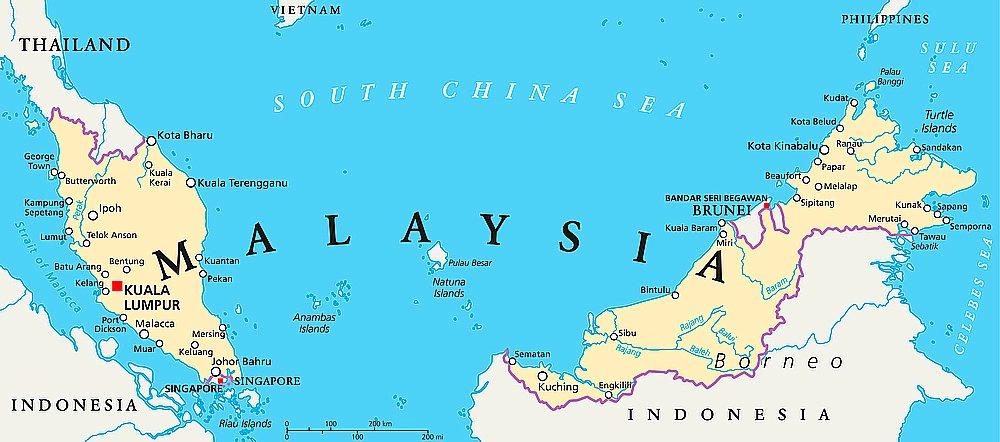
Malaysia has decided to apply for BRICS membership and will start filing the official paperwork soon, Malaysian Prime Minister Anwar Ibrahim has said. Existing BRICS member South Africa has agreed to accept a request. Anwar said “We have made our policy clear and we have made our decision. We will start the formal process to join BRICS soon. We are waiting for the final result and the feedback from the South African government.”
Kuala Lumpur’s potential membership in the organization would be of strategic significance, as one of the world’s most important shipping lanes — the Malacca Strait, connecting the Pacific and the Indian Ocean — is located between Malaysia and the Indonesian island of Sumatra.
According to Anwar, Malaysia is “relieved” that the world is no longer unipolar, and that the rise of BRICS and China in particular has offered “a glimmer of hope that there are checks and balances in the world.”
The West wants to “control the discourse” in the world, but “we can no longer accept it because they are no longer a colonial power and independent countries should be free to express themselves,” Anwar said.
Earlier this month, Russian Ambassador to China Igor Morgulov said that about 30 countries have voiced a desire to join BRICS. In South Asia, Thailand, Sri Lanka and Vietnam have already made requests to join. Russian President Putin has visited Vietnam in June 19.
Malaysia has a population of 34 million and a GDP (PPP) of US$1.3 trillion. It is a liberal Muslim country, and has a significant tourist industry. Its main exports are petroleum along with other natural and agricultural resources, including rubber and palm oil. It has significant manufacturing and service industries.
Russia Malaysia 2024 Trade & Development
Total Russia-Malaysia trade reached about US$3.2 billion in 2023, with about US$2.1 billion of this being Russian exports. Malaysia remains a key importer of Russian agricultural products, bringing in grains, oilseeds, meat, and dairy products. In return, Russia receives palm oil, rice, and fruits from Malaysia. Energy resources, primarily oil and gas, along with metals and chemical products, form the crux of exports from Russia to Malaysia.
Malaysia reciprocates with exports of cars, electronics, rubber, and palm oil. Russia is also interested in exporting Malaysian high-tech equipment.
Malaysia is also one of Asia’s largest semiconductor exporters with an annual volume of US$8.7 billion. The electronics sector contributes almost 6% of Malaysia’s GDP. Russia is also interested in medical products, and medical equipment, in particular in the field of dentistry. Around 31-32% of Malaysian exports to Russia are electronic goods. Malaysia has a developed auto industry, in particular the Proton and Perodua brands. In 2022, the country produced more than 700,000 cars — more than Russia.
Given the flight of Western companies from the Russian market the latter is now more open to the influx of Malaysian cars. This fits into the overall shift that is taking place in Russia since early 2022 — Asian car brands are becoming increasingly attractive to Russian customers.
Russian and Malaysian companies have now increasingly been switching to payments in Chinese RMB Yuan, UAE Dirhams, and other currencies. Yet for this mechanism to work, there must be common elements between participating states. Among the most important elements is the issue of determining the volume of trade and investment, which should be significant for payments in non-dollar currencies to be effective.
Another strategic move by the two countries to boost trade and investment is the finalization of a new Double Tax Agreement (DTA) between the two nations. This treaty aims to streamline and simplify the tax regime for businesses operating in both countries, fostering a more conducive environment for mutual investments. This treaty will set a standard 15% withholding tax rate on dividends. A 10% concessional rate will apply to recipients who hold a minimum of 25% of the capital in the dividend-distributing company. This follows an agreement signed in 2019 which covers mutual cooperation and the development of relations between Russia and Malaysia.
In a noteworthy event in May 2023, the “Russia — Islamic World: Kazan Forum” provided an avenue for detailed discussions on trade. Within this forum, the “Russia-Malaysia” segment facilitated by the Trade Mission of the Russian Federation in Malaysia and the Ministry of Economic Development of the Russian Federation explored ways to further amplify the trading relationship.
Both countries recognize the need for deeper bilateral and EAEU-ASEAN cooperation. In this regard, there are still notable challenges to address, particularly relating to standards and adherence. ASEAN remains predominantly driven by trade motivations, not geopolitics. While there are administrative hurdles to overcome and trade discussions to finalize, the potential trade alliance between ASEAN and EAEU is a development that is emerging and will benefit both sides. Initiatives are being set in motion for the creation of fresh supply chains.
Malaysia’s 2023 GDP growth was 3.8%.
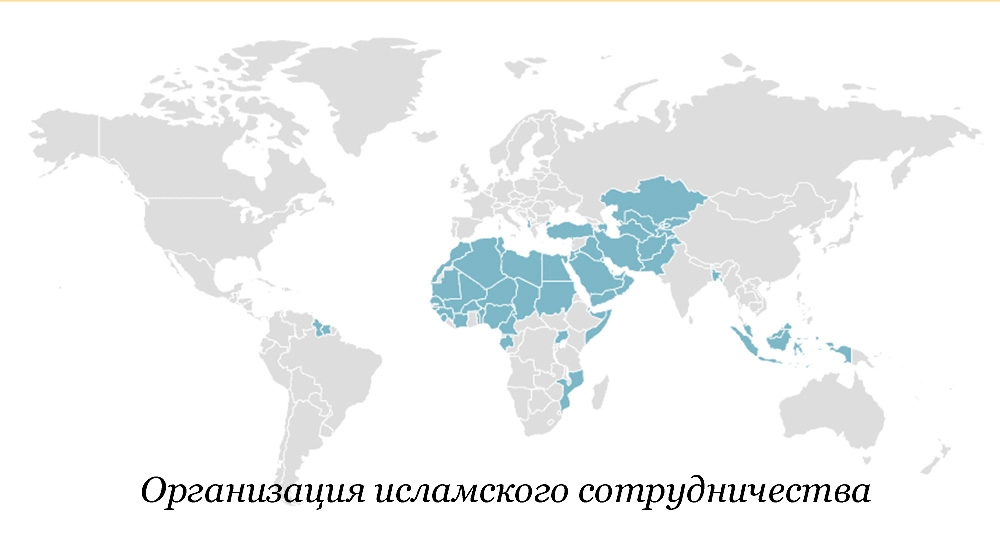
Russian Deputy Prime Minister Marat Khusnullin has stated that Russia’s trade turnover with the member countries of the Organization of Islamic Cooperation (OIC) in 2023 increased by 30% in 2023. He was speaking at the 2024 KazanForum “Russia & the Islamic World.”
“Thanks to this event, we have become even closer with our colleagues – Muslim countries. Our trade turnover is increasing. I can say that over the past year our trade turnover with the countries of OIC increased by 30%.” Khusnullin told reporters.
The OIC includes 57 member states, 48 of which are Muslim-majority. The organisation claims to be “the collective voice of the Muslim world” and works to “safeguard and protect the interests of the Muslim world in the spirit of promoting international peace and harmony”. Russia has observer status.
Knusnullin said there have been more tourist exchanges between Russia and OIC states, and that the volume of exports and imports of products between Russia and OIC members have increased.
The OIC has a combined population of about 2 billion and a collective GDP (PPP) of US$27.949 trillion. It is headquartered in Jeddah, Saudi Arabia.
KazanForum is a platform for strengthening trade, economic, scientific, technical, social and cultural ties between Russia and OIC countries. The forum received federal status by a presidential decree in 2023. The event took place in Kazan, the capital of Russia’s Tatarstan region, often referred to as a third capital of the country. Kazan will also be the venue for the 2024 BRICS summit.
Rustam Minnikhanov, the head of Russia’s Tatarstan Republic and Chairman of the forum said that Islamic countries will make an important contribution to the safe development in the multi-polar world order. “When it comes to key spiritual and moral values, Orthodox Christianity and Islam are similar and close,” Minnikhanov told the conference. “This applies, in particular, to human rights and family fundamentals. I am sure that positive interaction and partnership between Russia and the Islamic world will make an important contribution to secure development in a fair multipolar world order.”
The Russia-Islamic World group includes former high-level leaders, representatives of science and the public, business circles and religious figures representing both Islam and Orthodox Christianity.


If you're planning to buy or sell a business in any country, enter its market, do not forget to visit the section “Countries” — here we have collected overview materials about the countries participating in our Catalog.

