


6/30/26 The Commonwealth of Independent States Ashgabat summit: key takeaways & analysis
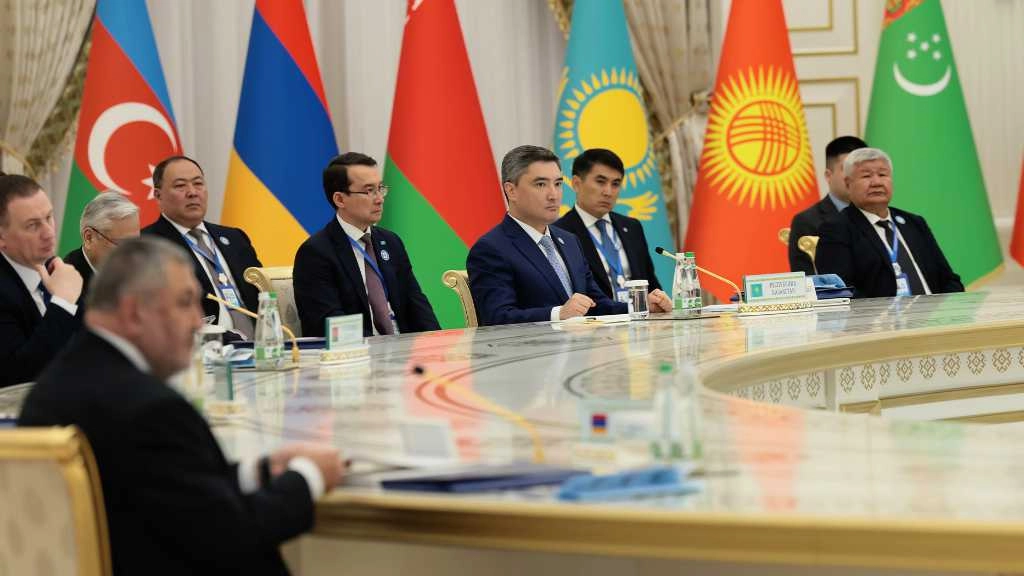
The 22 May 2026 meeting of the Commonwealth of Independent States (CIS) Council of Heads of Government in Ashgabat, Turkmenistan, officially framed as a routine Commonwealth meeting focused on economic cooperation and institutional coordination, in reality exposed a much deeper structural transformation unfolding across Eurasia.
The summit revealed how the CIS is gradually transforming into a pragmatic Eurasian economic coordination platform centered on transport corridors, industrial digitalization, logistics sovereignty, geospatial governance, mineral supply chains, and trade resilience amid intensifying global fragmentation.
In recent years, the CIS has increasingly evolved from a legacy post-Soviet political framework into a practical geoeconomic platform centered around transport integration, industrial modernization, digital governance, logistics sovereignty, strategic mineral supply chains, customs digitization, agricultural security, energy coordination, and sanctions-resistant continental trade.
The CIS Free Trade Agreement (2011), signed by Armenia, Belarus, Kazakhstan, Kyrgyzstan, Russia, Tajikistan, and Ukraine, reduced or eliminated tariffs on thousands of goods, replacing the 1994 framework. The CIS Agreement on Free Trade in Services (2023), involving Russia, Armenia, Belarus, Kyrgyzstan, Kazakhstan, Tajikistan, and Uzbekistan, promotes cross-border services and investment liberalization.
The Eurasian Economic Union (EAEU), including Russia, Belarus, Kazakhstan, Kyrgyzstan, and Armenia, represents deeper integration with a unified customs code and common external tariff; collectively, these developments show that CIS countries are now focusing on deeper economic integration.
The summit gathered Azerbaijani Prime Minister (PM) Ali Asadov, Belarus PM Alexander Turchin, Kazakh PM Olzhas Bektenov, Kyrgyz PM Adylbek Kasymaliev, Russian PM Mikhail Mishustin, Tajik PM Kokhir Rasulzoda, Uzbek PM Abdulla Aripov, Turkmen Deputy PM Hojamyrat Geldimyradov, Armenian representative Razmik Khumaryan, and CIS Secretary-General Sergei Lebedev. Turkmenistan hosted the summit during its 2026 CIS chairmanship year, while President Serdar Berdimuhamedov separately held audiences with delegation heads before formal meetings began.
What emerged from Ashgabat is the rise of a functional Eurasian economic governance architecture increasingly driven by logistics security, sanctions adaptation, industrial sovereignty, technological modernization, and continental connectivity.
The meetings, held in both restricted and expanded formats, ultimately resulted in the adoption of a comprehensive package of agreements aimed at building a sustainable, technologically advanced, and secure Eurasian economic ecosystem. The delegation leaders focused heavily on the practical implementation of the CIS Economic Development Strategy through 2030 while simultaneously aligning long-term integration efforts with newly approved development strategies extending toward 2035.
This demonstrates that the CIS is increasingly being repositioned around seven interconnected pillars: transport corridor integration, industrial digitalization, strategic resource coordination, geospatial governance, logistics resilience, energy modernization, and technological sovereignty.
The economic component of the discussions focused heavily on innovative development and digital transformation. The introduction of intelligent platforms in trade and logistics was identified as a critical mechanism for increasing the competitiveness of CIS products on global markets, reducing administrative barriers, accelerating paperless customs systems, and streamlining export-import procedures across Eurasia.
At the same time, the parties outlined a comprehensive modernization agenda for the industrial sector. Specifically, leaders discussed digital transformation in mining and metallurgy, joint projects in the chemical and textile industries, cooperation in geodesy and cartography, geoinformation technologies, spatial data infrastructure, and construction-materials manufacturing. The attendees approved the strategy for Exhibition and Congress Activities in the CIS for the period until 2030 and the Interstate Radionavigation Programme for 2027-2030.
The summit also highlighted growing energy-sector coordination. The participating governments emphasized joint development of electric power infrastructure, deployment of energy-efficient technologies, grid modernization, and the launch of pilot renewable-energy projects. This reflected a broader realization that Eurasian energy integration is increasingly extending beyond hydrocarbons toward electricity interconnection, industrial electrification, and sustainable energy systems.
A major outcome was the signing of the Concept for the Integration of Major Transport Arteries Passing through the Territories of the CIS Member States. The agreement aims to improve the speed, accessibility, security, and quality of transit freight transportation while simplifying export-import operations across the Commonwealth. The concept effectively institutionalized the long-term integration of railways, multimodal logistics hubs, customs infrastructure, and transcontinental freight systems across the Eurasian landmass.
Another major agenda item focused on coordination in ecology, water conservation, agricultural cooperation, and regional food security. Climate volatility, water stress, fertilizer supply disruptions, and food inflation are increasingly pushing CIS governments toward integrated agricultural planning and resource coordination. The humanitarian dimension was also elevated as a core pillar of integration. The CIS officially designated 2026 as the Year of Health in the Commonwealth. Delegates discussed targeted programs for exchanging medical technologies, healthcare practices, epidemiological coordination, and the creation of regional “sanitary shield” mechanisms against future pandemics and biological threats.
The summit additionally approved new Youth Capitals of the Commonwealth. Minsk was designated CIS Youth Capital for 2027, while Karaganda in Kazakhstan received the status for 2028. These initiatives aim to expand educational exchanges, startup ecosystems, youth innovation forums, scientific cooperation, and long-term social integration across the region.
Following the conclusion of the high-level meeting, CIS Secretary-General Sergei Lebedev emphasized the high organizational level of the Ashgabat summit and stated that the adopted decisions would serve as a major catalyst for accelerating integration processes across the Commonwealth. The next meeting of the CIS Council of Heads of Government is scheduled for December 2026 in Moscow.
The Ashgabat summit reflected a much more operational and outcome-oriented agenda. Several factors explain why the 2026 meeting carried unusual strategic importance.
First, Eurasian trade geography is rapidly changing. Continued disruptions in the Red Sea, instability around maritime chokepoints, sanctions fragmentation, rising freight insurance costs, and geopolitical tensions across the Indo-Pacific are increasing the attractiveness of overland Eurasian corridors.
Second, CIS economies are now more interconnected commercially than many external observers recognize. Trade among CIS countries has expanded steadily since 2022, especially in industrial goods, machinery, agriculture, logistics, metals, chemicals, energy equipment, fertilizers, rail transport, and consumer goods.
Third, the summit occurred amid accelerating competition over industrial supply chains and critical minerals. The CIS collectively controls enormous reserves of uranium, copper, rare metals, titanium, natural gas, aluminum, potash, gold, ferroalloys, and hydrocarbons.
Fourth, digital governance is becoming a new integration mechanism. The summit’s focus on paperless customs, geospatial infrastructure, radionavigation, mining digitalization, and logistics digitization showed how technological integration is gradually replacing older ideological integration models.
Fifth, the Ashgabat agreements demonstrated that the CIS is moving beyond general economic coordination toward sector-specific institutionalization. The approval of transport integration concepts, mining digitalization roadmaps, radionavigation programs, exhibition strategies, and science-and-technology development frameworks indicates the emergence of a more structured Eurasian governance architecture.
Finally, the summit exposed how Eurasian states are quietly building parallel economic coordination systems outside Western-controlled financial, technological, and logistical networks.
Tags:
 Telegram
 VK.com
 Facebook
 X (Twitter)
 LinkedIn
 REAB Services
Initial business valuation
Business analysis and audit (Due Diligence)
Business pre-sale preparation
Initial assessment of the business being purchased
Audit of the purchased business (Due Diligence)
Company Registration — General Provisions

 News
News
 Useful tip
Subject tags are a convenient and quick way to find all the information on this website related to a certain topic. Such tags are under each article, news item, description of a service or country, and all the lots in the catalog.

