


Mauritius
 Table of contents

Mauritius is a small island nation in the Indian Ocean, located east of Madagascar and southeast of the Seychelles. In recent years, Mauritius has implemented numerous reforms, allowing the country to keep pace with global changes. As a result, the local business environment is thriving, and the country remains competitive, transparent, and attractive for business and investment.
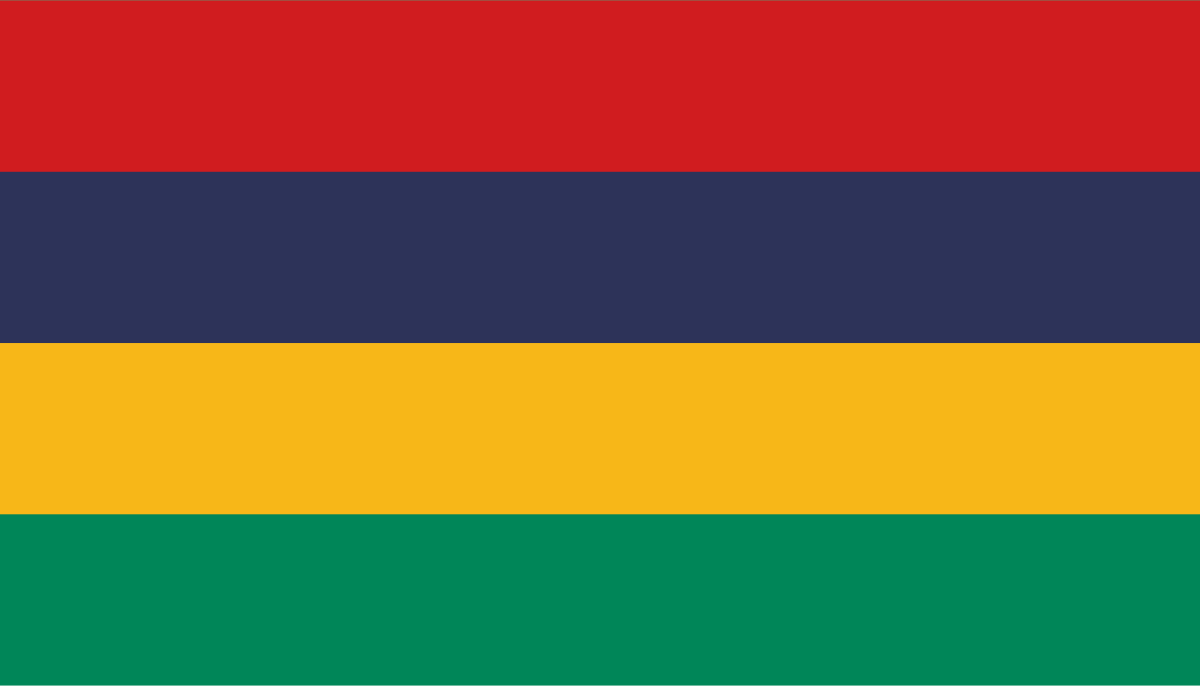
General information
The official name of the country is the Republic of Mauritius. It occupies an area of 2,040 km² (169th largest in the world). The population is approximately 1,265,060 (as of the beginning of 2026).
The ethnic composition of the country is as follows: 68% are Indo-Mauritians (of Indian and Pakistani descent), 28% are Creoles (mixed races), 3% are Chinese, and 2% are French.
Hinduism is practiced by 51% of Mauritians. Approximately 32% are Christians, of whom the majority are Catholics, with the remainder being Protestants. Islam is practiced by approximately 17% of the population, and Buddhism is practiced by 0.5%.
The Constitution of the Republic does not establish an official language. The primary language of official communication is English. French and Mauritian Creole are used in everyday life and in most media. Creole Moricienne, spoken by 90% of the population, is often considered the native language of Mauritians and is used informally.
The country's official currency is the Mauritian rupee.
Port Louis is the largest city, main port, and capital of Mauritius. The city is a major economic center, playing an important role at the pan-African level as a hub for banking activity and offshore business. The city is home to the Mauritius Stock Exchange, the head offices of the state-owned Bank of Mauritius and several commercial banks, as well as branches of international banks, insurance companies, and other financial institutions. Port Louis is an important transcontinental shipping hub: cargo turnover at the port accounts for approximately 2% of the country's GDP. International tourism, including cruise tourism, plays a significant role in the city's economy.
Light and food industry enterprises operate here, producing textiles and clothing made from imported materials, canned fish (tuna) and vegetables, fruit juices, vegetable oil, and alcoholic beverages, including rum. Metal products, chemical products, including fertilizers, and equipment for the sugar, leather, and clothing industries are also produced. Ship repair and shipbuilding complexes operate at the port.
Beau Bassin - Rose Hill is the second most populous city in Mauritius and the country's second economic center after the capital.
According to the Constitution of the Republic of Mauritius, the territory of Mauritius includes the islands of Mauritius, Rodrigues, Agalega, Tromelin, Cargados Carajos (St. Brandon), the Chagos Archipelago, including Diego Garcia Atoll, and any other islands that form part of the Republic of Mauritius. The island of Mauritius is further subdivided into nine administrative districts. Rodrigues Island enjoys autonomy. The islands of Agalega, Cargados Carajos (Saint Brandon), Tromelin, and the Chagos Archipelago form the Outer Islands of Mauritius, which are defined as "all the islands forming part of the State of Mauritius, excluding the islands of Mauritius and Rodrigues."
History, geography, culture, mentality
The uninhabited island of Mauritius was discovered in the early 16th century by the Portuguese (according to a popular version, by Diogo Fernandes in 1510) and named Sishna after one of the Portuguese ships.
In 1598, the Dutch landed on the site of today's Mahébourg, renaming the island Mauritius in honor of Prince Maurice de Nassau, and converted the harbor into a stopover point on the route from Holland to Java.
The Dutch brought slaves here from India and Madagascar, devastated the island's wildlife, and ultimately exterminated the famous dodo.
Finally, in 1710, having suffered a series of setbacks, the Dutch abandoned the Mauritian plantations and set sail for the Cape of Good Hope, whose geographical position was much more advantageous at the time, as it lay on the sea route to India.
Nevertheless, the sailors left behind an important legacy for the island: sugarcane and reindeer, brought from Java in 1639, as well as the first maps of Mauritius.
In 1715, the French, having captured the island, named it Île de France. The first colonists arrived only six years later.
From 1735 to 1747, Mahé de Labourdonnais served as governor of the island; thanks to his wise rule, the island began to prosper. Throughout the 17th century, the island attracted the attention of privateers, including the famous Surcouf, as well as renowned navigators Bougainville and La Pérouse.
Later, Mauritius became a French naval base.
The island became a strategic point in the Indian Ocean. The British, taking advantage of Napoleon's military entanglement, captured the island in 1810. Due to its relative proximity to India, the "jewel" in the British imperial crown, the island was of paramount importance to them.
The British restored the name Mauritius and began instilling British traditions and teaching English to its inhabitants. The island's population obediently accepted British rule, while retaining both their French-Creole language and their French way of life. It was only in the mid-19th century that Mauritius became a cosmopolitan island, and it remains so to this day. After the abolition of slavery in 1835 and until 1909, the British imported cheap labor from India, leading to a veritable "Indianization" of the island.
Later, many Chinese and Madagascans came to Mauritius. Such famous figures as Charles Darwin, Joseph Conrad, and Mark Twain also visited the island.
The sugar industry flourished until 1860, but the opening of the Suez Canal in 1869 cut the island off from key shipping routes. The disasters that befell the country at the end of the century—numerous cyclones, epidemics, and overpopulation—broke the economy into complete decline.
World War I brought no changes to the country. However, during World War II, the British converted the island into a British naval base. Thus, a hundred years later, Mauritius regained some prestige.
On March 12, 1968, the island gained independence while remaining a member of the Commonwealth of Nations. On March 12, 1992, the country proclaimed itself a republic, headed by a president elected by parliament.
The economic development and social achievements of modern Mauritius testify to its success on the international stage. The country actively participates in the global economy, tourism, and foreign policy, demonstrating a model of sustainable development and intercultural interaction.
Mauritius's geography is determined by its location in the Indian Ocean. This island nation is located east of Madagascar and is part of the Mascarene archipelago. The nearest islands are Réunion and Rodrigues.
The island is of volcanic origin. Mauritius's topography is primarily mountainous, particularly in the central part of the island, where plateaus and several mountain ranges are located. The country's highest point is the Piton de la Petite Rivière Noire, which rises to approximately 828 meters above sea level.
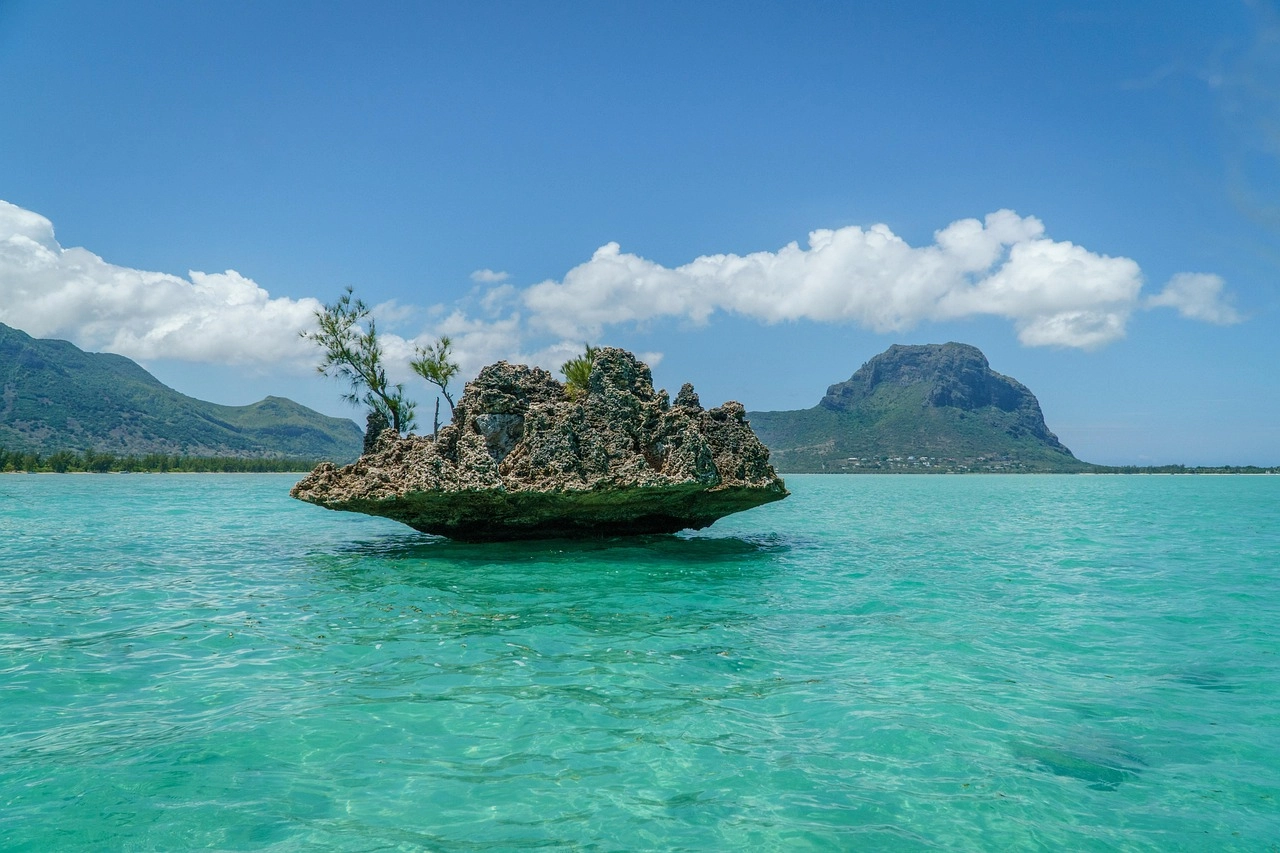
Mauritius's coastline is surrounded by coral reefs, which protect the island from strong ocean waves and create tranquil lagoons. These lagoons are known for their clear waters and rich marine life, making the island a popular tourist destination.
The island also boasts numerous rivers, waterfalls, and natural parks. One of the most famous natural sites is the Black River Gorges National Park, home to a large number of rare plants and animals.
The culture of Mauritius has been shaped by the influence of various peoples and traditions. Throughout history, the country has been settled by people from Europe, Africa, India, and China. Consequently, the country's culture is distinguished by a diversity of languages, religions, music, cuisine, and customs.
The island's colonial history played a significant role in shaping the country's culture. Mauritius was under French and British rule at various times, which influenced the language, architecture, and education system.
Music and dance occupy a special place in Mauritian culture. The most famous musical style is sega, a folk music with African roots, accompanied by rhythmic dances. Performed on traditional drums and other instruments, it is often featured at celebrations and festivals.
UNESCO World Heritage Sites play an important role in Mauritius's cultural heritage. One such site is Aapravasi Ghat, a historic complex in Port Louis. In the 19th century, it housed an immigration depot through which thousands of Indian workers arrived on the island after the abolition of slavery. This site symbolizes an important stage in the migration and cultural development of the Mauritian population.
Another World Heritage Site is Le Morne Brabant, a mountain in the southwest of the island. This site has great historical and symbolic significance, as it served as a refuge for runaway slaves during the slave era. Today, Le Morne is considered a symbol of the struggle for freedom and an important part of the country's national memory. The Mauritian mentality has been shaped by its multi-ethnic population and long colonial history. The island is home to descendants of Indian, African, European, and Chinese immigrants, so society is characterized by a high degree of cultural tolerance and respect for various traditions and religions.
Friendliness and openness are considered key characteristics of the Mauritian mentality. People on the island are generally welcoming, sociable, and willing to help one another. Due to the country's small size and close social ties, family, relatives, and local communities are of great importance in society.
Mauritians are also known for their tolerance and the peaceful coexistence of different cultures. The country celebrates holidays of various religions—Hindu, Christian, and Muslim—without reservations. This respect for diversity is considered an important part of the national identity.
Another characteristic of the Mauritian mentality is a calm and measured pace of life. Residents of the island often have a more relaxed attitude toward time and work than those in large industrialized countries. This is due to the warm climate, tourist economy and traditional way of life.
Power
Mauritius is a parliamentary republic. The head of state is the president, elected by a simple majority of members of parliament for a five-year term (renewable for a second term) on the nomination of the prime minister. Unless otherwise expressly provided by the constitution, the president is obliged to act in all cases on the advice of the government.
The National Assembly is a unicameral legislature of 70 members (62 elected by the people for five-year terms, and another 8 appointed by the Electoral Commission from among representatives of the country's various ethnic communities).
Economy
Mauritius is the second-wealthiest country in Africa economically and is also ranked among the "very high" countries by the UN Human Development Index. In recent years, Mauritius has achieved recognition as a business and financial hub in Africa.
Mauritius pursues a liberal trade and economic policy. The island enjoys very low tariffs. While not a party to NAFTA (the North American Free Trade Agreement), the country benefits from preferential trade agreements with various countries and regional blocs. It is a member of the African Union, the Southern African Development Community (SADC), and the Common Market for Eastern and Southern Africa (COMESA), among others. These agreements promote trade and strengthen economic cooperation.
The China-Mauritius Free Trade Agreement, which entered into force in January 2021, is the first free trade agreement between China and an African country. This agreement positions Mauritius as a strategic conduit for trade between China and Africa, allowing businesses to benefit from duty-free access in both directions for eligible goods.
Currently, Mauritius's economy relies on the sugar industry, tourism, textiles and clothing, and financial services, but is expanding into sectors such as fish processing, information and communications technology, hospitality, and real estate development. Sugarcane is grown on approximately 90% of cultivated land and accounts for 11% of exports. Other key agricultural products include tea, tobacco, fruits (such as pineapples and bananas), and vegetables. The agricultural sector also includes livestock farming, particularly poultry and cattle breeding, as well as aquaculture for fish and shrimp.
Mauritius has a developed financial services sector, with key categories including banking, insurance, and offshore financial services. The country is the region's financial hub, offering a wide range of banking and financial products and services to both domestic and international clients.
Tourism is a vital sector for the country, as the country's stunning beaches, cultural attractions, and natural beauty attract visitors from around the world. Key categories in the tourism sector include accommodation (hotels and resorts), food and beverage services (restaurants and cafes), transportation (airlines and tour operators), and recreational activities (water sports, excursions, and cultural events). Tourism plays a crucial role in generating foreign exchange earnings, creating jobs, and stimulating economic growth in Mauritius.
The government's development strategy focuses on creating vertical and horizontal development clusters in these sectors. Mauritius has attracted over 32,000 offshore companies, many of which are focused on trade with India, South Africa, and China.
Mauritius has a well-developed infrastructure compared to many other African countries. The country boasts an extensive road network, including highways and secondary roads connecting urban centers and rural areas. Furthermore, the government is investing in modernizing ports and airports to facilitate trade and tourism.
Mauritius's exports primarily include textiles and clothing, sugar, and seafood. The country's main trading partners are France, the United Kingdom, the United States, China, and South Africa. Imports consist of machinery and equipment, petroleum products, chemicals, and food products. Specific figures for the volume and value of exports and imports fluctuate annually, with exports often exceeding imports due to Mauritius's developed manufacturing and export-oriented economy.
The country pursues a fiscal policy aimed at stimulating economic growth and development. Government spending focuses on infrastructure development, education, healthcare, and social security programs. Tax policy aims to achieve a balance between revenue generation and enhancing business competitiveness.
Russia and Mauritius
Trade and economic cooperation between the two countries is developing steadily. Mauritius views Russia as a promising trading partner. However, due to objective historical and geographical factors, Russian-Mauritian trade has remained quite modest in recent years. Mauritius supplies processed sugarcane products, as well as local textiles, and imports fertilizers, paper and cardboard products, and food products. Several Russian and joint Russian-Mauritian companies are registered in the Mauritian offshore zone.
The development of the "blue economy"—industries related to marine resources, fisheries, and maritime transport—is considered a promising area of cooperation between Russia and Mauritius. The countries have signed memoranda of cooperation in fisheries and the development of maritime infrastructure.
Cooperation in technology and education is also being discussed. In recent years, representatives of the two countries have held talks on the digitalization of business, particularly the implementation of digital tools for the development of small and medium-sized businesses. Such cooperation could facilitate the exchange of technology and knowledge.
Furthermore, business organizations from the two countries signed agreements to promote trade and investment. For example, the chambers of commerce and industry of Mauritius and Russian regions signed memoranda to strengthen business ties and support joint projects.
Business climate
Mauritius is a leading business destination in Africa, offering a unique combination of political stability, a competitive 15% corporate tax rate, and zero capital gains tax.
The country has strategically positioned itself as Africa's leading international business and financial hub, combining geographic advantages with targeted policy reforms. The country serves as a bridge between Africa, Asia, and Europe, and its location in the Indian Ocean provides access to major markets on three continents.
This jurisdiction offers a developed, transparent, and well-regulated international financial center with a supportive ecosystem offering a full range of financial products and services. The Economic Development Board (EDB) serves as a one-stop shop, facilitating business setup, obtaining permits, and providing ongoing support to investors.
Mauritius' key structural advantages include a Westminster-inspired political system with an independent judiciary, a bilingual workforce fluent in English and French (with Creole as a lingua franca), world-class telecommunications infrastructure connected by submarine cables (SAFE and LION/LION2), and a time zone (GMT+4) enabling business with both Asian and European markets.
Mauritius provides unparalleled preferential market access to approximately 68% of the world's population through an extensive network of regional and bilateral trade agreements. This makes the jurisdiction an ideal hub for companies seeking to enter markets in Africa, Asia, and Europe with reduced tariffs and non-tariff barriers.
Investment climate
Mauritius strives to become an investment hub located midway between Africa and Asia. In recent years, the country's economic diplomacy has focused on creating and strengthening partnerships with developing countries (India, Turkey, etc.), as well as providing technical assistance to a number of African countries. Agreements have been approved with Ghana, Senegal, and Madagascar to create special economic zones (SEZs) in these countries and open niche markets for Mauritian exports. Moreover, one of the key factors contributing to Mauritius's success in attracting foreign direct investment is a network of double taxation treaties with more than 45 countries. Restrictions apply only to a few sectors, including television broadcasting (foreign ownership limit of 49.9%), sugar production (15%), and publishing (newspapers and magazines); while in the tourism sector, restrictions are related to a minimum investment amount, the number of rooms, or the maximum shareholding. In the construction sector, foreign consultants or contractors are required to register with the Construction Industry Development Board (CIDB).
The Government of Mauritius has created a favorable investment environment and provides a number of investment incentives, including:
- 100% foreign ownership and free repatriation of profits, dividends, and capital.
- Tax-free dividends and no capital gains tax.
- Reduced corporate tax rate (3%) for companies engaged in international trade.
- Accelerated depreciation on the acquisition of fixed assets, machinery, and equipment.
- Imported equipment is exempt from customs duties.
- Annual reimbursement of 100% of the capital cost of purchasing a solar power system.
- Investment tax deduction of 5% for three years on the cost of new equipment and machinery.
- Five-year tax incentives for companies partnering with the Mauritius African Fund to develop infrastructure in special economic zones.
In addition to government incentives for investment, the country offers a stable economic and political environment, a robust judicial system, modern infrastructure, a stable financial system, and a highly skilled and dynamic workforce. Furthermore, the Mauritian government has implemented various initiatives to attract foreign investment.
Business and investment support structures
Mauritius has several agencies dedicated to supporting business and attracting investment. These organizations create a favorable environment for entrepreneurship, help investors establish companies, and implement economic projects.
One of the key government organizations is the Economic Development Board of Mauritius. It is the country's primary agency for economic development and investment attraction. It promotes Mauritius as an international investment center, helps foreign and local entrepreneurs establish businesses, and supports investment projects throughout all stages of implementation.
The Financial Services Commission of Mauritius plays a key role in regulating the financial sector. This government agency oversees the activities of financial companies, investment funds, and insurance organizations. The Commission issues licenses for financial activities and ensures the stability of the country's financial system.
The tax system and customs administration are administered by the Mauritius Revenue Authority. This government agency is responsible for collecting taxes, monitoring customs operations, and implementing the state's tax policy. Thanks to its transparent tax system, Mauritius is considered an attractive country for doing business.
SME Mauritius supports small and medium-sized businesses. It provides advice to entrepreneurs, organizes training programs, and helps small companies develop their projects and access financing.
The Development Bank of Mauritius is also an important public financial institution. This bank provides preferential loans and financial support to small and medium-sized enterprises, and finances various investment projects in industry and other sectors of the economy.
Business Mauritius is the country's largest business association. It unites over 1,200 companies, represents business interests to the government, participates in economic policy development, and organizes training and development programs for entrepreneurs. The organization acts as an intermediary between the government and the private sector.
Mauritius International Financial Centre is an international financial center that promotes investment and financial services. Its main functions are: developing international financial transactions, attracting investment funds, supporting banks, insurance and investment companies, and developing offshore businesses.
Mauritius also offers various business financing mechanisms:
- Small and Medium Enterprise (SME) Support Programs
- SME Equity Fund - investments in small companies
- Investment Support Program - assistance in project financing
- Loan and guarantee programs through government institutions and banks.
The business support system in Mauritius includes government agencies, business associations, and financial institutions. These organizations create a favorable environment for entrepreneurship, investment, and the country's economic growth.
Tags:

668,941,600 ₽
752,559,300 ₽
250,853,100 ₽
1,254,265,500 ₽
 New artıcles
 REAB Services
Initial business valuation
Business analysis and audit (Due Diligence)
Business pre-sale preparation
Initial assessment of the business being purchased
Audit of the purchased business (Due Diligence)
Company Registration — General Provisions

 News
News
 Useful tip
This website can automatically make regular searches in the catalog according to your conditions and send you the results. For subscribing, you need to register on the site.

