


Investment climate in Mauritius
 Table of contents

Investing in Mauritius is a strategic choice for any company seeking an international presence in compliance with current legislation. The jurisdiction's emphasis on legal integrity, genuine economic activity, and operational transparency makes the country an ideal choice for companies seeking to expand into foreign markets.
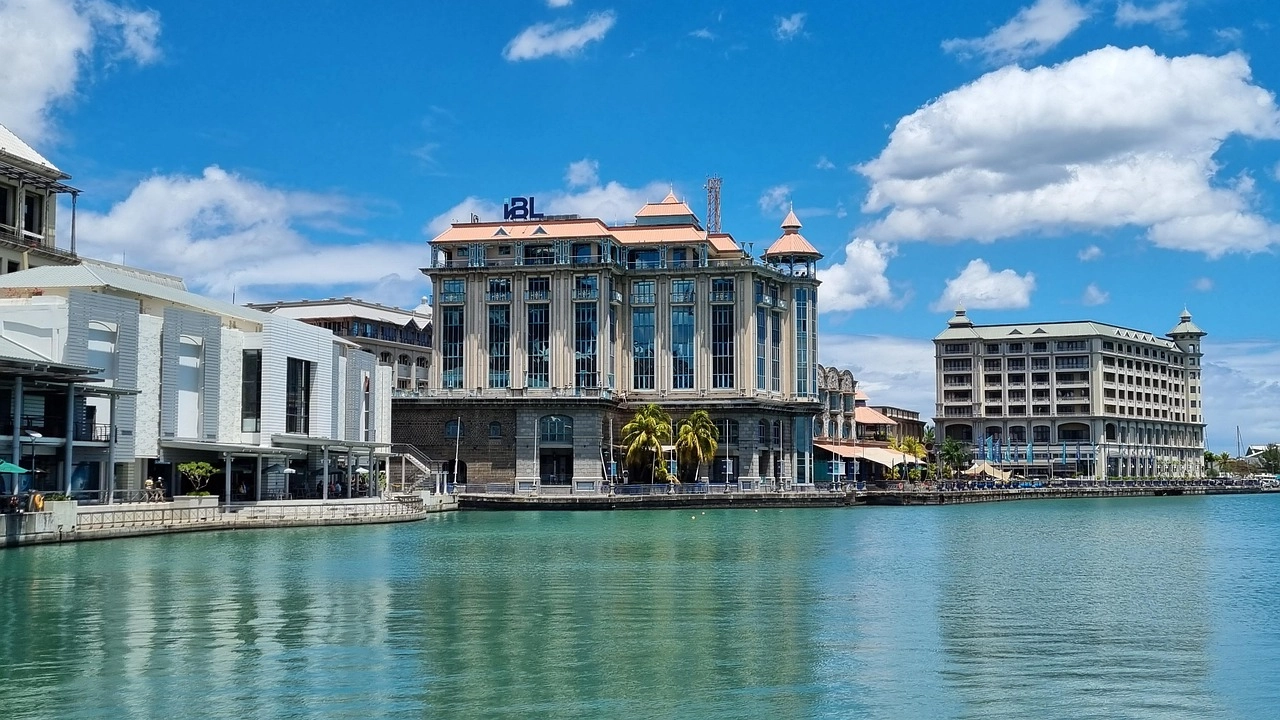
Mauritius is one of the most attractive investment destinations due to its advantageous geographic location, a true crossroads between Asia and Africa, and its favorable international treaties that provide access to European and other foreign markets. To further open the Mauritian market to investors and foreign experts, and to ensure long-term stability, the government offers a 10-year public sector occupation permit as an incentive for investment using various investment instruments.
Why Mauritius
- Competitive, well-diversified, and broad-based economy
Over the years, Mauritius has developed a sustainable, growth-oriented development strategy that has resulted in one of the highest per capita incomes in Africa. This strategy, based on a combination of political stability, a strong institutional framework, and a favorable regulatory environment, laid the foundation for economic development, while open trade policies played a key role in sustaining growth, gradually transforming Mauritius from a monocrop economy reliant on sugarcane as a primary source of foreign exchange earnings in the 1960s into a competitive, well-diversified, and broad-based economy that is now open to investment in more than 15 sectors.
- Investor Protection
Mauritius is a beacon of political, social, and economic stability. Through an extensive network of double tax treaties and investment promotion and protection agreements (IPPAs), the country offers investors a favorable business environment that guarantees predictability, certainty, and security.
- Ease of Doing Business
Mauritius is ranked among the top 20 countries globally for ease of doing business and has strengthened its leading position in Sub-Saharan Africa over the past years. This recognition from the World Bank confirms that Mauritius remains a competitive and attractive jurisdiction for the international investor community.
To further simplify processes and make it easier to do business in Mauritius, the Economic Development Board, in collaboration with the European Union, officially launched the National Electronic Licensing System (NELS). Its primary objective is to create a single entry point for applications, payments, and decisions on business-related licenses and permits. As part of the ongoing reforms, business processes are being reengineered to streamline the issuance of 140 business-related licenses and permits across 14 ministries.
- A Developed International Financial Center
Mauritius has a developed, transparent, and well-regulated international financial center with a supportive ecosystem offering a full range of financial products, such as treasury management centers, global funds, safe-deposit companies, captives, family offices, and trusts. To encourage new activities, the government has introduced tax incentives for the establishment of regional headquarters, investment banking, and fund management.
- International Systems ITC
Mauritius is currently connected to two submarine cables: the South African Far East Cable (SAFE) and the Lower Indian Ocean Network (LION)/LION2, providing international internet access. The island is also connected to two additional international fiber-optic cables: the Indian Ocean Xchange Cable (IOX), which connects Mauritius, Réunion Island, and Rodrigues with South Africa and India, and the MElting poT Indianoceanic Submarine System (METISS), which connects Mauritius, Réunion Island, Madagascar, and South Africa.
Furthermore, the Central Electricity Authority, through Fibrenet, has established a second national fiber-optic backbone in Mauritius. This network, which complements the existing fiber-optic infrastructure of telecommunications operators on the island, is designed to accelerate the government's efforts to provide accessible and affordable broadband services to all.
- Air Transport
Mauritius is served by more than 20 airlines and connects to over 150 destinations worldwide. The country is well-positioned to expand its presence in Africa thanks to codeshare agreements with South African Airways and Kenya Airways, which will become two new gateways to the African continent. Furthermore, Mauritius aims to position itself as a strategic hub, effectively connecting South African markets with destinations in the Asia-Pacific region. Projections indicate that by 2040, approximately 8 million passengers will pass through the airport. In terms of accessibility, Mauritius has direct flights to nine of the world's 15 largest airports. These include Paris, London, Singapore, Dubai, Johannesburg, Nairobi, New Delhi, Mumbai, and others.
- Port Connectivity and Throughput
Mauritius is building an island container terminal to handle container traffic after 2025. The government is investing 47 billion rupees (US$1.3 billion) in developing the "blue economy" and transforming the port of Port Louis into a regional maritime hub. These projects include the construction of an island terminal, a breakwater, a fishing port, and oil and gas storage facilities, among many other facilities. The Mauritius Container Terminal (MCT) is slated to become one of the largest container ports in the region; several projects are already underway, and an 800-meter quay extension has been completed. This 6.5 billion Mauritian rupees project demonstrates the government's commitment to making Port Louis a privileged offshore platform in the Indian Ocean.
- Smart City Project
Initiated by the Government of Mauritius, the Smart City Scheme (SCS) is an ambitious economic development program aimed at creating smart cities across the island. Through this program, local and foreign investors gain access to a variety of opportunities. This favorable environment is further enhanced by attractive tax and non-tax incentives that enable higher returns on investment.
The "smart city" concept is focused around specific projects: stimulating innovative scientific and technological activity, implementing intelligent systems designed to foster community development, creating a new dynamic urban lifestyle, and developing renewable energy production to build a sustainable and resilient Mauritius.
These new practical and pleasant urban spaces, created based on the "Live-Work-Play" concept, are designed to become the heart of the Mauritian lifestyle, offering Mauritians and foreigners optimal conditions for living, working, and simply relaxing.
Investment Laws in Mauritius
Laws and Regulations on Foreign Direct Investment
Mauritius has a number of key laws regulating investment and business Activities:
- The main legislation is the Investment Promotion Act Mauritius (2000), which aims to attract foreign investment and protect investor rights. It defines measures of state support and incentives for investment activity.
- The Companies Act 2001 Mauritius (2001) regulates the establishment, operation, and management of companies. This law establishes corporate governance rules and protects the rights of shareholders.
- The financial sector is regulated by the Financial Services Act Mauritius (2007), which defines the licensing and supervision of financial institutions, including investment funds and international companies.
- Business registration is carried out on the basis of the Business Registration Act Mauritius (2002). It simplifies the process of incorporating companies and makes doing business more transparent.
- Taxation is regulated by the Income Tax Act of Mauritius (1995), which sets tax rates, incentives, and tax rules for businesses and individuals.
Restrictions on Foreign Control and the Right to Private Ownership, and Establishment of Businesses
A foreign national may own, acquire, or receive real estate under the Foreign Nationals Property Restriction Act (NCPRA), subject to government approval. A foreign national is eligible for permanent residence by purchasing residential property under government-regulated regulations:
- Property Development Scheme (PDS),
- Integrated Resort Development Scheme (IRS),
- Real Estate Development Scheme (RES),
- "G+2" (Grade + 2) Scheme,
provided that the investment amount exceeds US$375,000 or the equivalent in any freely convertible foreign currency.
On December 13, 2024, new regulations came into effect introducing certain mandatory currency requirements for real estate purchases by foreign citizens. Key changes require that foreign nationals purchasing real estate under the above-mentioned schemes, after transferring funds to Mauritius from abroad in hard convertible currency, must now pay the developer at least 85% of the purchase price in Mauritian rupees, with the remainder in foreign currency or rupees.
In certain situations provided for by the National Commissioners Regulation Act (NCPRA), namely, if the following rights are met:
- Immovable property for commercial purposes under a lease agreement for a period of not more than 20 years;
- shares in companies that do not own immovable property;
- Immovable property acquired by inheritance or through marriage to a citizen under the "community legal regime";
- shares in companies listed on the stock exchange Mauritius;
- interests through a mutual fund or any other collective investment vehicle, as defined in the Securities Act.
With regard to business activities, the Mauritian government generally does not distinguish between local and foreign investments. However, there are certain business activities in which foreign participation is restricted. These include television broadcasting, sugar production, newspaper and magazine publishing, and certain activities in the tourism sector.
In 2019, the Independent Broadcasting Authority (IBA) Act was amended, increasing the permissible participation of a foreign company investing in broadcasting from 20% to 49.9%. Foreign control over broadcasting was also limited to 49.9%.
In the sugar industry, foreign investors are prohibited from making investments that would result in 15% or more of the voting shares of a Mauritian sugar company being held by foreign investors. However, foreign investors may be exempted from this rule subject to approval from the Financial Services Commission.
In the tourism industry, foreign nationals are permitted to engage in most tourism activities under Schedule I of the Tourism Authority Act, subject to certain conditions. These conditions typically include a minimum investment amount, a maximum shareholding, and environmental protection requirements depending on the type of activity. Foreign nationals must comply with the Tourism Authority's rules, guidelines, and code of conduct when conducting any activity.
In the construction sector, foreign consultants or contractors are required to apply for temporary registration with the Construction Industry Development Board (CIDB) in accordance with the CIDB Act 2008.
The European Development Board's Investment Division (EDB) reviews foreign investment proposals and provides a range of services to potential investors. The EDB is a useful resource for investors exploring business opportunities in Mauritius and assists in obtaining operating permits, licenses, and approvals, coordinating with the relevant local authorities.
The EDB evaluates proposals based on economic benefits, environmental impact, and national security issues. It then advises potential investors on the necessary permits or licenses depending on the nature of the business. Foreign investors can apply for the necessary permits through the EDB; alternatively, investors can apply directly to the relevant authorities. If an investment fails the review process, the potential investor can appeal the decision to the EDB or the relevant government ministry.
In 2022, the National Property Regulation Act (NCPRA) was amended to give the government greater control over real estate ownership by non-citizens. In 2021, the Mauritian government also introduced a Premium Investor Certificate, which allows companies investing at least $11 million, as well as companies engaged in the production of pharmaceuticals and medical devices, to receive incentives.
MIDI Convention and the New York Convention
Mauritius is a party to the Convention on the Settlement of Investment Disputes between States and Nationals of Other States (MIDI Convention) and a signatory to the New York Convention on the Recognition and Enforcement of Foreign Arbitral Awards. Mauritius is also a member of the World Bank's Multilateral Investment Guarantee Agency. In 2014, it became a party to the United Nations Convention on Transparency in Treaty-based Investor-State Arbitration, 2014, also known as the Mauritius Convention, as it was first signed in Mauritius. In August 2019, it signed the United Nations Convention on International Agreements for the Settlement of Disputes Resulting from Mediation, also known as the Singapore Convention.
The Convention on the Recognition and Enforcement of Foreign Arbitral Awards Act 2004 is the domestic legislation governing the enforcement of awards under the 1958 New York Convention. As Mauritius is a party to the New York Convention without any reciprocity clause, all foreign arbitral awards are enforceable in Mauritius. The Investment Disputes (Enforcement of Awards) Act 1969 is the domestic legislation governing the enforcement of disputes under the Washington Convention.
The Government of Mauritius is a party to several investment treaties recognizing international arbitration of investment disputes. Most investment promotion and protection agreements (IPPAs) include an arbitration clause referring to the ICSID dispute settlement mechanism.
Investor-State Dispute Settlement
Mauritius is a party to numerous bilateral and multilateral investment treaties that include mandatory investor-State arbitration (ISDS) provisions, such as the BITs and the Mauritius Convention on Transparency under ISDS, ratified in 2017.
Mauritius's courts have a high degree of enforcement support: foreign arbitral awards, including those against the government, are regularly recognized and enforced under the International Arbitration Act (implementing the New York Convention), and enforcement procedures are effective. In investor-state dispute resolution cases where compensation was awarded, the government complied with its contractual obligations and internal enforcement mechanisms, and there were no recorded cases of non-payment.
International Commercial Arbitration and Foreign Courts
In 2011, the Government of Mauritius, the London Court of International Arbitration (LCIA), and the Mauritius International Arbitration Centre (MIAC) established a new arbitration centre in Mauritius, the LCIA-MIAC Arbitration Centre. LCIA-MIAC provided all the services offered by the LCIA in the United Kingdom. In July 2018, the LCIA and the Government of Mauritius terminated their partnership, and MIAC began operating as an independent organization. In June 2022, MIAC entered into a cooperation agreement with ICSID under Article 63 of the ICSID Convention, which provides for the possibility of holding ICSID hearings at MIAC's premises in Mauritius.
Furthermore, the Mauritius Chamber of Commerce and Industry (MCCI), a pioneer of institutional arbitration in Mauritius, established the MCCI Permanent Court of Arbitration in 1996. In 2012, it was renamed the MCCI Arbitration and Mediation Centre (MARC). Since July 2020, MARC has operated under the auspices of Mediation and Arbitration Centre (Mauritius) Ltd. MARC's core functions include providing mediation and/or arbitration services to businesses, conducting training in alternative dispute resolution, and promoting arbitration and mediation at the local, regional, and international levels.
International Regulatory Aspects
Mauritius is a member of the Southern African Development Community (SADC) and the Common Market for Eastern and Southern Africa (COMESA). The Government of Mauritius fulfills its obligations to these regional economic institutions by amending its legislation and regulations accordingly. Mauritius is a party to the Tripartite Free Trade Area and the African Continental Free Trade Area (AfCFTA). The AfCFTA entered into force in January 2021 for countries that have submitted market access offers and ratified the Agreement. With regard to trade in goods, Mauritius enjoys preferential access for goods subject to rules of origin. Negotiations on the Tripartite Free Trade Area, as well as the AfCFTA, continue with some outstanding issues related to market access and rules of origin.
Mauritius has been a member of the WTO since 1995. The government notifies the WTO Committee on Technical Barriers to Trade of all draft technical regulations, to the extent possible. Mauritius also became the fourth country to submit an instrument of acceptance of the Trade Facilitation Agreement (TFA).
To coordinate efforts to implement the Trade Facilitation Agreement (TFA), in 2015 Mauritius established a National Trade Facilitation Committee, co-chaired by government and private sector representatives.
Expropriation and Compensation
The Constitution includes a guarantee against nationalization. However, in 2015, the government passed the Insurance Amendment Act, which allows the Financial Services Commission (FSC) to appoint receivers in cases where there is evidence that the liabilities of an insurer and its associated companies exceed assets by 1 billion Mauritian rupees (approximately US$25 million) and that such a situation "may jeopardize the stability and soundness of the financial system in Mauritius." The receivers are empowered to seize and sell assets.
Investment Incentives
The Government of Mauritius has developed a Regulatory Sandbox License (RSL) to encourage innovation by removing barriers to investment in advanced technologies. An RSL provides an investor with expedited permission to conduct business in a specific sector, even if no legal or regulatory framework for that sector yet exists.
Mauritius offers potential investors a low-tax jurisdiction and a number of other tax incentives, including:
- A flat corporate rate of 15% or lower, depending on the type of business.
- 100% foreign ownership is permitted.
- No minimum foreign capital requirement.
- No withholding tax on dividends and capital gains.
- Free repatriation of profits, dividends, and capital.
- Accelerated depreciation on the acquisition of fixed assets, machinery, and equipment.
- Exemption from customs duties on imported equipment.
In addition In addition, the government has developed a Property Development Scheme (PDS) to attract wealthy foreign nationals seeking to purchase residential property in Mauritius. Buyers of residential properties priced over $375,000 in certain projects are eligible to apply for a Mauritian residence permit. Residential properties can be rented out by the owner.
In 2024, the government introduced the following new tax incentives:
- Investment tax deduction for manufacturing companies investing in artificial intelligence and patents. These companies can claim a 15% tax deduction for three years, starting from the year of acquisition;
- a full exemption from income tax on profits from the sale of virtual assets and tokens;
- an 80% tax break for companies providing consulting services in the field of robotics and artificial intelligence, as well as payment intermediary services, subject to certain requirements for the content of the activity;
- a ten-year tax break for insurance companies operating on the "captive insurance" principle.
In addition, the government has introduced tax deductions and incentives for companies investing in:
- childcare facilities;
- support for NGOs;
- sponsoring professionals in the arts.
In budget announcements on In June 2025, the newly elected government announced a series of measures regarding work and residence permits for foreign investors.
Free Trade Zones / Free Ports / Trade Facilitation
The Mauritius Free Port, a free trade zone, was established in 1992 and is a duty-free zone for goods intended for re-export. Over the past decade, the freeport has expanded significantly and now includes:
- Developed refrigerated and dry warehouse space.
- Technology units.
- Open warehouse and office space.
The government's goal is to promote the country as the largest and most competitive logistics hub in the Indian Ocean, providing freeport operators with supply chain solutions that meet international standards and providing access to markets in Africa, Asia, and Europe. Global business license holders are authorized to operate in the freeports, including:
- warehousing and storage;
- bulk unloading;
- sorting, grading, cleaning, and mixing;
- labeling, packaging, repackaging, and repackaging;
- lighting unit;
- shipbuilding, repair, and maintenance of ships, aircraft, and heavy equipment;
- storage, maintenance, and repair of empty containers;
- quality control and inspection services;
- export- and re-export-oriented activities carried out at airports and seaports;
- storage facilities for gold, silver, platinum, precious and semi-precious stones, precious metals, pearls, works of art, as well as collectibles or antiques;
- security area, courier area, assay laboratory, or An exhibition area, as applicable, used solely for the storage of valuables;
- Precious metal refining;
- Precious metal minting and order fulfillment center.
Companies operating in the free economic zone are entitled to a corporate tax of 3%. Other investment incentives include:
- 8-year income tax exemptions for new free port operators or private free port developers investing at least MUR 50 million (subject to conditions that may be established);
- Exemption from duties and VAT on goods and equipment imported into free port zones;
- Extension of the Freight Rebate Scheme and the Export Credit Guarantee Scheme;
- Reduction in port handling charges.

 Telegram
 VK.com
 Facebook
 X (Twitter)
 LinkedIn
 Other topics:
 REAB Services
Initial business valuation
Business analysis and audit (Due Diligence)
Business pre-sale preparation
Initial assessment of the business being purchased
Audit of the purchased business (Due Diligence)
Company Registration — General Provisions

 News
News
 Useful tip
Each country has its own laws and rules for investors and business buyers. How to get around all the obstacles? Read related articles “Investor Life Hacks”.
