


Settlements in National Currencies and the New Institutions of BRICS Bridge and BRICS Clear: Prospects and Challenges for Reforming the International Financial System
 Table of contents

The expert opinion was prepared following the results of the SPIEF-2025 session “The Future of the International Financial System.”
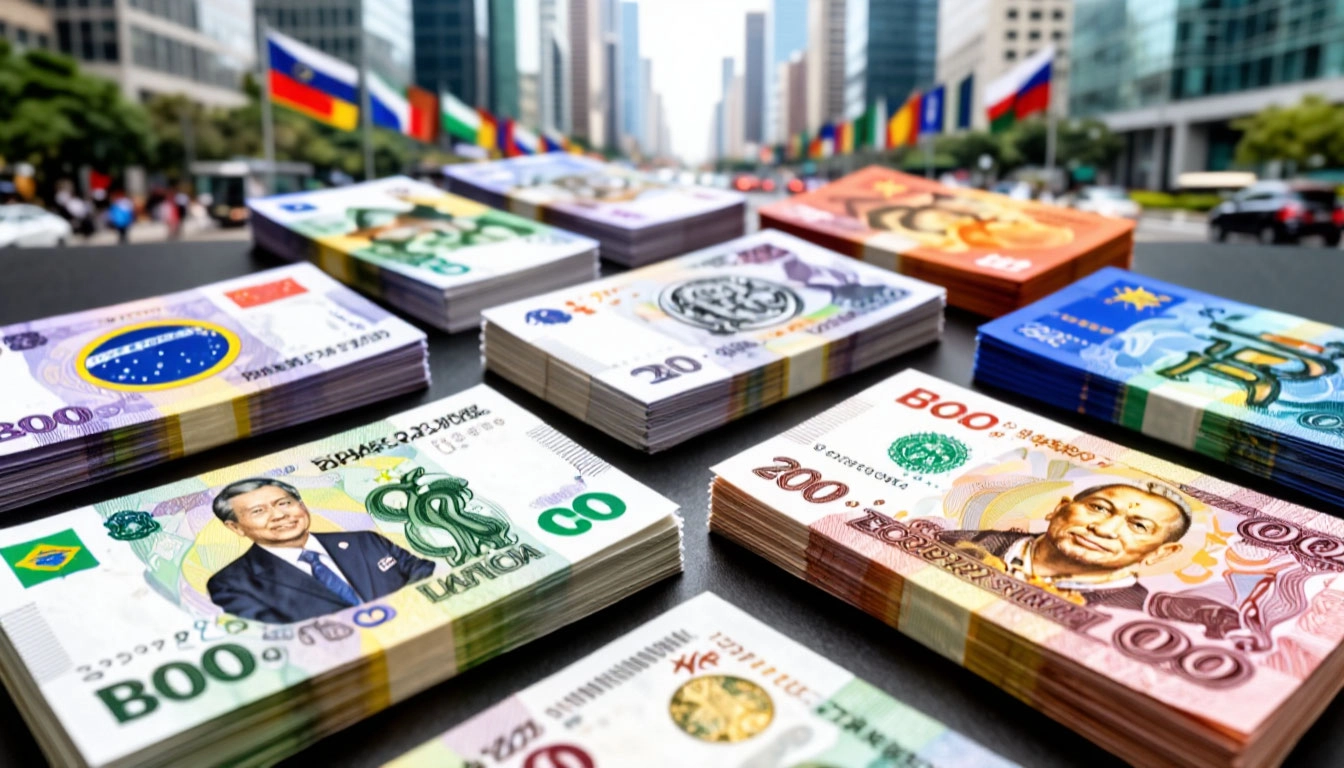
During Russia's BRICS Presidency (2024), special attention was paid to the transition to a "post-Bretton Woods 2.0 "— a decentralized architecture where settlements in national currencies, the use of central bank digital currencies (CBDCs), and distributed ledger technologies could reduce dependence on the dollar and sanctions risks in international trade. At the 16th BRICS Summit in Kazan, the launch of the BRICS Bridge payment platform, the BRICS Clear settlement and depository infrastructure, and a network of central bank swap lines were discussed.
The Current State of Intra-BRICS Payments
Just five or six years ago, the idea of switching intra-BRICS settlements to national currencies was perceived as a declarative gesture — the share of the dollar and euro in the trade turnover of the five BRICS countries has historically exceeded 80%. Today, the situation is changing literally before our eyes. In the spring of 2025, Sergey Lavrov confirmed that 67% of mutual trade was already being settled in BRICS currencies, while the dollar's share had fallen to 33%.
This dynamic is driven by a combination of political and technological drivers. On the one hand, sanctions pressure from the collective West made maintaining existing payment chains too risky for large raw material exporters and equipment importers. On the other hand, instruments have emerged that allow for the elimination of the dollar and SWIFT from the process. First, when payments for Russian fertilizers began to be processed in yuan and for Indian medicines in rupees, companies immediately realized the benefits: lower costs on hedging against exchange rate fluctuations and bank fees, with savings in some places reaching up to 40%. Second, large state-owned companies organized the new infrastructure: they were the first to begin paying directly in currency pairs such as yuan-rupee or ruble-rand, gradually drawing their counterparties into this system. Finally, banks now have a financial cushion: the Bank of Russia and the People's Bank of China expanded ruble/yuan repo transactions and opened a five-year swap line, with the daily volume of such transactions reaching 32 billion rubles.
The digital framework of new financial institutions is particularly important. Russia is actively testing the use of a digital ruble in international payments, relying on the BRICS Bridge module as a "corridor" for CBDC exchanges between central banks. Combined with the efforts of other BRICS members, this makes de-dollarization not a one-off but a sustainable one — the more effective digital channels there are, the less sense there is in ever returning to costly dollar clearing.
Key Challenges and Risks of Expanding Settlements in BRICS National Currencies
Despite initial successes, the current situation does not guarantee the irreversibility of the process. BRICS countries continue to face four interrelated obstacles to international trade.
Firstly, some countries still have problems with currency pair liquidity: on Johannesburg exchanges, the volume of yuan-rand transactions is several times smaller than the dollar-rand pair, so South African exporters hedge against the dollar. Until central banks consolidate a common "wallet" of swap lines and establish international repo systems, exchange rate fluctuations will be an additional risk factor in such transactions. Secondly, regulators speak different languages: the Central Bank of Brazil requires one set of company owner data, while Rosfinmonitoring requires another, forcing banks to duplicate KYC checks, which lengthens each payment and, in essence, makes it more expensive. Thirdly, payment platforms are a modern-day "Tower of Babel": India's UPI, China's FPS, and Russia's SBP are built on different protocols, and integrating them into a single blockchain system is expensive and complex. Finally, the fourth barrier is geopolitics: Washington threatens 100% tariffs on countries that actively shift away from the dollar and can cut off dollar liquidity for individual banks at any time; disconnecting one or two correspondent accounts would halt the transactions of many companies. It appears that, on the one hand, macroeconomic and political interests are pushing countries toward independent settlements, while on the other, new instruments are constantly emerging to facilitate this. To address these barriers to deeper BRICS economic integration, it is planned to use the new financial institutions mentioned above — BRICS Bridge and BRICS Clear.
The Potential of the New BRICS Bridge and BRICS Clear Institutions
BRICS Bridge, an initiative aimed at creating a distributed payment infrastructure among the BRICS countries, was officially unveiled in October 2024 during Russia's presidency of the group. According to Ledger Insights, Russia proposed a concept for a platform based on distributed ledger technology (DLT) focused on cross-border settlements with the potential to use central bank digital currencies (CBDCs) and tokenized assets. The BRICS Bridge architecture is expected to be built on decentralized principles, with the ability to connect national validator nodes, reflecting the member countries' desire to move away from a centralized infrastructure like SWIFT.
BRICS Clear is viewed as a potential clearing and depository platform complementing the BRICS Bridge project and aimed at developing an independent settlement infrastructure within the group. The idea of creating such a system was discussed in the context of increasing the financial sovereignty of BRICS countries and reducing dependence on Western infrastructures such as Euroclear and Clearstream. Transitioning to their own clearing and depository mechanisms could allow BRICS countries to reduce the costs of cross-border transactions, reduce the need for dollar liquidity to cover settlements, and ensure resilience to sanctions restrictions in the financial infrastructure.
However, these effects can only be achieved if conditions are met, which are largely related to the barriers described above:
- synchronizing central bank swap lines into a multi-currency basket, allowing liquidity to flow between the ruble, yuan, rupee, and other currencies without additional costs;
- unification of KYC 2.0 – a project already being pursued by a FATF subgroup, proposing an electronic beneficiary passport with a unified QR signature format;
- Cyber-resilience: backup validator nodes must be located in different jurisdictions to prevent the failure of one segment from paralyzing the entire network.
Conclusion
A distinct financial ecosystem is emerging within BRICS—without the dollar as a reserve currency, without SWIFT as a single payment channel, and without Western depositories. The figures for the past two years clearly demonstrate progress in this area, but further development requires the development of new institutional solutions. It is the scaling of settlements in national currencies that reveals hidden risks: low liquidity of national currencies, regulatory and technological differences. Nevertheless, a set of tools—swap lines, CBDC, Bridge, and Clear—creates conditions under which a rollback to the old dollar-centric model becomes economically unprofitable.
The true degree of de-dollarization will be measured not by percentages of trade turnover, but by the ability of the new system to independently survive an external shock (a sharp tightening of sanctions, a cyberattack, a liquidity crisis) without reverting to the dollar.
Recommendations for state and municipal authorities
To develop trade relations with the BRICS countries, the following measures must be taken:
- Expand the network of bilateral swap agreements between the Bank of Russia and BRICS banks;
- Create a national BRICS Bridge validator node based on the combined infrastructure of the Federal Tax Service and Customs Service to ensure simultaneous currency and commodity control;
- Subsidize the digital integration of SMEs by compensating up to 50% of the costs of connecting to the Bridge and pilot payments in digital rubles, especially in export-oriented sectors;
- Ensure a mechanism for the tokenization of real-sector assets under an experimental legal regime.

Tags:
 Telegram
 VK.com
 Facebook
 X (Twitter)
 LinkedIn
 Other topics:
 REAB Services
Initial business valuation
Business analysis and audit (Due Diligence)
Business pre-sale preparation
Initial assessment of the business being purchased
Audit of the purchased business (Due Diligence)
Company Registration — General Provisions

 News
News
 Useful tip
Want to understand how to sell or buy a ready-made business? The REAB website has an informative collection of articles "Buying and Selling a Business".
