


Investing in Gas Production in Russia: How to Buy a Field and Assess the Risks
 Table of contents

Investments in natural gas fields in the Russian Federation represent a complex and multifaceted area, combining significant resource potential with a high level of regulation and industry specificity.
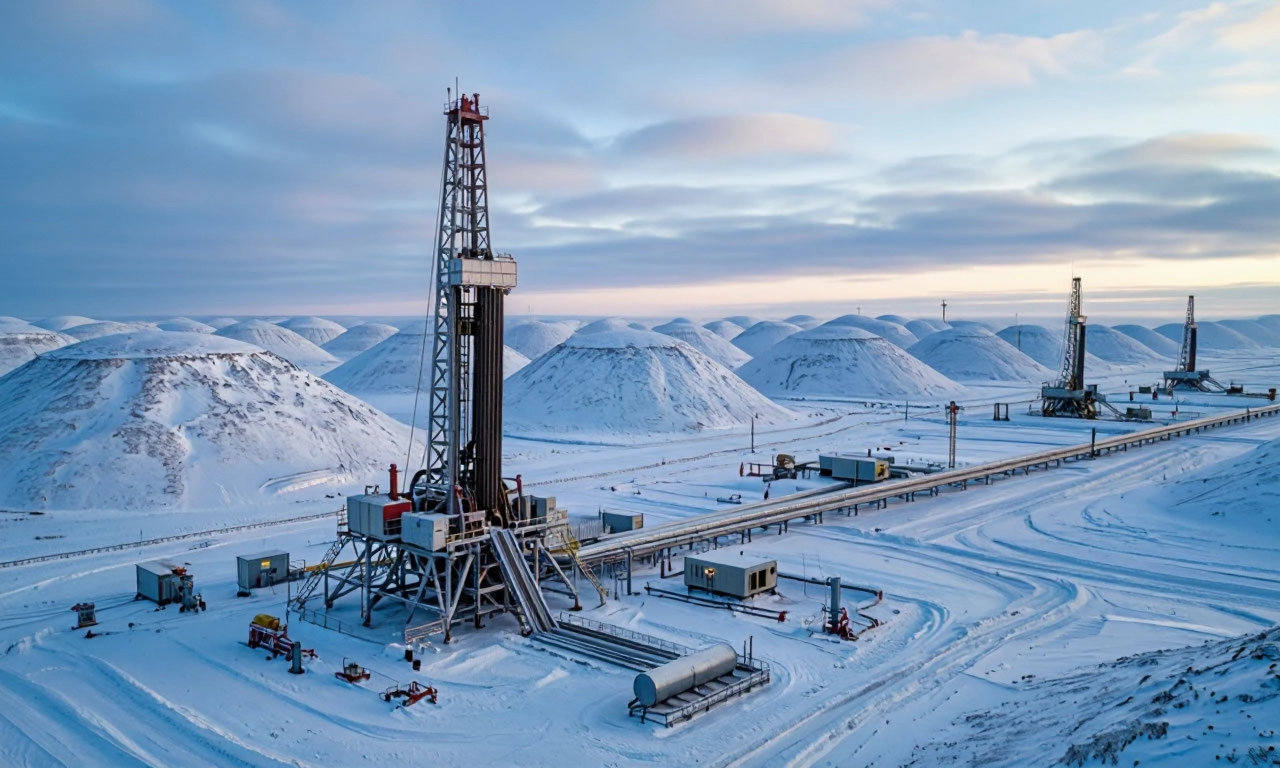
Many people believe that the gas business in Russia is a closed territory for select giants, but in reality, hundreds of independent companies operate in the country. For an investor, purchasing a field is a way to invest capital in a real asset that will generate income for decades.
Gas fields in the Russian Federation remain one of the key areas for long-term investment in the commodities sector. Their attractiveness stems from a combination of a significant resource base, stable energy demand, and a developed, albeit regulated, infrastructure.
First and foremost, Russia possesses some of the world's largest natural gas reserves, which creates the industry's long-term potential. This creates the foundation for stable projects with a development horizon spanning decades. Gas demand remains strong both domestically and internationally, including supplies to Asian countries and the development of the liquefied natural gas segment.
A key factor in investment attractiveness is the relatively predictable demand for gas within the country. Despite government price regulation, the domestic market ensures stable product sales, particularly in the energy and industrial sectors. This reduces commercial risks compared to purely market segments.
An additional advantage is the opportunity to access export markets. Although Gazprom largely controls access to pipeline exports, the development of LNG production projects opens up new opportunities for independent investors. This allows for the diversification of sales markets and increases project profitability.
Government support for the industry plays a significant role. Tax incentives, reduced coefficients for mineral extraction taxes, and special regimes for individual regions and projects help reduce the fiscal burden and improve the economics of investment. These measures are aimed at stimulating the development of new fields and complex reserves.
Overall, the Russian gas industry remains attractive for investment thanks to a combination of large-scale resources, stable demand, and government support. However, investment success is determined not only by macroeconomic conditions but also by the investor's ability to properly evaluate a project, manage risks, and effectively develop a strategy for its implementation.
Benefits for investors when purchasing a gas field in Russia
When acquiring a gas field in Russia, it is important for investors to consider not only the basic tax burden but also the system of existing incentives that can significantly impact the project's economics. Crucially, incentives are granted not for the asset purchase itself, but rather upon meeting certain conditions—geographical, technological, and investment-related.
A key instrument of state support is the tax incentives provided by the Tax Code of the Russian Federation. This primarily concerns the mineral extraction tax (MET), for which reduced coefficients or special calculation formulas are applied. These measures are aimed at stimulating the development of hard-to-recover reserves, where high production costs require compensation. As a result, the investor can significantly reduce the tax burden during the field's operation.
Significant incentives are available for projects implemented in new and remote production regions, such as the Arctic and Eastern Siberia. In these zones, reduced MET rates, tax holidays, and deferrals on certain taxes are possible. This is due to the need to offset significant capital expenditures on infrastructure development and operations in challenging climatic conditions.
LNG production projects deserve special attention. They are eligible for special tax regimes, including reduced mineral extraction tax rates and profit tax breaks. Such projects require significant investment but also have high export potential, making them a priority for government support.
An additional tool is the mechanism of investment protection and incentive agreements (IPIA). These agreements allow investors to lock in tax and regulatory conditions for the long term, providing predictability and protection from adverse legislative changes. This is especially important for long-term projects in the gas industry.
Investors should also consider regional support measures. Subjects of the Russian Federation may provide additional benefits, including property tax reductions, subsidies, and participation in infrastructure development. However, such measures are individual and depend on the specific region and the terms of the investment agreement.
Thus, the incentive system in the Russian gas industry is an important factor in investment attractiveness. Proper use of available incentives can significantly reduce costs, accelerate project payback, and increase resilience to market and operational risks.
How to Become a Field Owner
Becoming a "direct owner" of a field in Russia is impossible—subsoil resources are state-owned. An investor can obtain the right to use a subsoil plot, meaning control over the development and production of the resource. This is a fundamental distinction, regulated by the Law of the Russian Federation "On Subsoil."
There are several main ways to obtain such rights.
- The first and most direct route is to obtain a subsoil use license. Licenses are issued by the state, typically through auctions or tenders. An investor (or company) submits an application, proposes development terms, and, if successful, receives the right to geological exploration or production. This is a "clean" entry method, but it requires significant financial resources and time, as well as a willingness to fulfill strict licensing obligations.
- The second common option is to purchase a company that holds a license. In practice, most transactions proceed this way: the investor acquires a stake or 100% of a legal entity that already holds a license for the field. This allows for faster entry into the project, but requires thorough legal and financial due diligence of the asset—the license, debts, obligations, and risks.
- The third option is to enter the project through a partnership or consortium. The investor can purchase a stake in the project or enter into a joint development agreement. This reduces the risks and the initial investment, but limits the level of control.
- Production sharing agreements (PSA) are also possible; however, in modern Russian practice, such projects are limited and rarely used.
Ultimately, becoming the owner of a field in Russia means gaining control over the license to develop it. The most realistic path is to purchase a subsoil user company or participate in an existing project. In this case, high-quality legal and technical due diligence of the asset is crucial, as this determines the true value and risks of the investment. In such cases, specialized entities such as the REAB Consortium are often engaged to help structure the transaction and bring the parties together.
Key Success Factors: What an Investor Should Look At First
When purchasing a gas asset in Russia, the devil is in the details. Here are a number of factors that determine whether a well will become a gold mine or a source of losses:
Geological Risks and Reserve Audit
When acquiring a gas field in Russia, one of the key elements of investment analysis is the assessment of geological risks and an independent reserve audit. It is at this stage that a true understanding of the asset's value and its economic potential is formed.
Geological risks are associated with the uncertainty of the natural characteristics of a field. Even with preliminary data, actual parameters may differ significantly from forecasts. The main risks include inaccuracies in reserve estimates, reservoir heterogeneity, declining well flow rates as development progresses, and complex gas composition (e.g., high impurity content requiring additional processing). The level of exploration is also significant: reserves in categories C1 and especially C2 have a higher uncertainty than those in categories A and B.
The geological complexity of a deposit presents additional risk. Deep burial, abnormal formation pressure, the presence of tectonic faults, or hard-to-recover reserves can significantly increase development costs. In some cases, such factors make a project economically ineffective even with significant nominal reserves.
To reduce uncertainty, investors conduct a reserve audit. This involves an independent assessment of the resource base using international standards, such as PRMS. The audit verifies geological models, seismic data, drilling results, and reserve estimation methods. Particular attention is paid to the classification of reserves by probability categories (proven, probable, and possible), which allows for a more accurate assessment of risks and future cash flows.
In the Russian context, comparison with the state reserve accounting system, approved by the State Commission on Mineral Reserves, is also important. However, for investors, especially international ones, an independent assessment according to international standards is a priority, as it ensures comparability of projects and transparency for financial models.
A high-quality audit allows:
- to confirm or adjust declared reserve volumes;
- to identify geological and technological risks;
- to assess resource recovery;
- to increase confidence with banks and partners.
Therefore, geological risks are an integral part of gas industry projects, and an independent reserve audit is a key tool for mitigating them. Ignoring these factors can lead to significant financial losses, while a professional assessment allows for informed investment decisions and increases the likelihood of successful project implementation.
Infrastructure and Access to the Pipeline System
Infrastructure and access to the pipeline system are also key factors when assessing the investment attractiveness of a gas field in Russia. Unlike other mineral resources, natural gas cannot be effectively marketed without a developed transportation system, so the presence or absence of access to main gas pipelines directly determines the economic viability of a project.
The country's main gas transmission system is controlled by Gazprom, making this factor not only technical but also institutional. Investors must consider the possibility of connecting to the main gas pipeline infrastructure, the availability of spare capacity, and the conditions for gas transportation. Even with significant reserves, a field may be unprofitable if there is no guaranteed access to the transmission system.
The remoteness of a field from existing gas pipelines significantly impacts the project's economics. Significant distances incur additional capital expenditures for the construction of feeder pipelines, compressor stations, and gas treatment facilities. The availability of energy infrastructure, logistics, and access to labor resources are also important, especially in remote and hard-to-reach regions such as Eastern Siberia or the Arctic.
An additional aspect is the need to prepare the gas for transportation. Depending on its composition, the construction of purification, drying, and processing facilities may be necessary to bring the gas up to the standards required for delivery to the main gas pipeline system. This increases both capital and operating costs.
Legal regulation of access to the gas transmission system is implemented, in particular, based on the Law "On Gas Supply in the Russian Federation," which establishes the principle of non-discriminatory access. In practice, however, obtaining such access depends on the technical capabilities of the system, operator approval, and economic conditions, including transportation tariffs.
In cases where access to the pipeline system is limited or economically unviable, investors may consider alternative gas monetization options. These include liquefied natural gas (LNG) production, using gas for local power generation, or developing gas chemical projects. However, such solutions require additional investment and increase project implementation timelines.
Therefore, infrastructure and access to the pipeline system are critical elements of investment analysis. They should be assessed in the early stages of a project, as they largely determine the feasibility of commercializing the gas and the overall return on investment.
Sales Market and Export
Sales market and gas export are key elements of investment analysis when acquiring a field in Russia, as they determine future cash flows and the project's payback. Even with significant reserves and developed infrastructure, the lack of a stable sales market can significantly reduce the asset's investment attractiveness.
The domestic gas market in Russia is highly regulated. Gas prices for most consumer categories are partially controlled by the state, which limits potential profitability but ensures stable and predictable demand. The main consumers are the energy, industrial, and utility sectors. For investors, it's important to consider that domestic gas sales are typically lower margin than exports, but are associated with lower risks and more stable contracts.
Exports have traditionally been a more profitable option, as prices on foreign markets are based on global demand and can significantly exceed domestic prices. However, access to export channels in Russia is limited. Gazprom has historically played a key role in pipeline gas exports, with a dominant position in trunkline infrastructure and export deliveries. For independent producers, export opportunities depend on current regulations, infrastructure availability, and agreements with operators.
An alternative option is the export of liquefied natural gas (LNG). Private companies are permitted to participate in this segment, opening up additional opportunities for investors. However, implementing LNG projects requires significant capital investment in liquefaction plants, terminals, and logistics, and also depends on access to international markets and technology.
Geopolitical and sanctions factors significantly impact exports. Restrictions on equipment supplies, changes in export routes, and the transformation of global gas markets can both create new opportunities and increase risks. In these circumstances, market diversification and flexible logistics solutions are particularly important.
Investors also need to consider the contractual structure of sales. Long-term contracts ensure stable cash flows but can limit flexibility in the face of price fluctuations. Short-term and spot sales, on the other hand, allow for market opportunities but are accompanied by increased revenue volatility.
Thus, the sales market and gas exports are crucial factors in a project's investment viability. An optimal strategy involves a balance between domestic and foreign markets, consideration of regulatory restrictions, and the development of alternative sales channels, including LNG. It is important for investors to assess market access, sales conditions, and potential risks associated with changes in the external economic environment in advance.
Licensing and Legal Requirements
When purchasing a gas field, investors must keep in mind that the subject of the transaction is not the field itself, but the right to use the subsoil. Subsoil in the Russian Federation is state-owned, and its development is carried out under a license regulated by the Law of the Russian Federation "On Subsoil."
A subsoil use license is a key asset for a project. It defines the boundaries of the site, the type of permitted activity (geological exploration, production, or a combination), the development timeframe, and the obligations of the subsoil user. It is critical for investors to conduct a legal review of the license, including its validity period, renewal conditions, and the risks of early termination. Violation of license conditions, such as failure to meet deadlines for commissioning a field or failure to meet work volume obligations, may lead to license revocation.
Gas field transactions are typically carried out through the acquisition of a stake in the license-holding company. In this case, the investor must consider the requirements of corporate and antitrust laws, as well as possible restrictions on foreign investor participation in strategic industries. In particular, transactions may be subject to the regulation of Federal Law No. 57-FZ "On the Procedure for Implementing Foreign Investments in Economic Entities of Strategic Importance," which requires approval from government agencies.
Additionally, compliance with industry regulations, including the provisions of the Law "On Gas Supply in the Russian Federation," is crucial. These regulations define access to the gas transmission system, gas supply rules, and interactions between market participants.
Investors must also consider environmental and technical requirements. Project implementation requires state expert review, environmental impact assessments, and permits for construction and operation of facilities. Failure to comply with environmental regulations may result in fines, suspension of operations, or additional costs.
Infrastructure and land rights require special attention. Field development requires formalizing land rights and ensuring legal access to infrastructure facilities (roads, pipelines, and energy networks). These aspects can significantly impact project implementation timelines.
Thus, licensing and legal requirements in the Russian gas industry are a complex and multi-layered system. It is critical for investors to conduct a comprehensive legal due diligence of the asset, including an analysis of the license, corporate structure, regulatory restrictions, and associated rights. The legal integrity of a project largely determines its sustainability and investment attractiveness.
Conclusions
Investing in gas fields in the Russian Federation is a strategic approach that combines high return potential with significant requirements for risk analysis and management. A project's success is determined not so much by the volume of reserves as by a combination of factors: the quality of the geological base, access to infrastructure and the pipeline system, sales conditions, tax burden, and the current legal regime.
A comprehensive approach to asset valuation is key for investors. Licensing restrictions, reserve structure, gas composition, availability of sales markets and export opportunities, as well as access to government incentives and support mechanisms must be considered. The ability to adapt to changes in the external environment, including regulatory and geopolitical factors, is crucial.
Professional transaction and project support is particularly important. In a highly complex industry, the participation of specialized associations and partnerships, such as the REAB Consortium, can be an effective solution. They provide expert asset valuation, investment structuring, and support at all stages of project implementation.
Thus, investments in gas fields in Russia can be highly effective provided they are thoroughly researched and subject to specialized expertise. Only a systematic approach and competent management can minimize risks and ensure sustainable returns over the long term.

 Telegram
 VK.com
 Facebook
 X (Twitter)
 LinkedIn
 Other topics:
 REAB Services
Initial business valuation
Business analysis and audit (Due Diligence)
Business pre-sale preparation
Initial assessment of the business being purchased
Audit of the purchased business (Due Diligence)
Company Registration — General Provisions

 News
News
 Useful tip
Want to understand how to sell or buy a ready-made business? The REAB website has an informative collection of articles "Buying and Selling a Business".
