


Key factors for an investor when buying a gold deposit
 Table of contents

Purchasing a gold deposit is seen as one of the most capital-intensive, but potentially highly profitable forms of investment in the raw materials sector.
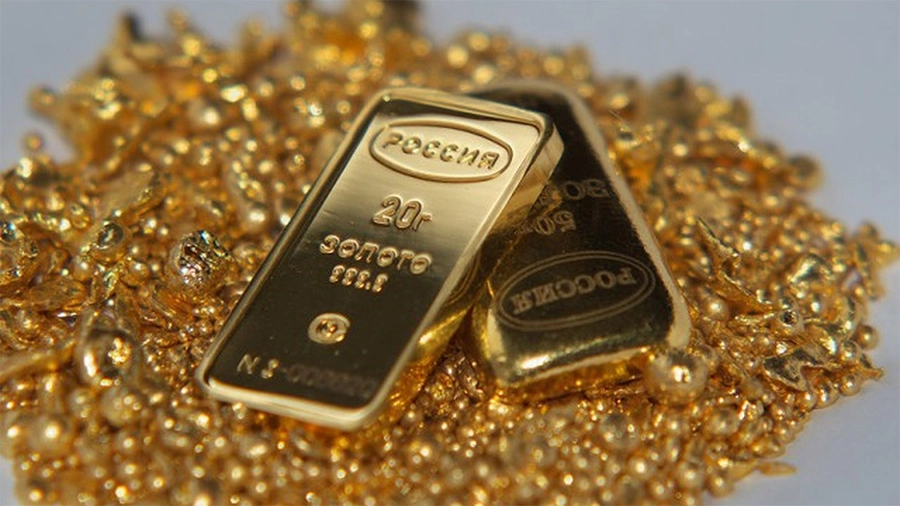
Such an asset represents more than just mining rights, but a long-term project encompassing geological exploration, development, exploitation, and sale of the extracted metal. For investors, this offers access to a resource with high liquidity and stable demand in both domestic and global markets.
The investment attractiveness of gold deposits is driven by a number of factors. First and foremost, gold traditionally serves as a safe haven asset, which is especially important in times of economic instability and inflation. Demand for it is generated not only by industry and the jewelry sector, but also by financial institutions and governments. In particular, the Central Bank of the Russian Federation uses gold to build and diversify international reserves, ensuring stable institutional demand.
An additional advantage is gold's high liquidity. The sale of extracted metal is possible through various channels, including export markets, the banking sector, and exchange infrastructure.
The price factor deserves special mention. Over the long term, gold has demonstrated a steady upward trend in value. Despite short-term fluctuations, the overall trend remains upward, driven by global inflation, increasing money supply, and growing demand from investors and central banks. In Russia, this effect is amplified by exchange rate dynamics: as the ruble weakens, the price of gold in the national currency rises even faster. This makes investing in gold mining assets particularly attractive as a means of preserving and increasing capital.
Thus, acquiring a gold deposit is a strategic investment with a long-term horizon. Its attractiveness is determined by a combination of stable demand, high liquidity of gold, and its structural price growth. However, to achieve a positive result, an investor must consider a wide range of factors—from geological characteristics to market and regulatory risks—requiring a comprehensive and professional approach to project assessment.
The geological characteristics of a site, political and legal risks, infrastructure, development costs, and environmental requirements shape the actual investment attractiveness of a deposit.
Legal Clarity and License
The legal clarity of an asset and the availability of a valid subsoil use license are fundamental factors in deposit assessment. Even with large reserves and favorable geological conditions, an opaque legal status can reduce a project's investment attractiveness to zero.
An investor must ensure that the rights to the site are legally established and that the license has been issued by authorized bodies and does not contain any restrictions that could impact development. It is important to consider the license's validity period, renewal terms, and the subsoil user's obligations—for example, regarding production volumes, investments, and environmental standards.
Particular attention should be paid to the asset's ownership history: litigation and conflicts with government agencies or third parties may indicate potential risks. A comprehensive legal due diligence allows for the identification of hidden issues and the assessment of the project's long-term sustainability.
Russian legislation distinguishes the following types of licenses:
- A BP (geological survey) license permits exploration and appraisal work without the right to mine.
- An BE (exploration and production) license permits commercial mining, infrastructure construction, and gold sales.
- The BR (combined) license combines exploration and production, allowing for the development of proven reserves while simultaneously exploring new ones.
- The license for man-made formations is designed for the processing of mining waste.
Geological Indicators and Reserves
Geological characteristics and reserve volumes are the basis for assessing the economic viability of a project. Not only the reserve size is important, but also their confirmation and quality.
Investors should consider the reserve category, gold grade, depth, and recovery rate. Confirmed reserves (C1, C2) have practical value, while probable resources (P1, P2) are associated with increased uncertainty and should not be considered guaranteed gold.
Gold grade is a key factor in profitability. For placer deposits, a good grade of 500–800 mg/m³ is considered good, while lower values increase the risk of unprofitability. For ore deposits, economic viability typically starts at 2–3 g/t for open-pit mining and higher for underground mining.
Technological factors such as clay content, fine gold fraction, and boulder content have a significant impact. These factors can reduce recovery efficiency and increase equipment wear. It is also important to compare exploration data with actual production results, as significant deviations indicate a risk of reserve overestimation.
Technical and environmental conditions
Technical and environmental conditions directly impact project costs and timelines. Even with high metal grades, challenging conditions can make mining economically unviable.
Key factors include burial depth, topography, climate, and hydrogeological features. The presence of permafrost, high seismicity, or complex soils require additional costs and technical solutions.
The mining method and necessary infrastructure, including roads, power supply, and processing facilities, are essential. The remoteness of the deposit from transportation hubs increases project costs and impacts the implementation timeline.
Power and water supply are critical resources. Diesel generation increases production costs, and water shortages can lead to production shutdowns. It is also important to assess the condition of tailings storage facilities and treatment systems, as their failure poses both environmental and legal risks.
Environment and Logistics
Environmental requirements and logistics significantly impact the sustainability of a project. Compliance with water use, waste disposal, and reclamation regulations requires additional investment, but ignoring them carries the risk of fines and disruption to operations.
The investor must verify the availability of permits, the condition of wastewater treatment facilities, and the scope of land restoration obligations. It is also important to consider interactions with local communities, as social conflicts can hinder development.
Logistics determines the operational efficiency of a project. It is necessary to assess the accessibility of the field, the availability of roads, and the seasonality of supplies. In remote regions, the delivery of fuel and equipment can significantly increase costs. The cost of logistics and the availability of year-round supplies are particularly important.
Gold Market Value and Distribution Channels
The key regulatory act governing gold circulation (mining, processing, purchase, sale, and accounting) is Federal Law No. 41-FZ of March 26, 1998, "On Precious Metals and Precious Stones." While Federal Law No. 2395-1 of February 21, 1992, "On Subsoil Resources," regulates how gold is extracted from the ground, Federal Law No. 41-FZ dictates what to do with it after extraction.
The project's economics are directly dependent on the market price of gold. The market price of gold in Russia is influenced by both global and domestic factors. The primary benchmark remains global prices, based on the London Bullion Market Association's price indicators. However, in Russia, the price is additionally dependent on the ruble exchange rate and the specifics of the domestic market. The policy of the Central Bank of the Russian Federation, which sets official prices and participates in gold transactions, plays a significant role. As a result, the ruble price of gold can demonstrate steady growth even with moderate global price dynamics, primarily due to the currency factor and increased domestic demand. In this regard, it is important to assess not only the current price level but also possible price scenarios.
Equally important is the issue of marketing mined metal. Gold marketing channels represent the aggregate of channels through which mining companies sell their produced metal. In Russia, this system is multi-channel and depends on the scale of production, the geopolitical situation, and the structure of demand.
Export has traditionally been the primary marketing channel. Large gold mining companies focus on foreign markets, where the bulk of liquidity and price, linked to London Bullion Market Association indicators, are formed. Under current conditions, Russia's export flows have largely shifted to countries in Asia and the Middle East, primarily China, the United Arab Emirates, and Turkey. Sales are carried out both through traders and refineries, and through direct contracts with end buyers. Price deviations from global prices in the form of discounts or premiums are possible.
The second important channel is the domestic market. This includes commercial banks that purchase gold from producers and sell it as investment bars and coins to individuals and corporate clients. Investment demand plays a significant role, especially in times of economic instability. The jewelry industry, which uses gold as a raw material for manufacturing, also remains a significant consumer.
State-owned distribution channels constitute a separate category. The Central Bank of the Russian Federation is a key participant here, as it can purchase gold to replenish international reserves or, conversely, sell it on the market. Furthermore, Gokhran of Russia, which functions as the state fund for precious metals and stones, conducts precious metal transactions.
The exchange infrastructure, represented by the Moscow Exchange, plays a significant role, as gold is traded as exchange-traded instruments. However, in reality, a significant portion of transactions are conducted over-the-counter (OTC), allowing participants to flexibly negotiate delivery terms, prices, and volumes. OTC transactions are particularly common in international trade and when dealing with large quantities of metal.
Long-term offtake contracts serve as an additional sales channel. Under these agreements, a mining company negotiates in advance with a buyer (e.g., a bank or industrial consumer) to supply specific volumes of gold over an extended period. This reduces price risks and ensures cash flow stability.
Thus, sales channels for mined gold in Russia include export deliveries, the domestic market, government procurement, exchange and OTC transactions, and long-term contractual arrangements. This combination allows producers to adapt to changing market conditions and minimize risks in product sales.
When choosing a sales strategy, it is necessary to consider the discount to the exchange price, product quality requirements, logistics, and possible foreign exchange restrictions. An effective sales model reduces commercial risks and ensures stable cash flow.
Due Diligence
Due diligence is a mandatory step before acquiring a deposit. It includes legal, geological, technical, financial, and environmental analysis. The main objective is to identify hidden risks, confirm the accuracy of data, and assess the real economic value of the asset. This approach allows the investor to make informed decisions and reduce the likelihood of financial losses.
The REAB Consortium provides a range of services supporting investment transactions in the raw materials sector. These include conducting in-depth due diligence, including legal, financial and technical examination of assets; structuring transactions taking into account international requirements and jurisdictional specifics; and support in the negotiation process between the parties.
Furthermore, REAB can act as an intermediary (broker), providing access to international investors and forming consortiums for the implementation of complex projects.
Integrating such services into the due diligence process allows the investor not only to obtain an objective and comprehensive assessment of the asset but also to develop an effective transaction strategy, minimizing risks and increasing the likelihood of successful project implementation.
The investment attractiveness of a gold deposit is determined by a combination of factors, including the quality of reserves, cost level, legal stability, and marketing effectiveness. Only a comprehensive approach to assessment allows for a realistic understanding of the project. The key criterion remains the ability to generate sustainable cash flow in various market conditions, which distinguishes a high-quality investment asset from a speculative one.
Gold deposits in Russia for sale

 Telegram
 VK.com
 Facebook
 X (Twitter)
 LinkedIn
 Other topics:
 REAB Services
Initial business valuation
Business analysis and audit (Due Diligence)
Business pre-sale preparation
Initial assessment of the business being purchased
Audit of the purchased business (Due Diligence)
Company Registration — General Provisions

 News
News
 Useful tip
Interested in an ad in the catalog? To avoid losing it and easily find it in the future, add it to "Favorites". To do this, click the heart icon in the upper right corner of the card or ad page.
