


Kuwait


Kuwait is a small but very wealthy state in the northwest Persian Gulf. Its economy is based on oil production and exports, making it one of the countries with a high per capita income.
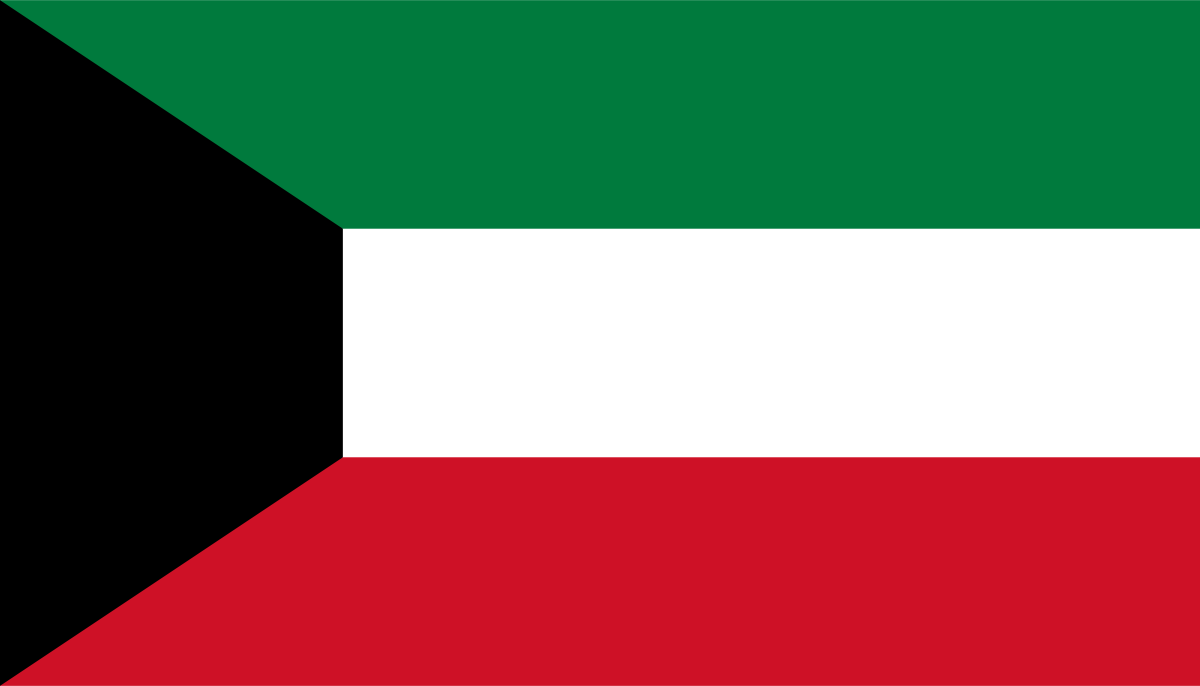
The official name of the country is the State of Kuwait. It covers an area of 17,818 km² (152nd largest in the world). The population is approximately 5,102,700 (as of the beginning of 2026).
Kuwaitis constitute the majority of the country's population, making up approximately 32% of the population; the remainder are migrant workers and their families. The majority of the country's population is Sunni Muslim (74.6%), Christians (18.2%), and the remaining 7.2%.
The official language of Kuwait is Arabic; Persian is widely spoken, and English is also used in business.
The official currency is the Kuwaiti dinar.
Kuwait City is the capital and largest city, as well as the country's political, scientific, cultural, and economic center. The central government bodies, various ministries and agencies, diplomatic missions, head offices and branches of national and foreign companies and banks, the Central Bank of Kuwait (1969), and the Kuwait Stock Exchange (established in 1962) are located here. The service sector includes administrative services, trade, banking and finance, healthcare, transportation and logistics services, restaurants and hotels, and tourism (including business). The majority of industrial enterprises are located in the industrial zone in Al Shuaiba.
Oil refineries, petrochemical plants, thermal power plants, and leading industrial manufacturing facilities are located here. Kuwait City is home to the largest port in the northwestern Persian Gulf.
Kuwait is divided into six governorates (muhafaza), which are further divided into districts.
Since ancient times, trade routes connecting Mesopotamia, India, and the Arabian Peninsula have passed through Kuwait. Archaeologists have found traces of ancient settlements and trade here.
Modern Kuwait began to take shape in the 18th century, when Arab tribes, including the Al Sabah family, migrated here. They founded the settlement of Kuwait and gradually developed it into a major seaport. Residents engaged in trade, fishing, shipbuilding, and pearl diving. Thanks to its convenient location, the city became an important trading center in the Persian Gulf.
In the 19th century, the influence of the Ottoman Empire increased, as did the interest of European powers in the region. To protect itself from possible annexation, the ruler of Kuwait entered into an agreement with Great Britain in 1899. After this, the country effectively became a British protectorate: Britain controlled the country's foreign policy and ensured its defense.
Until the early 20th century, Kuwait's economy depended primarily on maritime trade and pearl diving. However, following the advent of cultured pearls and the global economic crisis, the country fell on hard times. The situation changed dramatically in 1938, when large oil fields were discovered in Kuwait. After World War II, active oil production began, and state revenues grew rapidly.
In 1961, Kuwait gained independence from Great Britain. The country began actively developing its economy, building roads, schools, hospitals, and modern infrastructure. Thanks to oil revenues, the population's standard of living improved significantly.
In 1990, Iraq invaded the country, but an international coalition liberated it a year later. After the war, Kuwait rebuilt its economy and continued to develop. Today, it is one of the richest countries in the world thanks to its large oil reserves. The country combines modern technology with traditional Arab culture, and the ruling Al Sabah dynasty has held power for over two hundred years.
Kuwait is located on the northern edge of Eastern Arabia and borders Iraq to the north and Saudi Arabia to the south. The Persian Gulf borders the country to the east. The country also shares a maritime border with Iran. Much of its territory is covered by desert. Kuwait owns nine islands in the Persian Gulf: Bubiyan, Failaka, Warba, Qara', Umm Al-Maradim, Kubbar, Umm An-Naml, Miskan, and Awha.
Kuwait's culture is rooted in Arab traditions, Islam, and the culture of the Persian Gulf. Despite the country's modernity and wealth, Kuwaitis carefully preserve their customs and national identity.
Family is considered one of the most important values in Kuwait. Several generations often live together and maintain close relationships. Elders are respected, and the opinion of the head of the family plays a significant role.
Hospitality is highly valued. Guests are traditionally greeted with coffee, tea, dates, and refreshments. Refusing a treat can be considered impolite. A significant part of society is the diwaniya, a traditional gathering place for men to discuss news, politics, business, and family matters.
Islam has a strong influence on everyday life. The majority of residents are Muslim, so religious holidays and traditions are observed. During Ramadan, people fast during the day and gather for family dinner in the evening.
Kuwaitis generally value respect, politeness, and a calm demeanor. Maintaining dignity in society and avoiding open conflict are important. People strive to speak softly and respectfully, especially with elders. Kuwaitis are proud of their country, traditions, and history, but at the same time, the society is quite conservative.
Kuwait is a constitutional monarchy. The head of state is the Emir. He appoints the head of government, has the right to dissolve parliament, sign bills, and return them to the Majlis for revision. The Emir is also the Supreme Commander of the Kuwait Armed Forces and appoints key military positions, including commanders of all branches of the armed forces.
According to the constitution, the Emir enjoys legal immunity. Public criticism of the Emir is punishable by criminal penalties, both for ordinary citizens and for his relatives.
Furthermore, the Emir appoints the Crown Prince. However, his candidacy must be approved by members of the ruling family and confirmed by the National Assembly. If the National Assembly votes against the Emir's nominee, the Emir is required to submit three other candidates from the ruling family to the Assembly. The Assembly then selects one of them.
The Emir appoints the Prime Minister from among members of the ruling family. The prime minister, in turn, appoints government positions. All ministers are members of the National Assembly, and at least one minister is elected. Key ministries are headed by members of the ruling family.
Legislative power is vested in the emir and the unicameral National Assembly. Fifty members are elected by popular vote for a four-year term, and another 15 are appointed by the prime minister. Political parties are prohibited.
Kuwait is the oldest, but not the only, Gulf state with an elected legislature. The emir and head of the ruling family are also elected and confirmed, unlike the hereditary monarchies of neighboring countries.
Kuwait's economy is one of the richest and most oil-dependent in the world. The country is a member of OPEC and one of the world's largest oil exporters. Its oil reserves are estimated at approximately 100 billion barrels, making it one of the world's leading hydrocarbon reserves. The largest state-owned company is the Kuwait Petroleum Corporation. It controls oil production, refining, and export.
As of early 2026, Kuwait's nominal GDP is estimated at approximately $160–173 billion, with per capita GDP exceeding $30,000.
Despite its dependence on oil, the government is striving to gradually develop other sectors of the economy as part of the "Vision 2035" modernization and diversification program.
The petrochemical industry, including the production of plastics, chemical fertilizers, and fuel, is also actively developing.
Kuwait is an important financial center in the Persian Gulf. Major banks, investment funds, and insurance companies operate in the country. Of particular importance is the Kuwait Investment Authority, one of the world's oldest sovereign wealth funds. It manages hundreds of billions of dollars in assets and invests in real estate, stocks, technology, and international companies worldwide. Thanks to its oil revenues, Kuwait has accumulated vast financial reserves, which help support the economy even during periods of falling oil prices.
The country enjoys a favorable location on the Persian Gulf. Oil, construction materials, machinery, automobiles, and food products pass through its seaports.
Construction is one of the country's fastest-growing and most promising sectors of the economy. The service sector, including education, healthcare, tourism, trade, and communications, also plays a significant role.
Kuwait's primary export is crude oil, accounting for more than half of the country's total exports. Kuwait also exports petroleum products, natural gas, plastics, chemicals, and fertilizers. The largest buyers of Kuwaiti oil are China, India, Japan, South Korea, and several European countries. Most of the supplies go to Asian countries, where energy demand is particularly high.
Kuwait is heavily dependent on imports. Due to its hot climate and limited agricultural capacity, the country imports most of its food products. Automobiles, machinery, electronics, construction materials, medical equipment, clothing, and various industrial goods are also imported.
The main importing countries are China, the United States, Germany, India, Japan, and Saudi Arabia. Machinery, transport equipment, and electronics account for a particularly large share of imports.
Russia and Kuwait
Diplomatic relations between the two countries were established in 1963, shortly after Kuwait gained independence.
Economic cooperation between Russia and Kuwait is developing in several key areas: energy, investment, the oil industry, banking, and trade. Although trade volumes between the countries are still modest, both sides are interested in expanding economic ties.
One of the most important areas of cooperation is the oil industry. Russia and Kuwait cooperate under the OPEC+ agreement, jointly regulating oil production volumes to stabilize global energy prices. This cooperation is of great importance to the economies of both countries, as oil remains the main source of revenue.
On the Russian side, major energy companies such as Gazprom, Lukoil, and Rosneft are participating in the cooperation. They are interested in projects related to oil and gas production, petrochemicals, and energy technologies.
On the Kuwaiti side, the state-owned Kuwait Petroleum Corporation, which is responsible for oil production, refining, and export, plays a key role. The Kuwait Investment Authority is also an important participant in economic ties.
Russia and Kuwait have signed a number of agreements on trade and economic cooperation, investment protection, and the development of business contacts. Meetings of intergovernmental commissions, business forums, and negotiations between representatives of companies from the two countries are held regularly.
In recent years, the parties have discussed expanding cooperation in the following areas:
- energy and petrochemicals;
- investments;
- transportation and logistics;
- agriculture and food;
- high technology;
- banking;
- tourism and aviation.
As of early 2026, Russia and Kuwait continue to strengthen cooperation in energy policy and investment projects, although bilateral trade volumes remain relatively small.
Kuwait's business climate is characterized by high financial stability, significant government reserves, and a robust banking system.
A key feature of Kuwait's business climate is the significant role of the state in the economy. The public sector controls key areas of the country's development and remains the main source of employment for citizens. This ensures a high level of social stability, but also slows the pace of economic reform and the development of private business.
The country has free economic zones and foreign investment support programs. Foreign companies can participate in large government projects, particularly in construction and energy.
In recent years, the Kuwaiti authorities have been pursuing a policy of economic modernization under the "New Kuwait Vision 2035" program. Its goal is to reduce the country's dependence on oil revenues, increase the effectiveness of public administration, and improve the conditions for international business. The government is investing heavily in infrastructure development, digitalization, and administrative reforms.
A distinctive feature of Kuwait's business environment is the high importance of personal connections and business reputation. Respecting local traditions, observing business etiquette, and building long-term relationships with partners are essential for successful business. Kuwaiti society remains relatively conservative, and Islamic norms and family values have a significant influence on business culture.
The Kuwaiti government collaborates with the World Bank to address issues related to the country's business environment. Kuwait has been a member of the World Trade Organization since January 1, 1995, and a member of the General Agreement on Tariffs and Trade since May 3, 1963.
To attract foreign investment, Kuwait adopted a Foreign Direct Investment Law in 2013, allowing up to 100% foreign ownership in businesses for entities approved by the Kuwait Direct Investment Promotion Authority (KDIPA). In January 2024, Kuwait expanded its ability to accept foreign investment by reforming the law to allow foreign companies to open branches in Kuwait without a local agent. Foreign businesses can now establish a representative office and conduct business in Kuwait by opening a wholly owned branch, in addition to the existing options of incorporating a company with a majority shareholder from Kuwait or appointing a local agent.
Furthermore, foreign companies can now directly bid on government tenders and, if successful, execute/implement the contracts through their own branches in Kuwait. The National Assembly adopted this reform to encourage foreign companies to open branches in the country, hoping that increased competition will increase the availability of higher-quality products at competitive prices. In 2017, the Agreement on the Simplification of Investment Procedures for Development was signed. In 2016, the Ministry of Commerce and Industry (MOCI) opened the Kuwait Business Center (KBC) to streamline the issuance of commercial licenses and the establishment of limited liability companies and single-owner companies within three to five business days. KDIPA established a unit to streamline registration and licensing procedures for eligible foreign investors. Its goal is to approve licenses within 30 days of submitting a completed application.
Kuwait remains an attractive market for foreign investors due to:
- high income levels;
- major public infrastructure projects;
- a stable banking system;
- low public debt;
- large investment reserves.
The most promising sectors are considered to be:
- energy;
- petrochemicals;
- construction;
- logistics;
- finance;
- digital technology;
- medicine and education.
Kuwait operates several government and business structures that support business, attract foreign investment, and develop the economy.
- Kuwait Direct Investment Promotion Authority (KDIPA)
The government agency for the promotion of foreign direct investment. KDIPA is responsible for attracting international companies, registering foreign investors, and providing various business incentives. The organization helps foreign companies obtain licenses, provides legal advice, and supports investment projects.
- Kuwait Investment Authority (KIA)
The Kuwait Investment Authority. It is one of the largest sovereign wealth funds in the world, managing hundreds of billions of dollars in assets. KIA invests in international projects, real estate, infrastructure, financial markets, and major companies worldwide. The fund ensures the country's long-term financial stability and supports the government's economic strategy.
- Kuwait Chamber of Commerce and Industry (KCCI)
The Kuwait Chamber of Commerce and Industry represents business interests, organizes business forums, facilitates international contacts, and participates in discussions of economic reforms. Many negotiations between foreign investors and local companies are conducted through the chamber.
- Central Bank of Kuwait (CBK)
The Central Bank of Kuwait regulates the country's financial system, overseeing the banking sector, foreign exchange policy, and inflation. The Kuwait Authority for Partnership Projects (KAPP) plays a vital role in maintaining the stability of the national economy and the confidence of international investors.
- Kuwait Authority for Partnership Projects (KAPP)
This government agency is responsible for public-private partnership (PPP) projects. The organization attracts private and foreign companies to participate in major infrastructure projects, including the construction of roads, power plants, ports, energy facilities, and utilities.
- Public Authority for Industry (PAI)
The organization is involved in the development of industry and industrial zones. The PAI helps businesses obtain licenses, land plots, and support for industrial production.
- Kuwait National Fund for SME Development
State fund for supporting small and medium-sized businesses. It finances startups, assists young entrepreneurs, and provides consulting, soft loans, and training programs. The fund was created to stimulate the private sector and reduce the economy's dependence on the state.
- Ministry of Commerce and Industry
The Ministry of Commerce and Industry is responsible for company registration, trade regulation, business licensing, and competition protection. Many administrative procedures for local and foreign companies are handled through the ministry.
- Kuwait Ports Authority
The organization manages the country's seaports and plays a vital role in foreign trade and logistics. Kuwait's ports handle oil exports and the import of machinery, food, and industrial goods.
- Communication and Information Technology Regulatory Authority (CITRA)
The agency regulates telecommunications, internet services, and digital infrastructure. In recent years, CITRA has been actively involved in the digitalization of the economy and the development of the IT sector.
- Kuwait Banking Association
The Association unites the country's commercial banks and promotes the development of the financial sector, banking services, and public-private partnerships.
All these entities are involved in the implementation of the "New Kuwait Vision 2035" program, aimed at modernizing the economy, developing the private sector, and improving the country's investment climate.
23,447,148 ¥


It's very easy to contact us — on any page of the website there is a blue button at the bottom right that will help you send us your request. We always respond quickly!

