


10/15/26 The 2026 BRICS Summit
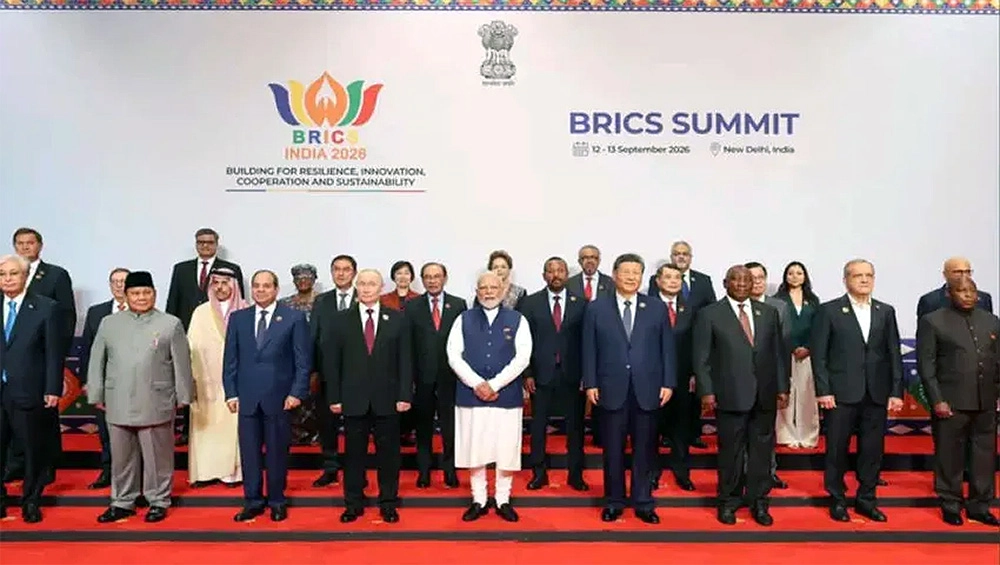
The 18th BRICS Summit in New Delhi on September 12-13, 2026 produced a substantial institutional and economic package under India’s theme, “Building for Resilience, Innovation, Cooperation and Sustainability.” The 11-member grouping unanimously adopted the New Delhi Declaration, a 45-page, 140-point document, after more than 400 meetings and engagements involving ministers, parliamentarians, agencies, officials, experts, businesses and civil society across 30 Indian cities during India’s chairmanship.
The practical result was more than 50 concrete outcomes, initiatives, networks, action plans and mechanisms. Their significance lies less in a single headline treaty than in the creation of interconnected infrastructure for trade, payments, supply chains, technology, finance and investment.
The economic starting point is already substantial. Intra-BRICS merchandise trade has risen from about US$84 billion in 2003 to nearly US$1.2 trillion in 2024. The expanded grouping represents roughly half of global population, about 40% of global GDP at purchasing-power parity and more than 25% of global trade. President Vladimir Putin separately told the Outreach/Plus meeting that BRICS accounted for 49% global GDP growth and about 25% of global exports.
The central economic question emerging from New Delhi is therefore no longer whether BRICS possesses scale, but whether that scale can be converted into lower transaction costs, faster payments, stronger supply chains, more investment and diversified trade and economic partnerships.
Tags:
 Telegram
 VK.com
 Facebook
 X (Twitter)
 LinkedIn
 REAB Services
Initial business valuation
Business analysis and audit (Due Diligence)
Business pre-sale preparation
Initial assessment of the business being purchased
Audit of the purchased business (Due Diligence)
Company Registration — General Provisions

 News
News
 Useful tip
Want to understand how to sell or buy a ready-made business? The REAB website has an informative collection of articles "Buying and Selling a Business".

