


How a foreigner can open a company in Slovakia
 Table of contents

Setting up a business in Slovakia is becoming an increasingly attractive solution for global entrepreneurs seeking to enter the EU market, take advantage of competitive tax rates, and operate in a stable, investor-friendly environment.
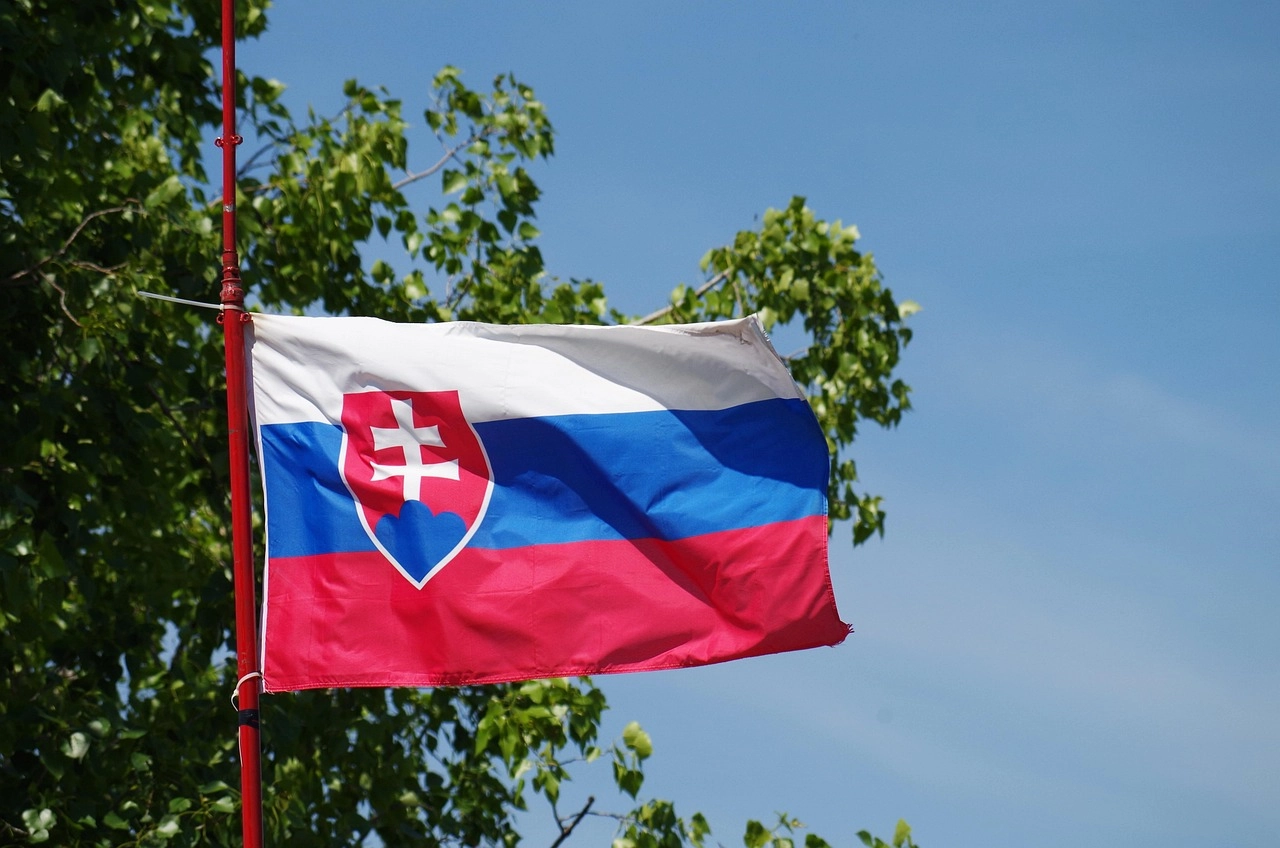
Citizens of any EU country and foreigners holding temporary or permanent residence permits are eligible to establish a company in Slovakia. Non-EU citizens wishing to conduct business in Slovakia typically apply for a residence permit for business purposes. You will need to provide Slovak immigration authorities with business-related documents (e.g., an extract from the Commercial Register, a business plan, and proof of authority). In practice, doing business in Slovakia is available to foreigners under the same conditions and to the same extent as for citizens.
The process is regulated by Act No. 513/1991 Coll. (Commercial Code) and the associated trade licensing regulations.
Most sectors of the Slovak economy are open to foreign investment, and there are no general prohibitions on foreign ownership in standard types of business. However, certain strategic sectors, such as defense or some telecommunications companies, may be subject to restrictions or regulatory oversight.
On the other hand, Slovakia offers incentives to foreign investors, particularly in priority areas such as advanced manufacturing, technology, renewable energy, and exports. These incentives may come in the form of government grants, tax breaks, or special economic zones, depending on the project and location.
It is also possible to register a company in Slovakia without being present in person, through a representative in the country.
Business Structures
- Sole Proprietor (živnostník)
If you need a simpler form of registration, you can operate as a sole proprietor with a trade license (Živnostenské oprávnenie).
- Public Joint-Stock Company (verejná obchodná spoločnosť, vos)
Two or more partners are required. There is no statutory minimum share capital. The founders guarantee the fulfillment of obligations with all their assets. Each partner may manage the company in accordance with agreed-upon rules; profits are divided equally.
- Limited Liability Partnership (komanditná spoločnosť, ks)
One or more limited partners (komanditisti) guarantee the amount of their outstanding deposit registered in the register (minimum 250 euros), while one or more general partners (komplementári) are liable for all assets. Only general partners may manage the company.
- Limited Liability Company (spoločnosť s ručením obmedzeným, sro)
The organization may have from 1 to 50 partners. Liability is limited to the amount of each partner's contribution. Minimum share capital: EUR 5,000; minimum individual contribution: EUR 750. Partners are entitled to a proportional share of the profits.
- Joint Stock Company (akciová spoločnosť, as)
Can be a private or public company; founded by one legal entity or at least two individuals. Minimum share capital: EUR 25,000. Shares represent shareholders' rights to participate in management.
- Simple Joint-Stock Company (jednoduchá spoločnosť na akcie, jsa)
A flexible form suitable for start-ups; can be founded by one or more persons. Minimum capital from €1 (with special solvency rules). Shares are generally recorded in book-entry form; corporate governance is simplified.
- Cooperative (družstvo)
A community with no limit on the number of participants; minimum 5 members (or at least 2 legal entities). The authorized capital is the sum of the membership fees, with a minimum of €1,250.
Step-by-Step Guide to Opening a Company
Step 1. Select and select a company name.
The name must be unique and not misleading. Check the Commercial Register (Obchodní register) to avoid confusion with existing trade names. Once registered under a specific name, you must conduct business under that name.
Step 2. Decide on the legal form of the company and the legal address.
Determine whether you are registering as an individual (sole proprietor with a trade license) or a legal entity (e.g., SRO), the number of directors/partners, and the amount of deposit/authorized capital in accordance with the chosen form. Depending on the chosen form, it is necessary to prepare the articles of association/founding documents, partnership agreements, declarations, and other documents reflecting the number of participants and the management structure.
You must have a legal address/registered office in Slovakia (non-residential premises, an apartment, or a house) based on ownership or lease.
Step 3. Notify the Trade Licensing Office and submit an application for a trade license (Živnostenské oprávnenie).
Contact the competent trade licensing authority (Živnostenský rad) for the place of business. Provide your personal information, company name, address, period of operation, representative in Slovakia (if you permanently reside abroad and need someone to receive notifications), criminal record information, and information required for tax and health insurance registration. Prepare the necessary incorporation documents.
Step 4. Obtain a trade permit (trade license).
After reviewing your application and confirming compliance, a trade license is usually issued within three days of receiving your request and documents. The document contains personal and business information, as well as the license's validity period (if limited). Upon request, the Statistical Office assigns an identification number in accordance with a special regulation.
Step 5. Register in the Commercial Register.
Data on sole proprietors and legal entities is stored in an information system; some of this information is publicly available. Submit your application electronically to the Commercial Register or to the Trade Licensing Office. Processing time is typically approximately 2 business days, after which the business can begin operations.
Step 6. Fulfill post-registration obligations.
Within 30 days of starting operations, register with the tax office and obtain a taxpayer identification number (TIN). If you have at least one employee, register them with the health and social security funds within 8 days of company incorporation.
The legal entity must also open a business bank account. Typically, you will need the company's incorporation documents, an extract from the commercial register, proof of address, identification documents of directors or beneficial owners, and proof of registered address. Some banks may require an in-person visit to complete the "know your customer" procedure.
Depending on the size and legal structure of the company, annual financial statements, statutory accounting, and possibly an audit may be required.
Important! The company's founders (members) must not have outstanding taxes or social security contributions to the Social Security Administration. The Registration Court may refuse to register a company if its founder is included in the list of debtors.
Required Documents
Always provide originals or certified copies with an official translation, if required.
For a sole proprietor:
- Identity document and proof of age (passport/ID card).
- Certificate of no criminal record (no relevant convictions) - recent extract.
- Proof of professional competence (if the activity is regulated: education/experience).
- The right to use the premises as a place of business (owned or leased); Landlord's consent, if applicable.
- Representative in Slovakia to receive notifications (if the founder permanently resides abroad)
- Completed application form for an individual (trade license/registration).
For a legal entity (e.g., SRO, AS):
- Identity documents of the founders/managing directors.
- Certificates of no criminal record (if required for legal representatives)
- Constituent documents (articles of association/memorandum, resolutions)
- Confirmation of registered legal address (ownership or lease; landlord's consent, if applicable).
- Confirmation of payment of contributions/authorized capital (in accordance with the chosen legal form)
- Confirmation of professional competence to carry out regulated activities (if any).
- Details of the company's representative in Slovakia (for serving notices if the founders reside abroad).
- Completed applications for registration of a legal entity (trade license and registration with the Trade register).
Taxation
When starting a business in Slovakia, understanding your local tax obligations is crucial to long-term success.
Corporate Income Tax
Standard rate: 21% of the taxable base in accordance with the Income Tax Act.
For companies whose income for the tax period does not exceed EUR 100,000, a reduced rate of 15% applies.
Value Added Tax (VAT)
The standard VAT rate in Slovakia is 20%, with a reduced rate of 10% applied for certain goods and services.
If your annual turnover (or taxable transactions) exceeds the local VAT registration threshold, you are required to register for VAT and regularly Submit VAT returns.
Wages and Social Security
If you hire employees, you are required to register with the Social Insurance Agency and local health insurance companies within 8 days of hiring.
Employers are responsible for social security contributions, health insurance contributions, and withholding taxes from wages.
Double Taxation and Treaties
Slovakia has an extensive network of double taxation agreements, which helps avoid or reduce taxation on cross-border income.
Tax residency is determined according to local rules, and foreign-owned companies need to consider permanent establishment, cross-border withholding, and transfer pricing issues.
Buy a shelf company in Slovakia or set up a new one?
Choosing between buying a shelf company The choice of buying a company in Slovakia (a typical company) and registering a new one depends on your goals and timeline. There are numerous businesses for sale in various sectors and at varying prices. Transactions are completed through a simple process, and you can become the owner of a Slovak company in just a few days. One of the advantages of buying an existing company is that most of the processes are already in place, it has a client and partner base, as well as a reputation and market position.
However, an established brand implies an existing audience and legacy processes that the new owner will have to work with. By establishing a new company in Slovakia, you can develop optimal workflows from scratch and align the brand with your strategy. To make the right decision, determine your priorities: buying a business in Slovakia and restructuring its operations or creating your own system, which may take longer.
You should also evaluate costs and compare the price of a ready-made business with the costs of company registration (fees, authorized capital), purchasing equipment and goods, marketing, and other tasks already completed in the existing organization. Depending on the niche, the difference in overall costs can be significant. You can also consider relocating the business or opening a branch in Slovakia.
Before purchasing, conduct legal and financial due diligence: check entries in the Commercial Register (Obchodný register) and the Trade Register (Živnostenský register), and obtain confirmation from the seller that there are no outstanding taxes, social security contributions, or health insurance.

 Telegram
 VK.com
 Facebook
 X (Twitter)
 LinkedIn
 Other topics:
 REAB Services
Initial business valuation
Business analysis and audit (Due Diligence)
Business pre-sale preparation
Initial assessment of the business being purchased
Audit of the purchased business (Due Diligence)
Company Registration — General Provisions

 News
News
 Useful tip
Interested in an ad in the catalog? To avoid losing it and easily find it in the future, add it to "Favorites". To do this, click the heart icon in the upper right corner of the card or ad page.

