


Investment climate of Turkmenistan
 Table of contents

Turkmenistan is one of the countries with an actively developing, investment-industrial, and fairly open economy.
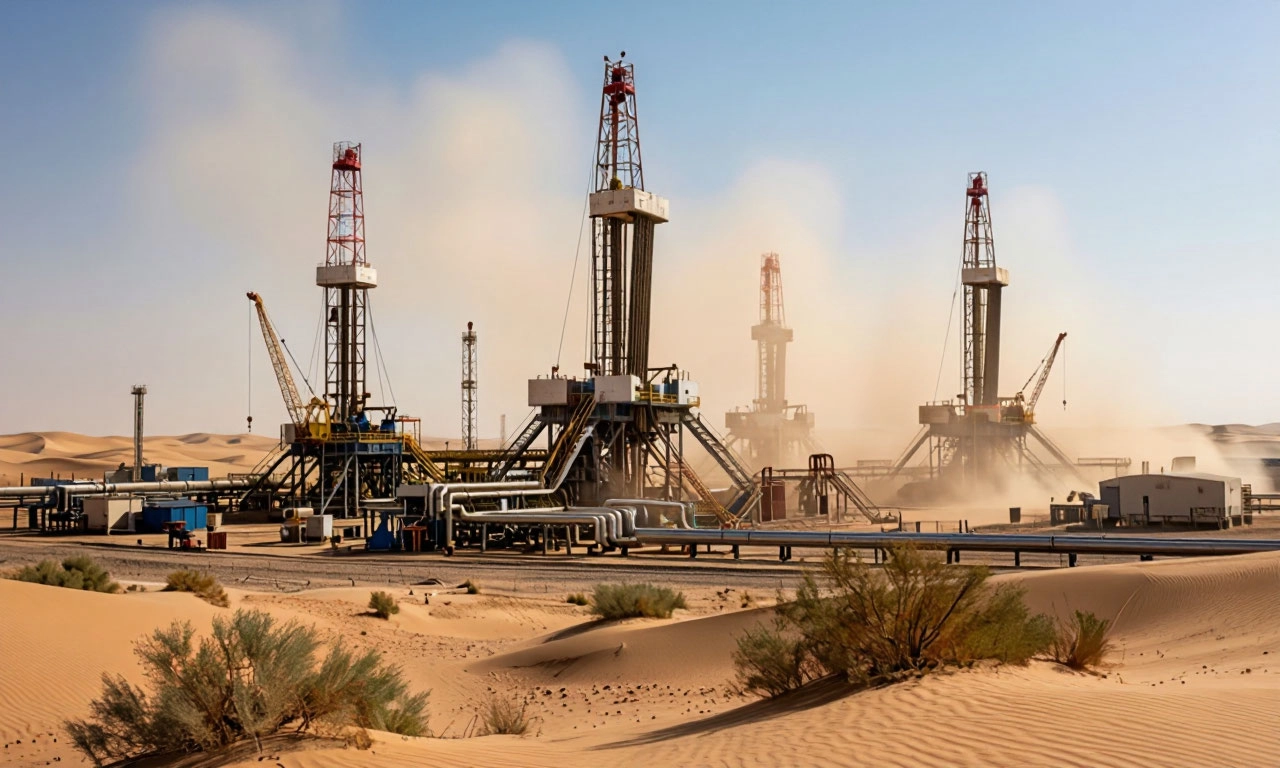
Turkmenistan's investment policy is aimed at attracting capital investment and channeling it into innovation, high-tech manufacturing, job creation, and human capital development, as well as areas designed to ensure the country's environmental and socioeconomic security.
Why Turkmenistan
Turkmenistan's economic diversification strategy aims to reduce dependence on natural gas exports through the development of the processing industry, transport and logistics potential, and digitalization. Key areas in this direction include gas chemicals and petrochemicals, transport and logistics, and the textile industry.
The government is shifting its focus from raw material exports to the production of high-value-added goods. Turkmenistan has significantly increased its capacity to produce urea, ammonia, and potash fertilizers (plants in Mary, Garabogaz, and Garlyk). In addition, polyethylene and polypropylene production facilities are operating in Kiyanly, as well as a gas-to-gasoline plant in Ovadandepe. This industry will help increase Turkmenistan's export potential to global fertilizer markets.
Turkmenistan also enjoys a strategically important geographic location, located at the crossroads of Europe and Central Asia. This allows the country to effectively utilize its transportation resources to facilitate Eurasian connections, reviving the concept of the Great Silk Road. The Turkmenbashi seaport is considered the gateway to the Caspian Sea, facilitating cargo transit between Europe and Asia. Furthermore, Turkmenistan is participating in the construction of the Kazakhstan-Turkmenistan-Iran and Turkmenistan-Afghanistan-Pakistan highways, which could increase trade turnover between these countries and strengthen the country's strategic position in the region as a transportation hub.
Turkmenistan is also expanding its textile production capacity, made possible by its vast cotton reserves. Over 80% of textile products are exported to the US, China, the EU, and Turkey.
In 2026, Turkmenistan continued its active economic diversification and reduced dependence on energy sales, thereby expanding local production capabilities and the range of services it offers. Thus, diversification will facilitate the development of small and medium-sized businesses and expand the scope for attracting foreign investment.
In February 2026, President Serdar Berdimuhamedov signed a decree approving the investment and development strategy for the current year. He identified the green economy, digital technologies, import substitution, and support for small and medium-sized businesses as priorities.
Investment Legislation of Turkmenistan
In 2026, investment legislation in Turkmenistan continues to evolve toward attracting foreign capital while maintaining a significant role for the state in regulating the economy. The legal framework for investment activity is based on the 2008 Law of Turkmenistan "On Foreign Investments" and subsequent amendments, the Law "On Investment Activity in Turkmenistan," as well as civil, tax, and customs legislation.
The key regulatory act is the Law "On Foreign Investments," which defines the legal status of foreign investors, the forms of investment, and state guarantees for their protection. The law enshrines the principle of national treatment for foreign investors, stipulating that their operating conditions cannot be less favorable than those of domestic economic entities. Foreign investment is permitted in the form of cash, securities, property rights, intellectual property, technology, and other assets with monetary value.
Turkmenistan's legislation allows for the establishment of enterprises with 100% foreign capital, joint ventures, and branches of foreign companies. At the same time, the state retains control over strategic sectors of the economy, primarily in the oil and gas industry, energy, transportation, and telecommunications. Access by foreign investors to certain sectors requires approval from the Cabinet of Ministers of Turkmenistan and relevant government agencies.
Investment Incentives
One of the key areas of Turkmenistan's state economic policy is attracting foreign investment through the provision of various legal, tax, and administrative incentives. The country's legislation provides a number of mechanisms to support foreign investors, particularly in strategically important sectors of the economy.
The main investment incentives are enshrined in the Law of Turkmenistan "On Foreign Investments," the Law "On Investment Activity," tax legislation, and regulations governing the activities of special economic zones (SEZs). State policy is focused on attracting capital to the oil and gas industry, transport and logistics infrastructure, the chemical industry, agriculture, construction, and the digital economy.
Tax incentives are among the most significant incentives. Tax holidays, exemptions from partial customs duties, and preferential terms for the import of equipment, technology, and raw materials may be granted for certain investment projects. In some cases, foreign companies are exempt from licensing for export-import operations if their activities are carried out within special economic zones or priority state projects.
Special economic zones (SEZs) are an important tool for stimulating investment. Turkmen legislation provides for the creation of territories with a special legal regime, where investors are granted simplified administrative procedures, preferential tax treatment, access to infrastructure, and special land lease terms. These zones are primarily focused on the development of industrial production, exports, and import substitution. According to international experts, the development of SEZs is viewed by the state as one of the mechanisms for integrating Turkmenistan into global production chains.
An additional incentive is the provision of state guarantees for investment protection. Foreign investors are guaranteed protection from nationalization and requisition of property, except in cases expressly provided for by law and accompanied by compensation. The law also enshrines the right to freely transfer profits, dividends, and other income abroad after fulfilling tax obligations.
In 2025–2026, Turkmen government agencies will intensify efforts to develop investment cooperation with foreign partners. Significant attention is being paid to international investment forums and public-private partnership mechanisms.
The state is paying special attention to the development of the digital economy. In early 2026, Turkmenistan legalized cryptocurrency exchanges and mining, subject to mandatory state licensing and oversight by the Central Bank. These measures are seen as an attempt to diversify the economy and attract investment in the high-tech and financial innovation sectors.
Key Sectors for Investment
Oil and Gas
Turkmenistan is rich in oil and, especially, gas resources. According to official data, Turkmenistan's resource base is approximately 71.64 billion tons of oil equivalent, including 53 billion tons located onshore and 18.21 billion tons in the Caspian Sea. The country consumes half of its oil production domestically, and exports the rest via the Caspian Sea to global markets.
Opportunities
Exploration and development of oil and gas fields, particularly Galkynysh (formerly South Yoloten), Osman, Minara, Tagtabazar-I, offshore blocks of the Caspian Sea, and primarily the Dostluk field, as well as a group of fields in the Central Karakum Desert. Construction of a trans-Caspian interregional pipeline or conductor, as well as gas purification and processing facilities at the aforementioned fields, is possible. Opportunities also exist for suppliers of gas-to-liquids (GTL) technology, as Turkmenistan is currently expanding its production capacity in this sector.
Oil and Gas Refining
Turkmenistan has two oil refineries: Turkmenbashi and Seydi. The Turkmenbashi refinery has a capacity of over 10 million tons per year. The refinery produces a wide range of products, including unleaded gasoline, petroleum coke, road bitumen, washing powder, hydrotreated diesel fuel, and lubricating oils, exporting them to Russia, China, Iran, Afghanistan, Turkey, Pakistan, Tajikistan, and Japan. The government is interested in attracting foreign investment to build plants for the production of finished petroleum-based products, such as detergents and tires.
Turkmenistan has invested $900 million in a number of projects aimed at increasing the country's oil refining capacity by 95% by 2030. These projects include the construction of a coking (carbonization) and deasphalting unit with an annual capacity of 900,000 and 500,000 tons, respectively. The government has also built a bitumen plant with an annual capacity of 38,000 tons, a polypropylene film plant, and an oil refinery with an annual capacity of 3 billion tons. Turkmenistan has commissioned a feasibility study for the construction of a new oil refinery in its Balkan region.
The government aims to diversify production and establish natural gas processing facilities for the production of polyethylene, polyvinyl chloride, methanol, formaldehyde, resins, synthetic rubber, and paints and varnishes.
Additional synthetic rubber plants are also planned for construction in the coming years.
Opportunities
Gas-to-liquid (GTL) technology – the Ovadandepe GTL plant (2019) was built jointly by Haldor Topsoe (Denmark), Kawasaki (Japan), and Rönesans (Turkey), demonstrating Turkmenistan's partnership with international companies in the field of advanced GTL technologies. Given the government's ambition to build a second GTL plant (~600,000 tonnes of gasoline equivalent per year), global expertise is essential in design, catalysts, plant integration, and environmental compliance. Opportunities for foreign companies include technology licensing (Fischer-Tropsch processes, TIGAS), engineering, procurement, and construction (EPC) contracts, and long-term fuel supply agreements.
The Kiyanly Petrochemical and Polymer Complex (2018, $3.4 billion) was built by Hyundai Engineering, LG International, and TOYO Engineering. The petrochemical industry is a strategic priority for export diversification beyond raw hydrocarbons. The government is focusing on new products: PVC, methanol, rubber, resins, and paints and varnishes. Prospects for foreign companies in this sector include technological partnerships in the production of polymers and specialty chemicals, joint ventures to build export-oriented complexes, and the supply of modular petrochemical units.
Oil refining modernization. The Turkmenbashi Oil Refinery (TsOR) and the Seydiysky Oil Refinery are being modernized with coking, deasphalting, hydrocracking, and hydrogen production units. Given the government's plans to nearly double oil refining capacity by 2030 (the new Okarem refinery will have a capacity of 3-5 million tons per year), foreign investment is essential. Promising areas include engineering, procurement, and construction (EPC) and equipment supply for cracking, hydrotreating, and hydrogen production units, software/process optimization, and environmental and safety technologies (sulfur reduction, compliance with Euro 5/6 fuel standards).
Specialty chemicals and bitumen. Expanding the product range to include polypropylene films, detergents, lubricants, and bitumen. Promising areas include modular chemical plants, technical licensing of specialized materials, export logistics, and marketing support.
Utilization and export of liquefied petroleum gas (LPG). Annual LPG production is approximately 300,000 tons, exported to Afghanistan, Pakistan, and South Asia, with potential for expansion of utilization facilities at oil refineries. Promising areas include small-scale LPG utilization technologies, storage and transportation solutions, and distribution partnerships in regional markets.
Chemical Industry
Turkmenistan has nine chemical plants producing nitrogen and phosphorus fertilizers (700,000 tons per year), sulfuric and nitric acids, iodine, bromine, and mineral salts. In 2014, a urea plant with a capacity of 640,000 tons per year and an ammonia plant with a capacity of 400,000 tons per year were commissioned in the southeastern city of Mary.
The government plans to increase fertilizer production to approximately 5,000,000 tons per year, of which 1,400,000 tons will be potash fertilizers. In March 2017, a large potash fertilizer plant with a capacity of 1,400,000 tons per year was opened in the village of Garlyk in the Lebap region. Turkmenistan also plans to increase iodine production from 500 to 1,515 tons per year by 2030.
In September 2018, a $1.5 billion urea fertilizer plant opened on the Caspian Sea coast in Garabogaz, Balkan Region. Built by the Turkish company Gap Insaat and the Japanese Mitsubishi Corporation, the plant has a capacity to produce 1.1 million tons of urea per year, using approximately 1 billion cubic meters of natural gas as feedstock. The government also announced plans to establish joint ventures with foreign companies to produce various chemical products using local raw materials. In February 2018, Turkmenistan opened a sheet glass plant in Ovadandepe, Ahal Region.
Opportunities
Construction of urea and ammonia plants; utilization of sulfur obtained during natural gas production; and construction of iodine and bromine plants. Construction of new industrial facilities for the production and export of products such as caustic soda, chlorine and its derivatives, potash fertilizers, high-quality glass, and basalt fiber insulation composites. Construction of a new synthetic fuel plant will require the involvement of foreign licensors for catalysts and synthetic fuel production processes, engineering, procurement, and construction (EPC) contractors, and financing.
Transport
Turkmenistan is undertaking large-scale reforms to improve infrastructure in the road, rail, maritime, and air sectors, although much of the transport infrastructure, particularly roads, remains underdeveloped. The 2008 Commercial Maritime Code regulates commercial shipping and covers cargo transportation, the carriage of passengers and their baggage to foreign ports, emergency operations, and accidents involving other vessels. It also includes provisions on crew certification, state registration of vessels and vessel ownership, maritime traffic management systems, maintenance of sea lanes, and environmental protection.
Turkmenistan Airlines (TurkmenHowaYollary or THY) is a state-owned airline with a fleet of Boeing passenger aircraft. According to Turkmenistan's National Civil Aviation Development Program for 2012-2030, the number of new aircraft in Turkmenistan Airlines' commercial fleet will increase from 20 to 39. In recent years, the government has built new airports in Turkmenbashi, Balkanabat, Mary, Turkmenabat, and Kerki, as well as new runways at Ashgabat and Dashoguz airports. Extensive reforms are underway to improve infrastructure in road, rail, maritime, and air transport.
Road modernization is urgently needed in many parts of the country, including connections between major cities such as Dashoguz, which are virtually impossible to reach by car.
The Uzen-Gyzylgaya-Bereket-Etrek-Gorgan international railway, also known as the North-South Railway (NSR) or the Kazakhstan-Turkmenistan-Iran Railway, opened in 2014. The Northern Railway connects the Kazakh and Iranian railway systems via Turkmenistan, with a hub in Bereket, which connects to Turkmenistan's main east-west highway. The railway is expected to carry 10 million tons of freight annually. In November 2016, the presidents of Turkmenistan and Afghanistan inaugurated a single-track railway connecting Kerki (Turkmenistan) with Akina (Afghanistan), and in February 2018, a railway line from Serhetabat (Turkmenistan) to Toragundi (Afghanistan) was inaugurated.
In May 2018, Turkmenistan completed the expansion of the international seaport in Turkmenbashi on the Caspian Sea. The new port includes ferry, passenger, and container terminals, as well as ship repair facilities. These new services are intended to increase cargo turnover in the region. The new port has a total annual throughput of 17 million tons of dry cargo, 300,000 passengers, and 75,000 vehicles.
Opportunities
Opportunities in the area of railway electrification (Ashgabat-Turkmenabat line, priority corridor) include the supply of rolling stock and locomotives (diesel-electric, electric locomotives, and railcars), the modernization of signaling and control systems (digital rail traffic management), and the creation of transit hubs and dry ports near the borders with Kazakhstan, Iran, and Afghanistan.
Opportunities in the area of maritime transportation (Caspian Sea) include the expansion of the port of Turkmenbashi (increasing container handling capacity), fleet modernization (ferries, bulk carriers, and Ro-Ro vessels for Caspian trade), logistics concessions (container yard management, warehousing, cargo terminals), and initiatives to create "green" ports (integration of renewable energy sources, digital port management). Opportunities in the air transport and airport sectors include the modernization of regional airports in Mary, Turkmenabat, and Dashoguz (runways and terminals); air cargo development (refrigerated warehouses, express logistics, bonded warehouses); maintenance, repair, and overhaul (MRO) services for the Boeing/Airbus fleet; and airline partnerships (codesharing, ground handling, and catering).
Opportunities in the road transport and highways sector include public-private partnerships (PPPs) in highway construction and toll road management; intelligent road systems (traffic monitoring, weigh stations, electronic toll collection systems); fleet modernization (eco-friendly buses, electric trucks, fuel-efficient vehicles); and roadside services (rest areas, logistics parks, and repair stations).
Opportunities in logistics and transit services: free economic zones and logistics hubs near the Turkmenbashi seaport and border crossings, customs digitalization and e-logistics platforms – software, automation, AI, cold chain logistics for pharmaceutical and agricultural products, warehousing, 3PL, and last-mile delivery services.

 Telegram
 VK.com
 Facebook
 X (Twitter)
 LinkedIn
 Other topics:
 REAB Services
Initial business valuation
Business analysis and audit (Due Diligence)
Business pre-sale preparation
Initial assessment of the business being purchased
Audit of the purchased business (Due Diligence)
Company Registration — General Provisions

 News
News
 Useful tip
If you're planning to buy or sell a business in any country, enter its market, do not forget to visit the section “Countries” — here we have collected overview materials about the countries participating in our Catalog.

