


Investment opportunities in Tunisia (Part 2)
 Table of contents

The Tunisian government has made efforts to improve the business climate and attract foreign direct investment.
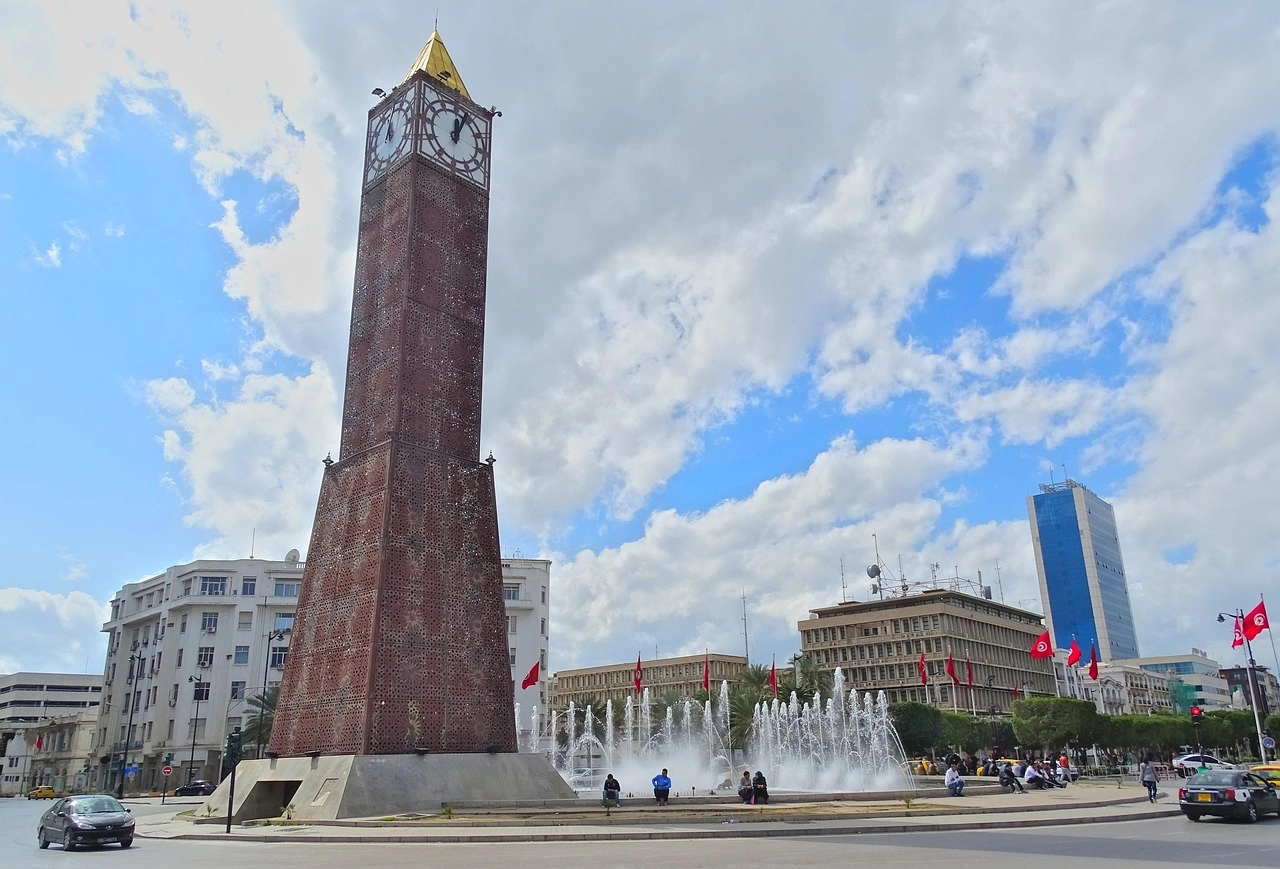
The government prioritizes attracting and retaining investment, particularly in underdeveloped inland regions, and reducing unemployment by providing tax incentives, subsidizing social security contributions for new employees, and offering investment bonuses.
There are currently more than 3,860 foreign companies operating in Tunisia, and the government has historically encouraged export-oriented foreign direct investment in key sectors such as call centers, electronics, aerospace and aeronautics, automotive parts, textiles and clothing, leather and footwear, agri-food, and other light manufacturing.
Sectors for Investment
Electricity Systems and Renewable Energy
Tunisia's energy sector is well developed, with almost the entire population having access to the national electricity grid. Tunisia currently has an installed electricity generation capacity of 5,944 megawatts (MW) across 25 power plants, which produced 19,520 gigawatt-hours in 2022. The state-owned Electricity Supply Company (STEG) controls 92.1% of the country's installed electricity generation capacity and produces 83.5% of its electricity. The rest is imported from Algeria and Libya, and is also produced by Tunisia's only independent power producer (IPP), Carthage Power Company (CPC), a 471 MW combined-cycle power plant. The CPC plant was officially handed over to STEG in May 2022, ending a 20-year power purchase agreement between the two companies. As a result of delays in the construction of the plant, the power sector does not have excess generation capacity and is susceptible to power outages. STEG struggles to meet peak summer electricity demand, let alone keep up with Tunisia’s 5% annual growth in electricity consumption.
About 97% of Tunisia’s electricity comes from fossil fuels, mostly natural gas. As of 2024, nearly 47% of Tunisia’s natural gas needs were met through imports (mostly from Algeria). Local gas production comes from concessions held by the country’s national exploration company, ETAP, as well as concessions held by foreign companies. The long-awaited Nawara gas field, which finally began production in early 2020, is expected to help reduce the overall energy deficit by 20% and gas imports by 30% once production peaks. In addition to local gas production, Tunisia receives natural gas as a royalty through the Algerian Transmed pipeline, which crosses Tunisia to Italy.
The 2015 Parliamentary Energy Law encourages independent power producers in renewable energy technologies. The decrees implementing the law and the template of the Power Purchase Agreement were published in early 2017.
The first IPPs in the field of renewable energy were announced in the second half of 2017, and so far the Tunisian government has awarded 24 solar projects of 10 MW each, 2 solar projects of 50 MW each, 2 solar projects of 100 MW each, 1 solar project of 200 MW each and 4 wind projects of 30 MW each to private companies. Most projects have not yet started generating electricity.
To meet growing electricity demand and promote energy conservation, the Tunisian government allows private companies and households using cogeneration and renewable energy technologies to produce electricity for their own consumption and sell up to 30% of their surplus electricity exclusively to STEG at a fixed price. The government provides grants and incentives for energy conservation and efficiency projects. In July 2021, the government announced the abolition of the pre-authorization requirement for private self-generation of electricity from renewable energy sources of less than 1 MW.
Leading subsectors
Renewable energy
While hydrocarbon-based generation will continue to dominate Tunisia’s overall energy picture in the near term, wind and solar power have significant growth potential. The country's government is keen to diversify into renewable energy technologies to help meet growing domestic demand for electricity.
The Renewable Energy Law, passed in 2015, encourages private businesses to produce and use clean energy. In May 2019, parliament passed a bill to improve the business climate, allowing businesses to create separate specialized companies entirely dedicated to electricity production. This policy change allows companies to produce electricity for their own consumption at more competitive prices.
The Tunisian government aims to increase the use of renewable energy to 35% of total capacity by 2030.
Green Hydrogen
Tunisia’s abundant solar and wind resources, as well as its proximity to Europe (which has an increased need for new and clean energy sources), make it a very attractive location for green hydrogen production. The existing Transmed gas pipeline connecting Algeria to Italy via Tunisia is an important asset for investors considering exports to Europe. The Tunisian government is also working to create a new legal framework to promote the production and use of green hydrogen and its derivatives on the local market.
Power Generation
STEG has been actively launching power projects over the past 10 years, some of which use General Electric (GE) combined cycle technology. Two tenders for gas-fired power plants, launched in 2014, were won in 2017 and 2018, and launched in 2019 and 2022. Tunisia is expected to continue launching tenders for gas-fired power plants over the next five years.
Opportunities
There are excellent commercial opportunities for the sale of power generation equipment to STEG and IPP projects. The sector also offers opportunities for Build-Own-Operate (BOO) or Build-Operate-Transfer (BOT) projects. Most of Tunisia's electricity is generated by gas turbines. The main players in this sector are General Electric (USA), Mitsubishi (Japan), Ansaldo (Italy) and Siemens (Germany).
In 2019, STEG launched a tender for the installation of a pilot smart power distribution system of 400,000 smart meters. The project was awarded in April 2022 to several foreign bidders, with an implementation phase in 2023-2025.
The Tunisian government is expected to issue a tender shortly for the construction of at least one combined cycle power plant with a capacity of 470-550 MW in Skhir (southern Tunisia) as an independent power plant (IPP).
In May 2018, the Ministry of Energy and Mines issued a call for private projects to build renewable power plants with a total capacity of 1,000 MW (500 MW wind and 500 MW solar). While the wind projects are still in the prequalification stage, the Turkish government awarded all 500 MW of solar projects to three private developers in 2019.
In January 2023, the Energy Ministry announced three new tenders for the development of solar and wind energy projects for 2023-2025, with a total capacity of up to 1,700 MW. These tenders include 10 photovoltaic power plants, eight of 100 MW each and two of 150 MW each, and eight wind farms of 75 MW each. The government plans to continue holding tenders after 2025, with the goal of reaching a total renewable energy generation capacity of 3.5 gigawatts by 2030. One-third of the projects will be wind farms, and two-thirds will be solar photovoltaics.
Tunisia’s national grid is connected to the grids of Algeria and Libya. Moreover, in August 2023, the Tunisian-Italy submarine connection project, called ELMED, was approved by the European Commission for $337 million in funding. The project, which has an estimated cost of $932 million, consists of the construction of a 600 MW high-voltage direct current (HVDC) cable that will link the grids of Tunisia and Italy and enable bidirectional power flow between Africa and Europe via a 124-mile submarine cable.
The ELMED project has also received $268.4 million in funding from the World Bank, specifically for the construction of an alternating current (AC)/direct current (DC) converter station in the Cap Bon region, in addition to the construction of other interconnector transmission lines. The construction work is expected to be completed in 2028. Once completed, the project will help expand Europe's access to renewable energy sources.
Agricultural sectors
Tunisia is a net importer of agricultural products. Compared to other North African countries, agriculture plays a relatively modest role in the Tunisian economy, accounting for 15% of the country's labor force and 12% of the country's GDP, while growing at around 2% annually. While large-scale agricultural enterprises are becoming increasingly visible, the sector remains politically sensitive and tightly regulated.
For historical and geographical reasons, the European Union exerts strong influence on Tunisia's agricultural policy. Tunisia also retains significant market control along the agricultural value chain, which to some extent limits opportunities for growth and investment. State-owned land may be leased from the government to private farmers or managed directly by the Ministry of Agriculture. Foreigners cannot own agricultural land, but they can obtain long-term leases.
Leading Subsectors
Food Processing Sector
In 2022, the food processing sector had about 1,200 enterprises, each employing 10 or more people. About 20% of these companies produce for export only. The value of the sector is about $12 billion per year and is growing steadily due to changes in eating habits towards processed foods over fresh ones. The food processing sector's demand for imported high-quality ingredients has steadily increased, with more sophisticated products being licensed by multinational food companies. Cereals and grain products, oilseeds, vegetable oils and sugar derivatives account for an average of 90% of Tunisia’s food imports.
Food retail sector
The modern retail sector has experienced profound development over the past decade, fueled by the expansion of modern distribution outlets and supermarkets through joint ventures with foreign investors. These were mainly with France. However, the sector has lost market share to boutique retail and family-run grocery stores due to the temporary closure of shopping malls and hypermarkets related to the pandemic. The restrictions on movement related to the pandemic have also spurred the growth of online grocery shopping.
Foodservice sector
In addition to domestic customers, this sector serves the many tourists who visit Tunisia every year. Most hotels and restaurants either purchase food through annual tenders or through the same distribution channels used by households. High-end hotels import spirits, wines and specialty cheeses either directly or through import companies.
Opportunities
The most significant market opportunities exist for products and services that support local agriculture and agro-processing, including soybeans and crude vegetable oil, feed grains and additives, modified starches, enzymes, genetics, grain silos, elevators, tractors, combines, irrigation systems, pesticides and food processing/bottling equipment.
The Tunisian government offers tax incentives of up to 50% under the 2016 Investment Law to encourage the acquisition of agricultural equipment. Consumer goods with the best prospects in the Tunisian market include nuts, dried fruits, condiments and sauces, dairy products, cookies and crackers, chocolate and cocoa, and alcoholic and non-alcoholic beverages.
Construction, Architecture and Engineering Services
Tunisia’s 2016-2020 Development Plan, announced to international investors and donors at an investment conference in Tunis in November 2016, included calls for the development of Tunisia’s infrastructure, particularly in the western and south-central regions of the country. Following the conference, the Tunisian government announced the signing of approximately US$6.5 billion in committed financing for many major infrastructure projects and US$8.5 billion in additional commitments. Moreover, in September 2018, Tunisia presented investors with a list of 33 public-private partnership (PPP) projects, which included major construction projects in 4 sectors: 1) transport and logistics; 2) energy, water and environment; 3) infrastructure and urban development; and 4) science and technology. Since then, only a few projects have been implemented.
Foreign suppliers of heavy equipment and technology may find potential demand in hospital, highway, port terminal and bridge construction projects undertaken by Tunisian or foreign contractors. Partnerships with Tunisian enterprises are vital to increase participation in this sector.
Opportunities
Companies could participate in major infrastructure projects through the provision of engineering services, design, heavy equipment, new technologies, highly specialized construction materials and safety systems. Italian and Turkish companies are already closely associated with Tunisian construction firms. Likewise, major Chinese firms have expressed interest in PPP opportunities in Tunisia.
Major transport system construction projects and funding sources were announced in 2016. These include a 188-km toll motorway that will link the capital of Tunis with the cities of Kairouan, Sidi Bouzid, Kasserine and Gafsa (the tender for the Tunis-Kairouan section was launched in 2021). The project received $520 million in funding from the Arab Fund for Economic and Social Development and the European Investment Bank.
The modernization of the 239-km railway between Tunis and the city of Kasserine received $112 million in funding from the European Bank for Reconstruction and Development, and the 2.7-km suspension bridge in the city of Bizerte received $260 million in funding from the European Investment Bank and the African Development Bank. The tender for the bridge project was launched in 2022 and awarded in 2023.
Construction of two general hospitals in Beja and Gabes, an oncology hospital in Tunis, a children's hospital in Manouba and eight other regional hospitals began in 2023 after receiving financing from the Islamic Development Bank, the Kuwait Fund for Arab Economic Development and the Saudi Fund for Development. Tunisian companies are managing the construction of the project. Some foreign-made heavy equipment is planned to be used.
One of Tunisia's largest recent development projects is the deep-water port in Enfidha (central Tunisia). The pre-revolutionary government allocated an area of 3,000 hectares as a future industrial zone and hoped to transform the region into an international logistics transport hub served by Tunisia's road and rail systems. Initial feasibility studies have been conducted to develop the port as part of a project costing more than US$1 billion to achieve a total capacity of 4.3 million twenty-foot equivalent units (TEUs) per year. The first phase of the project was expected to be completed by 2024 with an initial capacity of 1 million TEUs. However, delays in the tender are likely to result in a later completion date. The port site itself will require extensive dredging, and its location on wetlands may require intervention by the Ministry of Environment.
Tunisia’s Ports Authority (Office de la Marine Marchande et des Ports, or OMMP) also plans to expand the capacity of the country’s main commercial port in Rades, as well as add an adjacent logistics area. There are also plans to create a dedicated container terminal, build two new berths at the port and invest in improving port management.
After years of delays, Gulf Financial House (GFH) has confirmed that it still plans to build the Tunis Financial Harbour project in the northern suburbs of Tunis. In 2014, GFH and GOT signed an agreement allowing GFH to begin construction. Once completed, it will be North Africa’s first “offshore” financial centre. The project, which has been renamed the Tunis Bay project, is set to include business and banking services, a takaful (a form of insurance that complies with the principles of Islamic law) insurance centre, a business school and residential facilities. Construction began in 2017 in partnership with the Franco-Tunisian real estate and tourism company Alliance Group. The first phase of the project, called Tunis Bay Golf Residence, which includes a golf course and several residences, was completed in July 2021. The second phase includes more residential units and a 100,000 square meter shopping mall and is scheduled for completion in late 2024.
In March 2022, the Emirati Bukhatir Group announced the resumption of its $5 billion Tunis Sport City project in the northern suburbs of Tunis, originally planned for 2008 and delayed due to financial and political constraints. The project will be implemented in three phases: the first is due to be completed by 2026 and includes the construction of a golf course, four sports training academies and a residential area. The second phase will be a business district with expected completion by 2028. The third phase will include six hotels and a shopping mall, among other projects, and is expected to be completed by 2031.
Aircraft, airport ground support and aeronautics
There are six Tunisian airlines operating in the country: two state-owned and four private. Tunisair, the country's national carrier and the main carrier serving Tunisia's international markets, remains heavily subsidized by the country's government. As of 2024, Tunisair operates 29 aircraft, 11 of which are leased long-term. In May 2022, Tunisair's CEO presented a rescue plan for the airline aimed at reducing costs and helping the company meet international standards. The plan included a strategy to grow the fleet by leasing new aircraft, improving profitability, and digitalizing passenger check-in.
Tunisair Express, Tunisia's second state-owned airline and a subsidiary of Tunisair, operates short-haul domestic and international flights with a fleet of nine ATR turboprops.
Of Tunisia's four privately owned airlines, Nouvelair Tunisie is the largest, operating a fleet of 13 Airbus A320 aircraft. Tunisavia, a private commercial fixed-wing and helicopter operator, serves desert and offshore oil installations. Express Air Cargo, a cargo carrier serving Africa and Europe from Tunisia, operates four Boeing 737 aircraft. Jasmin Airways is the newest private airline, 40% owned by the Libyan state, and received its Air Operator Certificate (AOC) from the National Civil Aviation Authority in 2019. The airline operates two Embraer 170 aircraft, offering short- and medium-haul charter flights and ad hoc private flights to North African and Middle Eastern countries. The airline primarily operates from Enfidha-Hammamet International Airport and occasionally from Djerba-Zarzis Airport. The airline intends to fly to European destinations.
90 export-oriented aerospace companies, mainly French, operate in Tunisia across a wide range of sectors, including aircraft maintenance, aerospace wiring, engineering and consulting, sheet metal cutting and assembly, software development and electronics. The Tunisian Aerospace Industries Association, the leading Tunisian trade organization in the field, has 51 member companies.
As a result of a 2009 Memorandum of Understanding between EADS (reorganized as Airbus Group in 2014) and the Tunisian government, EADS launched an aeronautical industrial zone near the port of Rades. The facility produces aircraft components for Airbus.
Latécoère, a major Airbus supplier, operates two cable factories in Tunisia, employing 900 people. Another major supplier, Zodiac Aerospace, recently acquired by Safran, operates four production sites for passenger seats and metal structures, employing 3,500 people. These projects create a complete and complementary avionics supply chain. In partnership with Telnet Holding, a high-tech Tunisian engineering company, Altran has created a design and R&D platform specializing in advanced aerospace technologies.
Tunisia has also positioned itself well in the niche market of light aircraft. Two local companies, Avionav and Evada Aircraft, manufacture and export two- and four-seat light aircraft to several countries such as Italy, Spain, the United Kingdom, Saudi Arabia and Algeria.
With an initial capacity of 7 million passengers per year, the first phase of Enfidha International Airport, built by Turkish holding company Tepe Akfen Ventisres (TAV) under a 40-year concession, was completed in 2009. Originally conceived as a potential hub for flights to sub-Saharan Africa, the airport remains underutilized and expansion plans have been put on hold indefinitely. The airport currently serves mainly charter flights and receives passenger traffic from nearby Monastir Airport.
In late 2019, the Ministry of Transport announced a US$100 million expansion plan for Tunis-Carthage Airport, aiming to increase its annual capacity from 5 million to 8 million passengers. An international tender for the project was launched in 2021, and bids are still pending.
Opportunities
Tunisia’s tourism sector has largely recovered from the COVID-19 travel restrictions. Private airlines in particular appear to be increasingly exploiting underserved European markets. The Open Skies Agreement with the EU will increase competition and lower airfares for cost-sensitive tourists.
In aeronautics, Tunisia is positioning itself as a high-value-added industrial hub in avionics manufacturing, aircraft maintenance, engine components, air traffic control equipment, and other areas. The Tunisian government provides tax breaks and other incentives for foreign investment in the sector. Tunisia also offers an educated, relatively inexpensive workforce, including trained engineers, and a very close proximity to Europe.
Automotive Parts, Services, and Equipment
Automotive sales and servicing are one of the main sectors of the Tunisian economy. Cars are not manufactured entirely locally, but Tunisia has a small car assembly industry. The government operates a strict quota system that limits the number of vehicles allowed into the country each year. Quota thresholds take into account Tunisia's trade deficit, market demand for new cars, and investment agreements between foreign automakers and domestic parts manufacturers. Since 2012, all vehicles older than five years, including heavy trucks, have been banned from import. Tunisian Customs applies a progressive tax on all vehicle imports, which increases with the age of the vehicle up to a five-year limit.
The Tunisian car market has historically been dominated by European brands, but the overall market share of the 20 Asian brands present in Tunisia is high, such as Toyota, Kia, Hyundai, Suzuki, Haval and Geely. The hybrid car market is still underdeveloped; however, many brands such as Toyota, Kia, Mercedes, Honda, BMW, Audi and Hyundai have started offering hybrid models in Tunisia.
In January 2020, the Tunisian government began allowing the sale of 100% electric cars in the country, but so far the domestic market is still underdeveloped, with only five brands offering 100% electric cars on the local market. French multinational Total Energies has launched the country’s first public charging station for electric vehicles and plans to install them at all of its filling stations in the capital and surrounding suburbs.
The National Oil Distribution Company (Agil) and Tunisian energy company STEG have agreed to set up a pilot project of 10 electric vehicle charging stations located in six of the country’s largest cities. There are currently 60 electric vehicle charging stations in Tunisia.
The Turkish government has introduced a 50% reduction in customs duties on hybrid vehicles and a full exemption from duties on electric vehicles from January 2022 to encourage the expansion of the sector. However, the lack of charging infrastructure, a lack of after-sales know-how and relatively higher vehicle prices compared to internal combustion engine vehicles continue to constrain the segment’s growth.
Vehicles with high-horsepower engines are subject to higher consumption taxes, with rates reaching 277% for petrol engines and 360% for diesel engines. The government reduces these rates to 67% and 88% respectively if they are imported through authorised distributors. The reduced tax scale is intended to allow the prices of cars sold through authorised dealers to be competitive with vehicles purchased privately abroad and shipped back to Tunisia.
The price of diesel and petrol at the pump is controlled by the government. Tunisian drivers pay more than their counterparts in neighbouring Libya and Algeria, but significantly less than European drivers. Two grades of diesel and unleaded fuel are available.
More than 260 automotive component companies, 65% of which are fully exported, operate in Tunisia across the entire value chain of automotive spare parts, electrical cables and wires, electronics, engine components, design, plastics and rubber, and textiles and leather. The Tunisian Automobile Association, the leading Tunisian trade organization in the automotive components industry, has 40 member companies.
Leading sub-sectors
The Tunisian market presents opportunities for mid-size foreign vehicles, including pickups and SUVs. There is local demand for larger assembly plants, mainly for heavy trucks (3.5+ tons), pickups and minibuses, which could attract foreign investors. Several Asian brands such as Geely (China), Hyundai (South Korea), Kinglong (China), Mahindra (India) and SsangYong (South Korea) are already investing in local assembly projects. The expanding market for foreign-branded vehicles will boost demand for foreign auto parts and components. Dealer service departments will also remain a potential profit center, despite the wide availability of auto repair shops.
Opportunities
The restructuring of the automotive sector has made possible a more open market with more foreign brands. Attracting investment in the production of automotive components for export is a priority for the Tunisian government, especially in the current economic situation. Operations aimed at exporting auto parts to European markets are promising, and several foreign companies have successfully invested in this sector. In terms of domestic sales, Tunisians can be very price sensitive, with spare parts often costing more than their quality.
Telecommunications Equipment and Services (ITES)
In line with international trends, Tunisia has a vibrant market for telecommunications products and services. With over 15.9 million mobile lines already in operation, Tunisia has one of the highest mobile subscriber bases in Africa.
Tunisia complies with its WTO Telecommunications Services Sector commitments and provides full market access and national treatment to foreign telecommunications service providers. Significant business opportunities exist in the telecommunications sector, particularly with the future implementation of private networks, digitalization of administration, cybersecurity and smart cities.
Leading Subsectors
Mobile and Fixed Telecommunications Networks
Tunisia’s mobile services market continues to expand, albeit at a slightly slower pace than in previous years. The playing field for foreign companies operating in Tunisia remains fair, with no clear competitive advantage for state-owned telecoms company Tunisie Telecom. Four major operators control the mobile market. Tunisia’s largest telecoms company is Ooredoo (Orascom Telecom Tunisia).
Following the country’s 2011 revolution, the government froze the assets of many former regime members and nationalized their shares in the companies. This included shares in Ooredoo and Orange Tunisie. In a consortium with Zitouna Telecom, Qatar Telecom bought some of these nationalized Ooredoo shares through its subsidiary Wataniya in 2012, bringing its total shares in Ooredoo to 90%. At the time, the Finance Ministry announced that the government’s remaining 10% would be sold on the Tunis Stock Exchange. However, this public sale has yet to take place. Meanwhile, the company continues to operate profitably.
The majority of shares in Orange Tunisie, the French-Tunisian consortium Orange-Divona Tunisie, whose capital is 51% Tunisian and 49% French (via France Telecom), were similarly nationalized in 2011. Since its transfer to government control, the company has been managed by a state administrator. However, customer service continues uninterrupted.
Internet
As part of the Digital Tunisia 2020 program, a five-year national ICT development plan from 2016 to 2020, a series of regulatory measures and infrastructure projects have been implemented to improve internet connectivity throughout Tunisia.
Tunisie Telecom is the leading provider of international internet connectivity in Tunisia. The company operates three submarine cables; one of them, a 112-mile fibre optic cable owned and operated by Tunisie Telecom, connects the city of Kelibia in Tunisia with the Italian city of Mazara. In 2014, private telecom operators Ooredoo and Orange Tunisie began operating their own submarine cable. The two cables are considered to be among the most important telecommunications links in the Mediterranean and ensure the country’s digital independence. The cables have not only increased Tunisia’s international internet capacity to , but have also expanded the country’s IT connectivity and broadband capacity sufficiently to provide high-speed internet services to other parts of Africa. This makes Tunisia a strong potential regional IT hub.
The country’s government is considering various options to further expand its capacity and is studying a new undersea cable project that would connect the northern Tunisian city of Bizerte to Marseille in France.
Tunisia’s Ministry of Communications Technology and Digital Transformation has announced that Tunisia will begin issuing fifth-generation (5G) licenses by the end of 2024. Since 5G will require additional investment in infrastructure, the National Telecommunications Authority (INTT) has completed a feasibility study on the social and economic impact of 5G technology and created a 5G security task force to work on the 5G legal framework.
Opportunities
Offshoring
In November 2015, the Tunisian government launched the Smart Tunisia program to facilitate offshoring, nearshoring and foreign investment in the ICT sector.
Call centres are a new and rapidly growing service sector in Tunisia. The country’s communications infrastructure, coupled with skilled, bilingual and multilingual human resources, provide strong support for this industry. They serve mainly French-speaking clients, although some serve the Italian market. At least one operates in English, serving the UK healthcare sector. Several foreign companies operate call centres in Tunisia, mainly to serve European clients.
Cloud
Tunisia is committed to further digitalising its governance and plans to accelerate the transition to a paperless government by implementing cloud computing technology in ministries and government agencies. The government has begun developing a nationwide private cloud to gradually establish an e-government network to improve information sharing between ministries. In addition, Tunisia is working to establish a digital identity platform for individuals and businesses to enable secure interactions with government agencies.
With four fixed-line licenses and the availability of 3G and 4G mobile technology (and planned 5G), Tunisia has made progress towards high-speed mobile internet and high-bandwidth data, creating opportunities to sell technology to other countries. There are also investment opportunities in emerging technologies such as the Internet of Things (IoT) and artificial intelligence (AI), which could lead to further commercial offerings.
Cybersecurity
Cybersecurity is a significant issue for both the GoT and the private sector, and the GoT is working to implement a national cybersecurity strategy to combat electronic crime. Foreign cybersecurity programs are currently in high demand from financial institutions and other large enterprises.
Pollution Control Equipment
Leading Subsectors
Water and Wastewater
Due to its arid and semi-arid climate, poor water management, and growing population, Tunisia faces increasing water shortages, especially in the summer. The quality of water supplied by the national water utility, Société Nationale d'Exploitation et de Distribution des Eaux (SONEDE), varies across the country and does not meet drinking water standards in some areas. SONEDE operates 16 water treatment plants and 15 desalination plants across the country, serving 85.3% of the population. In agricultural areas, agricultural development cooperatives use both shallow and deep wells and connect to SONEDE pumping stations and distribution networks. Due to the lack of precipitation, aquifer levels are declining at an alarming rate.
The Tunisian Water Code regulates the distribution of water resources, giving priority to the supply of drinking water to urban consumers. Less attention is paid to the needs of the industrial, tourism and agricultural sectors of the country. The government is currently working on reforming the water code and adopting new decrees for its implementation.
Tunisia’s largest urban areas, including the cities of Tunis, Sfax, Gabes and Djerba, face water supply constraints. To promote the conservation and sustainable development of water resources, the government recognizes the need to use non-traditional water resources, such as the reuse of reclaimed urban and industrial wastewater, desalination, artificial recharge and rainwater harvesting.
In July 2021, SONEDE and the Japan International Cooperation Agency (JICA) signed a US$287 million loan to finance the construction of a seawater desalination plant in Sfax (in the south) with a capacity of about 100,000 m3/day. Construction of the plant began in April 2022 and is scheduled to be completed in 2024.
In August 2023, SONEDE and JICA announced a three-year cooperation agreement to provide assistance and transfer water leak detection technologies to help Tunisia improve the conservation and distribution of drinking water.
Wastewater treatment is the responsibility of the Tunisian National Sanitation Service (ONAS). The country has 123 treatment plants that collect and treat approximately 287 million cubic meters of wastewater per year and serve 86.2% of the population. Treated wastewater is distributed to agricultural land, golf courses, and green spaces, and is also used to replenish groundwater. The sludge is treated, thickened and dewatered before disposal in landfills.
Solid Waste Management
Tunisia has comprehensive environmental laws that encourage the sustainable management and recycling of municipal and industrial waste, but solid waste management remains a challenge for government agencies. More investment is needed to ensure proper collection, treatment and recycling of solid waste, especially in the metropolitan areas of Tunis, Sousse and Sfax. Lack of citizen awareness and dysfunction of municipal and village councils pose additional challenges to maintaining existing waste management practices.
According to the Tunisian government, the total volume of solid waste in Tunisia ranges from 2 to 3.5 million tons per year, of which 85% is dumped in controlled landfills, while the rest is either recycled, composted or dumped in uncontrolled landfills. However, these estimates may mask other problems, as many municipal landfills do not meet sanitary standards and waste is often dumped in unsanitary areas.
The volume of municipal solid waste generated in the country is growing by 2.5% annually. An urban resident produces 0.82 kilograms of municipal solid waste per day; rural residents produce only 0.15 kilograms. The country has 12 operational municipal solid waste landfills, of which 8 are controlled by the government. Tunisia also has 1 inactive industrial waste landfill. Companies are offered tax incentives to encourage waste reduction or outsourcing of recycling.
Recycling
About 400 private companies are authorized by the Ministry of Local Affairs and Environment to collect, transport, and recycle plastic. The ministry has also authorized five private collectors and recyclers of used tires. Paper and cardboard recycling is still in its infancy, but there is a small informal sector for food packaging recycling.
Opportunities
The market for environmental protection and pollution control equipment and technologies has significant potential. Anticipated tenders for landfill construction and management, coastal pollution cleanup projects and wastewater treatment offer good opportunities for foreign companies.

 Telegram
 VK.com
 Facebook
 X (Twitter)
 LinkedIn
 Other topics:
 REAB Services
Initial business valuation
Business analysis and audit (Due Diligence)
Business pre-sale preparation
Initial assessment of the business being purchased
Audit of the purchased business (Due Diligence)
Company Registration — General Provisions

 News
News
 Useful tip
Do you want to know how other entrepreneurs managed to buy and successfully run a business abroad? The REAB website has a selection of such stories under the theme "Investment Ideas and Cases".

