


Business Culture in Bulgaria
 Table of contents

Bulgarian business culture combines respect for formal protocol with a strong emphasis on personal relationships. Successfully doing business in Bulgaria requires more than just exchanging emails or holding online meetings; trust is built gradually through personal interaction, regular meetings, and mutual respect. Bulgarian entrepreneurs value partner reliability, patience during negotiations, and a willingness to build long-term partnerships.
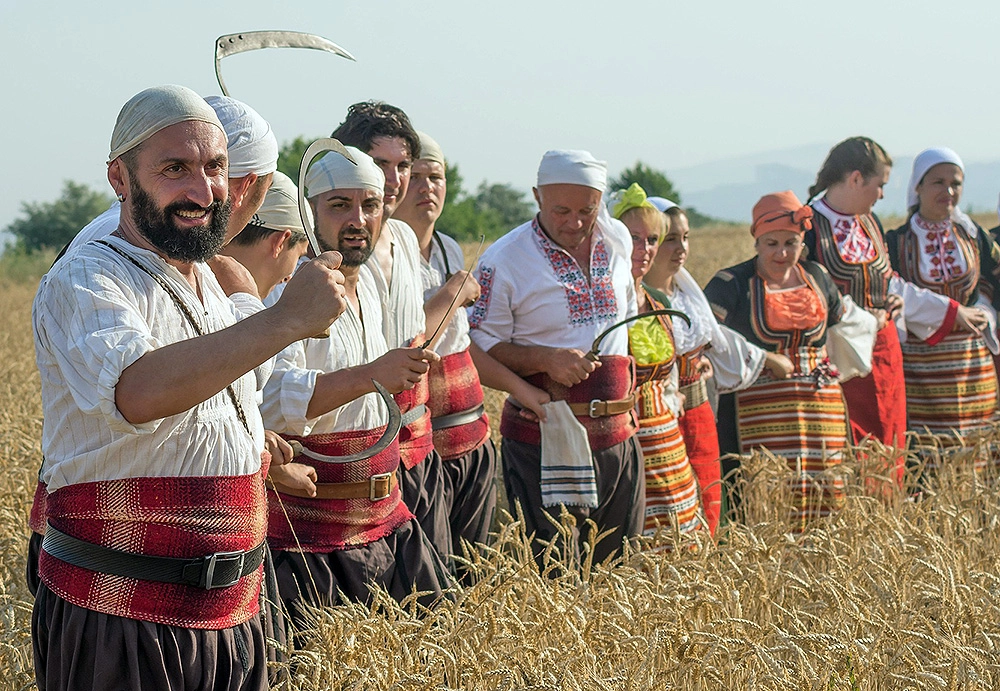
Despite Bulgaria's membership in the European Union and its active integration into the European economy, local traditions still exert a noticeable influence on business communication. Respect for one's counterpart, consistency in fulfilling promises, and a willingness to devote time to developing relationships rather than merely discussing commercial matters are highly valued here.
Characteristics of Bulgarian Business Culture
Face-to-face meetings play a key role in developing business relationships. Bulgarians prefer to meet partners in person, visit company offices, and socialize in an informal setting after official negotiations. This approach helps build trust, which is considered the foundation of successful cooperation. If communication is limited exclusively to email or phone calls, this may be perceived as a lack of genuine interest in the partnership.
In conversation, Bulgarians are generally fairly straightforward, but they attach great importance to nonverbal cues. Maintaining eye contact during a conversation is customary — it is seen as a sign of sincerity, respect, and engagement. Interlocutors often stand at a relatively close distance from one another, and gestures and expressive facial expressions are a natural part of communication.
Foreign visitors should pay particular attention to traditional Bulgarian head gestures. Historically, a nod up and down means «no,» while shaking the head from side to side means «yes.» Although today, especially among younger people and those involved in international business, the familiar European gestures are increasingly used, in some situations this peculiarity can cause misunderstanding, so it is best to clarify an answer with words when necessary.
Another feature of Bulgarian business culture is respectful regard for the age and position of one's counterpart. Many companies maintain a pronounced hierarchy, so the opinion of a manager carries particular weight, and final decisions are often made at the highest level.
Greetings
At a first meeting in Bulgaria, it is customary to shake hands firmly, maintain eye contact, and use a greeting appropriate to the time of day: «Dobro utro» (good morning), «Dobar den» (good day), or «Dobar vecher» (good evening). The handshake should be confident but not overly firm, and should be accompanied by a warm smile.
Until a more trusting relationship has been established, it is recommended to address one's counterpart by title or to use the forms «Gospodin» (Mr., abbreviated g-n) and «Gospozha» (Ms., abbreviated g-zha) together with the surname. The transition to addressing by first name usually occurs on the initiative of the Bulgarian partner, so it is best not to propose a more informal style of communication too early.
When being introduced, it is customary to greet first the most senior person by age or the highest-ranking participant at the meeting. If several people are taking part in the negotiations, you should shake hands with everyone present. At follow-up meetings, it is also customary to shake hands with all participants.
In a business setting, hugs and kisses on the cheek are generally not used at a first meeting — such forms of greeting are characteristic of interactions between relatives, friends, or long-standing colleagues. A foreign partner is advised to wait for the Bulgarian counterparts to take the initiative if the atmosphere becomes more informal.
An integral part of an initial introduction is the exchange of business cards. They are customarily presented at the beginning of a meeting after greetings, and it is recommended to briefly examine the received card before putting it away, as a sign of respect for the counterpart and their position.
Dress Code
Appearance in the Bulgarian business environment is regarded as an indicator of professionalism and respect for partners. Although requirements may vary depending on the industry, classic business attire is preferred for formal meetings.
Men are advised to choose dark blue or dark gray suits, light-colored shirts, and classic ties. Women should favor elegant business suits or dresses in muted tones, complementing the look with understated jewelry and subtle makeup.
Particular attention is paid to the neatness of clothing, footwear, and overall impression. Most companies maintain a fairly formal dress code, although in the information technology, startup, and creative industries, requirements may be less strict. When meeting with government institutions, it is recommended to adhere to the most formal dress code.
Planning Business Meetings
Business meetings are customarily scheduled in advance, usually two to three weeks ahead. Once the date has been agreed upon, it is recommended to reconfirm the meeting by phone or email. Showing up at an office without a prior appointment is not customary, as the likelihood of meeting the right person would be low.
The standard working hours for most organizations are Monday through Friday, 9:00 AM to 6:00 PM. Many companies have a lunch break of about an hour.
When planning trips, the vacation season should be taken into account. August is traditionally a time for holidays, so business activity noticeably declines during this period, and arranging meetings may take longer.
The first meeting is usually introductory in nature. Its main purpose is to get acquainted, discuss prospects for cooperation, and assess the reliability of the partner. Bulgarian companies rarely make final decisions immediately after the first meeting, especially when it comes to major commercial projects.
After the negotiations, it is advisable to send a thank-you letter, confirm the agreements reached, and maintain regular contact. Such an approach demonstrates serious intentions and interest in long-term cooperation.
Although videoconferences are becoming increasingly common, they are still perceived more as a supplement to in-person meetings than as a full replacement. When discussing important matters, face-to-face negotiations are generally preferred.
The Negotiation Process
Negotiations in Bulgaria usually proceed calmly and without excessive pressure. Bulgarian partners prefer to thoroughly analyze proposals and do not like being rushed into making a decision. Important issues are often discussed over several stages, and the final decision is frequently made by the company's senior management.
Many Bulgarian companies maintain a fairly hierarchical management structure. Even if middle managers conduct the negotiations, the final decision often rests with the CEO or the business owner. As a result, the decision-making process may take longer than representatives of countries with more decentralized management systems expect.
During negotiations, detailed written documentation is of great importance. All agreements should preferably be put in writing, especially when working with government institutions, where bureaucratic procedures may take more time than foreign partners anticipate.
When discussing the terms of cooperation, Bulgarians may actively negotiate on price, delivery timelines, and payment terms. Bargaining within reasonable limits is considered a perfectly normal part of the negotiation process; however, excessive pressure or an ultimatum-style approach can negatively affect the relationship. Well-reasoned proposals and a willingness to seek a mutually beneficial compromise produce a far greater effect.
Gift-Giving
Business gifts are not a mandatory part of business etiquette, but a small token of appreciation after a successful meeting or as cooperation develops is received positively.
Appropriate gifts include quality pens, books, corporate souvenirs, handcrafted items, or objects reflecting the culture of the partner's country. If a gift is presented during the holiday season, it can be accompanied by a box of good chocolates, quality coffee, or a local souvenir.
Overly expensive gifts should be avoided, as they may put the recipient in an awkward position. It is also not recommended to give overly personal items or gifts with political or religious connotations.
If flowers are given, it is preferable to choose an odd number — an even number of flowers in Bulgaria is traditionally associated with mourning occasions. The gift is usually opened immediately after it is presented, and the giver is thanked on the spot.
Business Meals
A shared lunch or dinner is considered an important part of establishing business relationships. The inviting party usually covers the bill, although it is polite for a foreign guest to offer to split the cost — the host will most likely decline.
During dinner, Bulgarian wine or traditional rakia may be offered. Bulgaria is known for its wine-producing regions, so discussing local wines often becomes a good topic for casual conversation. Declining alcohol is perfectly acceptable, provided it is done calmly and politely.
At the table, it is customary to wait until the host shows the guest to their seat, and to begin the meal only after the most senior participant or the host of the event does so.
Toasts hold great significance during a meal. The most common one is «Nazdrave!», which means «To your health!» When making a toast, it is customary to look the other person in the eye, as this is considered a sign of respect.
Overall, the atmosphere at the table is usually more relaxed than during formal negotiations. Over a meal, people often discuss travel, culture, sports, or traditional cuisine, and political topics are best raised only if the counterpart shows interest in them.
Invitations to Visit
An invitation to one's home is considered a sign of special trust and respect in Bulgaria. If a business partner invites you to their home, it usually means the relationship has moved beyond purely official communication. Such an invitation should be accepted if at all possible.
It is customary to arrive on time or with a slight delay of 5–10 minutes if the gathering is informal in nature. It is considered good manners to bring a small gift for the hosts: a box of chocolates, quality wine, coffee, or a souvenir from your country.
During a home dinner, guests are usually treated generously to national dishes, and it is advisable to try at least a small portion of every dish offered. At the end of the evening, it is customary to thank the hosts for their hospitality, and the following day you can send a brief message of gratitude — such a gesture makes a favorable impression and helps strengthen the relationship.
Public and Non-Working Holidays
When planning business trips, it is important to take into account Bulgaria's public holidays, as many companies and government institutions are closed on these days and business activity significantly declines.
The main non-working days include:
- January 1 — New Year;
- March 3 — Liberation Day of Bulgaria;
- Easter — four-day weekend (dates vary annually);
- May 1 — Labour Day;
- May 6 — St. George's Day;
- May 24 — Day of Bulgarian Script, Education, and Culture;
- September 6 — Unification Day of Bulgaria;
- September 22 — Independence Day of Bulgaria;
- December 24–26 — Christmas.
In addition to official holidays, business activity is noticeably affected by the summer vacation season, particularly August, when many companies operate with reduced staff. Therefore, important meetings and negotiations should be planned well in advance and reconfirmed shortly before the scheduled date.

Tags:
 Telegram
 VK.com
 Facebook
 X (Twitter)
 LinkedIn
 Other topics:
 REAB Services
Initial business valuation
Business analysis and audit (Due Diligence)
Business pre-sale preparation
Initial assessment of the business being purchased
Audit of the purchased business (Due Diligence)
Company Registration — General Provisions

 News
News
 Useful tip
Want to convert the amount into another currency at the rate? On the catalog pages, at the bottom right, there is a button with currency icons, it opens a calculator. Our website has more than 20 currencies with daily recalculation of the rate.

