


Investment Opportunities in Bulgaria: Energy and Digital Technologies as New Growth Drivers
 Table of contents

Bulgaria is steadily strengthening its position as one of Southeast Europe’s most promising investment destinations. EU membership, a competitive tax system, a strategic geographic location, and large-scale economic modernization programs create a favorable environment for long-term capital. Today, the country is focusing not only on infrastructure development but also on sectors capable of driving sustainable growth in the coming years.
Investors are particularly drawn to two sectors that define Bulgaria's new economic agenda — energy and information and communication technologies. The former is undergoing a large-scale transformation driven by investments in nuclear power, renewable energy sources, energy storage systems, and grid infrastructure modernization. The latter is becoming one of the main export engines of the economy, bringing together thousands of technology companies, a strong engineering school, and growing demand for solutions in artificial intelligence, cybersecurity, and the digitalization of public services.
Energy
Energy is becoming one of Bulgaria's largest investment areas. Just a few years ago, the sector was associated primarily with coal-fired generation and the Kozloduy nuclear power plant; today, the country is simultaneously modernizing its power grids, building energy storage systems, expanding gas infrastructure, investing in next-generation nuclear projects, and accelerating the development of renewable energy.
This combination of factors creates a rare situation in which virtually the entire energy chain — from generation to storage, transmission, and digital grid management — is undergoing large-scale renewal. For investors, this means opportunities not only in building new facilities but also in engineering, industrial equipment, digital technologies, project finance, and maintenance services.
The Energy Transition Without Abandoning Baseline Generation
Bulgaria remains one of the few European Union countries where nuclear power continues to play a key role in ensuring the national energy system. At the same time, the state does not view the transition to «green» energy as abandoning existing capacities. On the contrary, the strategy is built on a combination of three directions: maintaining nuclear generation, developing renewable energy sources, and gradually modernizing the coal sector.
According to data for the period from September 2024 to August 2025, nearly 67% of the country's electricity was produced from low-carbon sources. About 40% of total generation was provided by nuclear power, more than 16% by solar power plants, about 6.5% by hydropower, and a further 3% by wind generation. Fossil fuels retain a significant share of the energy balance, but their role is gradually declining. It is precisely this hybrid approach that makes the Bulgarian market more resilient. The state is not betting on a single technology but distributing investments across several segments, thereby reducing infrastructure risks.
Nuclear Power Becomes the Basis of Long-Term Investment
The country's main strategic asset remains the Kozloduy nuclear power plant. Two operating reactor units continue to provide a significant share of national electricity consumption, while the government is simultaneously advancing the construction of new capacities.
The project for reactor units 7 and 8 is considered one of Bulgaria's largest investment projects. A final investment decision is expected within the framework of the energy development program, and the project's implementation creates demand for turbine hall equipment, high-voltage infrastructure, control systems, construction work, and engineering services.
In parallel, the introduction of small modular reactors is being discussed. Although such projects are at an earlier stage of preparation, it is this segment that is seen as a promising direction after 2030.
An additional market is forming around the servicing of the existing plant. Extending the operational life of the current reactor units requires large-scale equipment modernization, safety standard upgrades, and the renewal of individual technological systems.
For investors, this means that the nuclear industry offers not a one-time construction project but a multi-year cycle of contracts.
Renewable Energy Moves to Industrial Scale
The fastest-growing segment in recent years has been solar energy. In 2023, Bulgaria added more than 1.2 GW of new solar capacity. In 2024, approximately 938 MW was added, confirming continued high investment activity.
Over the course of several years, installed solar generation capacity has effectively tripled. However, today the main constraint is no longer the construction of plants but the grid's ability to absorb new generation. This is why the next stage of market development is associated less with photovoltaic panels and more with energy storage and grid modernization.
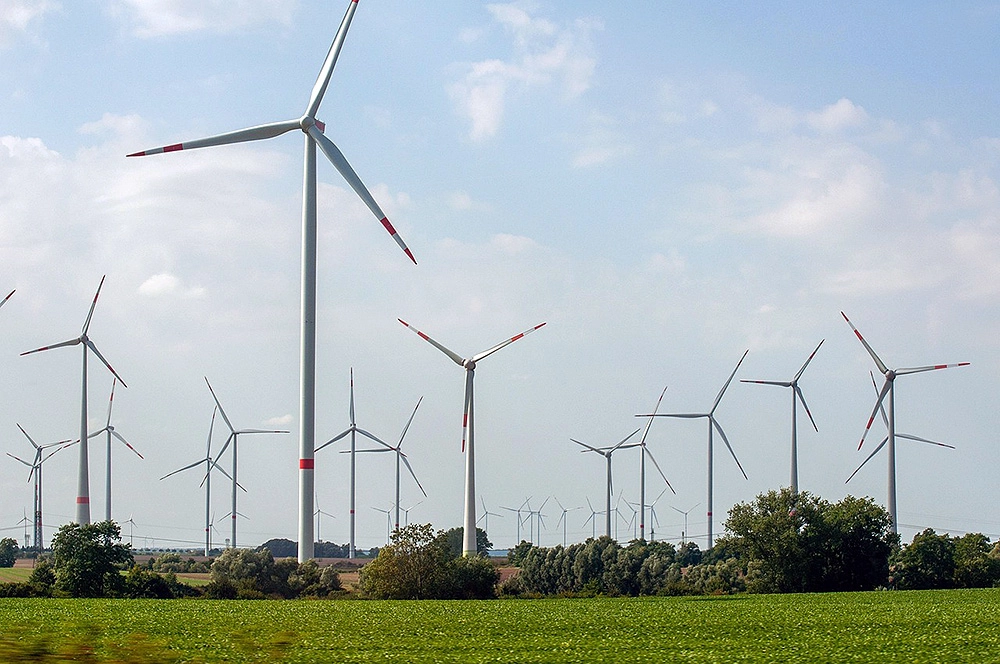
Wind energy currently accounts for a relatively small share of the market, but it is seen as one of the promising directions for further growth, especially in regions with high wind loads and the possibility of connection to a modernized grid.
Energy Storage Systems Become a New Investment Niche
If solar energy was the main driver of the previous growth phase, battery energy storage systems are now becoming Bulgaria's most rapidly forming market.
By mid-2025, approximately 500 MW of battery storage with a total capacity of roughly 1,300 MWh was already operational in the country.
The state program envisions a far more large-scale development. In the coming years, Bulgaria plans to substantially increase the volume of storage systems, which should ensure a more stable operation of the energy system and improve the efficiency of renewable energy integration.
European Union Support
The European Commission has approved funding for an energy storage support program amounting to 590 million euros, aimed at creating at least 3 GWh of new storage capacity. For private capital, this creates opportunities across several segments at once:
- battery system supply;
- power electronics;
- management software;
- storage facility construction;
- maintenance services.
It is the storage market that is considered one of the fastest-growing segments of Bulgarian energy today.
Power Grids Become a Separate Investment Market
Without large-scale infrastructure modernization, the energy transition would be impossible. That is why the Electricity System Operator (ESO) is implementing one of the largest grid digital transformation projects. The company has already invested tens of millions of euros in digitalizing the energy system, and future projects include the construction of new substations, the modernization of switchgear, and the laying of approximately 700 kilometers of new 400 kV transmission lines.
A separate direction involves the deployment of smart meters. The largest distribution companies are gradually replacing traditional metering devices with digital systems that allow remote consumption monitoring, reduction of technical losses, and integration of distributed generation.
In essence, Bulgaria is forming a Smart Grid market — intelligent energy infrastructure where demand arises not only for equipment but also for software solutions, data analytics, and grid management automation.
Gas Infrastructure Is Changing the Country's Role in the Region
Despite the accelerated development of renewable energy, natural gas retains strategic importance for the Bulgarian economy. However, the country's role itself is changing. While Bulgaria was previously perceived primarily as an importer of Russian gas, it is now transforming into a transit hub for Southeast Europe. The key project is the Vertical Gas Corridor, connecting Greece, Bulgaria, Romania, Hungary, Slovakia, Moldova, and Ukraine. The project will enable the transportation of liquefied natural gas arriving through Greek terminals to Central European countries.
No less important is the expansion of the Chiren underground gas storage facility. Upon completion, its capacity is expected to nearly double — to one billion cubic meters. For the energy market, this means increased liquidity, reduced seasonal price risks, and enhanced energy security for the region.
The Black Sea Becomes a New Exploration Zone
Another direction that is gradually attracting international capital involves hydrocarbon exploration in the Bulgarian sector of the Black Sea. The most notable projects in recent years have been the work on the Khan Tervel and Khan Asparuh blocks. Companies are conducting large-scale geological surveys, 3D seismic exploration, and preparation for exploratory drilling. While commercial results remain to be confirmed, the very intensification of exploration signals a return of interest from major energy players to the Bulgarian shelf. For service companies, this opens up a market for offshore drilling, engineering support, geophysical surveys, and specialized equipment.
Hydropower Gets a Second Life
Unlike the solar segment, hydropower is developing not through the construction of a large number of new facilities but through the modernization of existing infrastructure. Particular attention is being paid to the Chaira pumped-storage hydropower plant — one of the most important facilities for balancing the energy system. After an extended period of limited operation, its capacity is gradually being restored. At the same time, the state is considering new pumped-storage hydropower projects, including public-private partnership models.
Against the backdrop of growing solar generation, it is precisely such facilities that become critically important for energy storage and grid stabilization.
Energy Efficiency Turns Into a Multibillion Market
Bulgaria remains one of the most energy-intensive economies in the European Union. Per unit of GDP, the country consumes significantly more energy than the EU average. This is why the modernization of buildings is viewed not as a social program but as a full-fledged investment market.
By 2027, funding for large-scale renovation of the housing stock and public buildings is planned within the framework of European funds. The main directions include:
- building insulation;
- heating system modernization;
- installation of intelligent management systems;
- improving the efficiency of utility infrastructure.
For manufacturers of construction materials, engineering systems, and automation technologies, this segment becomes one of the most predictable sources of demand.
The main feature of Bulgarian energy is that virtually all of its segments are simultaneously undergoing a phase of structural renewal. The country is modernizing nuclear generation, expanding solar capacity, creating one of the largest energy storage markets in the region, digitalizing power grids, strengthening international gas connections, and investing in energy efficiency.
This scale of transformation makes the industry attractive not only to large infrastructure funds but also to mid-sized companies working in construction, engineering, industrial equipment, digital technologies, and project finance. It is the combination of European funding, government support, and growing demand for infrastructure modernization that turns energy into one of Bulgaria's most long-term investment markets for the coming decade.
Information and Communication Technologies
Information and communication technologies have long ceased to be an auxiliary industry for Bulgaria. Today, it is one of the fastest-growing export sectors of the economy, creating high-paying jobs, attracting international capital, and becoming a key driver of the country's digital transformation. The combination of a competitive tax system, a strong engineering school, European Union membership, and relatively low operating costs has allowed Bulgaria to establish a firm position among the region's largest technology hubs.
In recent years, the industry has evolved from a predominantly outsourcing market into an ecosystem of software development, cloud services, cybersecurity, fintech, and industrial automation solutions. This is why investment interest is now shifting from traditional service centers to companies creating their own products and exporting digital solutions worldwide.
From Outsourcing to a Homegrown Digital Economy
Bulgaria is often informally called the «Silicon Valley of Southeast Europe.» This designation is linked not only to the number of IT companies but also to a historically strong engineering school that was formed during the development of electronics and computing in the second half of the 20th century.
Today, approximately 10,000 ICT companies operate in the country, with about 70% of them predominantly export-oriented. Bulgarian developers serve clients across Europe, creating software for the financial sector, industry, healthcare, the automotive industry, and telecommunications.
According to International Data Corporation (IDC), over the past seven years the volume of the Bulgarian ICT market has grown by approximately 300%, reaching 2.5 billion euros. This makes the digital economy one of the country's fastest-growing sectors.
The sector's competitiveness is additionally supported by one of the European Union's most attractive tax systems. The corporate tax rate is just 10%, which remains an important argument for international companies opening regional offices and development centers.
Bulgaria Becomes a Platform for International Technology Companies
Until recently, the country's main advantage was considered to be cheap labor. Today, the situation is changing. The main asset is becoming the combination of qualified engineers, multilingual specialists, and a convenient location within the European market. There are virtually no time-zone issues when working with most European clients, making Bulgaria an attractive alternative to more remote outsourcing destinations. This is why the country is actively developing:
- software development centers;
- global service centers;
- customer support centers;
- research divisions of international corporations;
- engineering offices of automotive electronics manufacturers.
The market is gradually shifting toward more complex services with high added value.
Digital Infrastructure Becomes a Competitive Advantage
One of the important growth factors remains the development of telecommunications infrastructure. According to the National Statistical Institute, 87.3% of urban households have access to high-speed broadband internet. About 71% of all households are connected to fixed-line internet. The most noticeable gap persists between cities and rural areas, particularly in the northwestern part of the country. This is why the state is directing European funding toward the expansion of broadband infrastructure, including rural areas.
The development of next-generation networks creates additional demand for communications equipment, data center solutions, cloud platforms, and Internet of Things technologies.
The State Accelerates the Digitalization of the Economy
Just a few years ago, Bulgaria lagged significantly behind most European Union countries in the use of electronic public services. The situation is gradually changing following the establishment of the Ministry of Electronic Governance.
Today, the digital transformation of the public sector is becoming a separate investment market. In the coming years, projects of national scale are being implemented, including:
- a citizen electronic identification system;
- a national e-health platform;
- an integrated information system for the judiciary;
- modernization of the IT infrastructure of the National Revenue Agency;
- digital voting projects;
- large-scale cybersecurity programs for government institutions.
Virtually all of these projects are implemented in accordance with European Union standards, opening up opportunities for international suppliers of equipment, software, and integration solutions.
Cybersecurity Becomes a New Market Driver
The growth of digitalization automatically increases demand for the protection of data and information systems. An additional factor is the European GDPR regulation, which has significantly raised the requirements for personal data processing. As a result, the cybersecurity market is becoming one of the fastest-growing segments of the Bulgarian ICT industry. The greatest demand is for solutions in:
- security operations centers (SOC);
- corporate network protection;
- cloud security;
- digital identity management;
- protection of government information systems.
This segment is currently seen as one of the most promising directions for long-term investment.
The Main Challenge — a Shortage of Specialists
Despite the industry's strong position, its further growth faces a serious workforce constraint. According to market estimates, the education system is no longer able to train a sufficient number of specialists. The number of open IT vacancies significantly exceeds the output of relevant university faculties, and business demand continues to grow faster than educational capacity. Today, approximately 70,000 people are employed in the ICT sector, representing 2.3% of total employment in the country — notably below the European Union average of 3.5%.
At the same time, salary levels significantly exceed the national average. A highly qualified IT specialist can earn around 20,000 US dollars per year, which is two to three times higher than the national average salary. It is the talent shortage that has become one of the reasons for active corporate investment in specialist training programs, in-house education, and cooperation with universities.
Digital Consumer Behavior Is Changing Faster Than Public Services
An interesting feature of the Bulgarian market remains the high level of digital activity among the population alongside relatively low use of certain online services. The country ranks among European leaders in the use of video calls: more than 82% of users regularly make voice and video calls over the internet, and about 74% actively use social networks. Facebook remains the country's largest social platform.
At the same time, the digitalization of financial habits is developing significantly more slowly. Only about 7% of the population uses online banking, and approximately 31% of users make online purchases. This indicates significant growth potential for fintech companies, digital payment services, and e-commerce.
Artificial Intelligence and Industrial Software Become the Next Stage of Development
The most promising investment directions today lie beyond traditional outsourcing. Bulgarian companies are actively adopting artificial intelligence technologies, big data analytics, and industrial automation. The market for manufacturing execution software (MES systems), automotive electronics, and digital solutions for industry is developing particularly rapidly. Among the most promising segments are:
- cloud technologies;
- artificial intelligence and big data analytics;
- Internet of Things (IoT);
- cybersecurity;
- digital healthcare;
- educational technologies;
- automotive electronics;
- intelligent transportation systems;
- «smart city» technologies.
Additional demand is created by large-scale government procurement financed by European funds, covering server infrastructure, data centers, communications equipment, automation of government processes, and the deployment of 5G technologies.
Why ICT Remains One of Bulgaria's Most Attractive Investment Sectors
The Bulgarian technology market is gradually moving beyond the classical outsourcing model and transforming into a full-fledged innovation ecosystem. High software exports, a competitive tax environment, access to the European market, and large-scale government digitalization programs create sustained demand for investment across virtually all segments of the industry — from cloud infrastructure and cybersecurity to industrial software and AI-based solutions. The combination of a mature export business and the not-yet-exhausted potential of domestic digital transformation makes ICT one of the most promising directions for long-term investment in Bulgaria.
It is the combination of major government projects, European funding, and the active participation of private capital that turns the energy and ICT sectors into key vectors for investment in Bulgaria for the coming decade.

 Telegram
 VK.com
 Facebook
 X (Twitter)
 LinkedIn
 Other topics:
 REAB Services
Initial business valuation
Business analysis and audit (Due Diligence)
Business pre-sale preparation
Initial assessment of the business being purchased
Audit of the purchased business (Due Diligence)
Company Registration — General Provisions

 News
 Useful tip
It's very easy to contact us — on any page of the website there is a blue button at the bottom right that will help you send us your request. We always respond quickly!

