


From transport corridors to agricultural technologies: what to invest in in Bulgaria in the coming years
 Table of contents

Bulgaria is entering a new investment cycle capable of transforming the country's role in the economy of Southeast Europe. While a decade ago its primary competitive advantages were low taxes, an accessible workforce, and relatively low business operating costs, today its development strategy is becoming far more comprehensive. The state is prioritizing the modernization of transport infrastructure, the digitalization of the economy, the energy transition, and the technological upgrading of industry, with the European Union providing a significant portion of the funding for these transformations.
By the end of the decade, Bulgaria will become the recipient of billions of euros under European programs for transport development, agriculture, the digital economy, and industrial modernization. At the same time, the government is actively expanding public-private partnership mechanisms that allow private capital to be attracted for the implementation of large infrastructure projects.
The main feature of the current stage is that growth is being driven by several interconnected investment clusters simultaneously. New transport routes stimulate the development of logistics and industrial real estate, digitalization increases business competitiveness, and agricultural modernization creates demand for equipment, software, and product processing. It is this combination of government investment, European funding, and market demand that makes Bulgaria one of the most interesting investment platforms in the region.
Transport and Logistics: Bulgaria Is Becoming a European Transit Hub
Transport infrastructure has become a central element of the national investment strategy. The country's geography allows it to serve as a natural bridge between Central Europe, the Balkans, Turkey, the Caucasus, and the Black Sea. Against the backdrop of the restructuring of international supply chains, this advantage is acquiring new significance.
Two key corridors of the Trans-European Transport Network (TEN-T) pass through Bulgaria's territory — the Rhine-Danube and the Eastern Mediterranean. It is these corridors that enable the movement of goods between the industrial centers of Germany, Austria, Romania, Bulgaria, Greece, and Turkey, forming the backbone of the European logistics system.
A significant financial base has already been established for the modernization of this infrastructure. The national program Transport Connectivity 2021–2027 has a budget of 1.61 billion euros. Nearly 604 million euros are allocated to railway projects, approximately 598 million euros to the development of TEN-T road infrastructure, and a further 343 million euros to the modernization of ports, intermodal terminals, and digital transport solutions.
These investments are aimed not only at building new facilities. Their main objective is to reduce freight delivery times, increase the throughput capacity of the transport system, and make Bulgaria a competitive alternative to traditional routes through Western Europe.
The Middle Corridor Becomes a New Logistics Axis
Particular importance is being placed on the development of the Yambol — Elhovo — Lesovo railway line, which is expected to strengthen the Trans-Caspian International Transport Route, known as the Middle Corridor.
In a context where European companies are increasingly diversifying supply routes between Europe and Asia, the significance of this project extends far beyond national infrastructure. Bulgaria gains the opportunity to become one of the terminal European links of an alternative route connecting China, Central Asia, the Caucasus, and the European Union.
In parallel, development continues on Pan-European Transport Corridor VIII, which will improve connectivity between Bulgaria, North Macedonia, and the Adriatic coast. For investors, this means the formation of new logistics hubs where modern warehouses, container terminals, distribution centers, and digital freight management systems will be in demand.
Railways Are Transitioning to European Standards
A separate direction is the digital modernization of the railway network. Under the Recovery Plan, Bulgaria is increasing the length of railways equipped with the European Rail Traffic Management System (ERTMS) from 217 to 707 kilometers. At the same time, the modernization of mainline routes is expected to reduce the travel time between Sofia and Burgas by nearly two hours — from 6 hours 40 minutes to 4 hours 48 minutes.
For business, these changes mean greater predictability of freight transport and lower transport costs — factors that directly affect the attractiveness of industrial investment.
Seaports Are Becoming an Independent Investment Direction
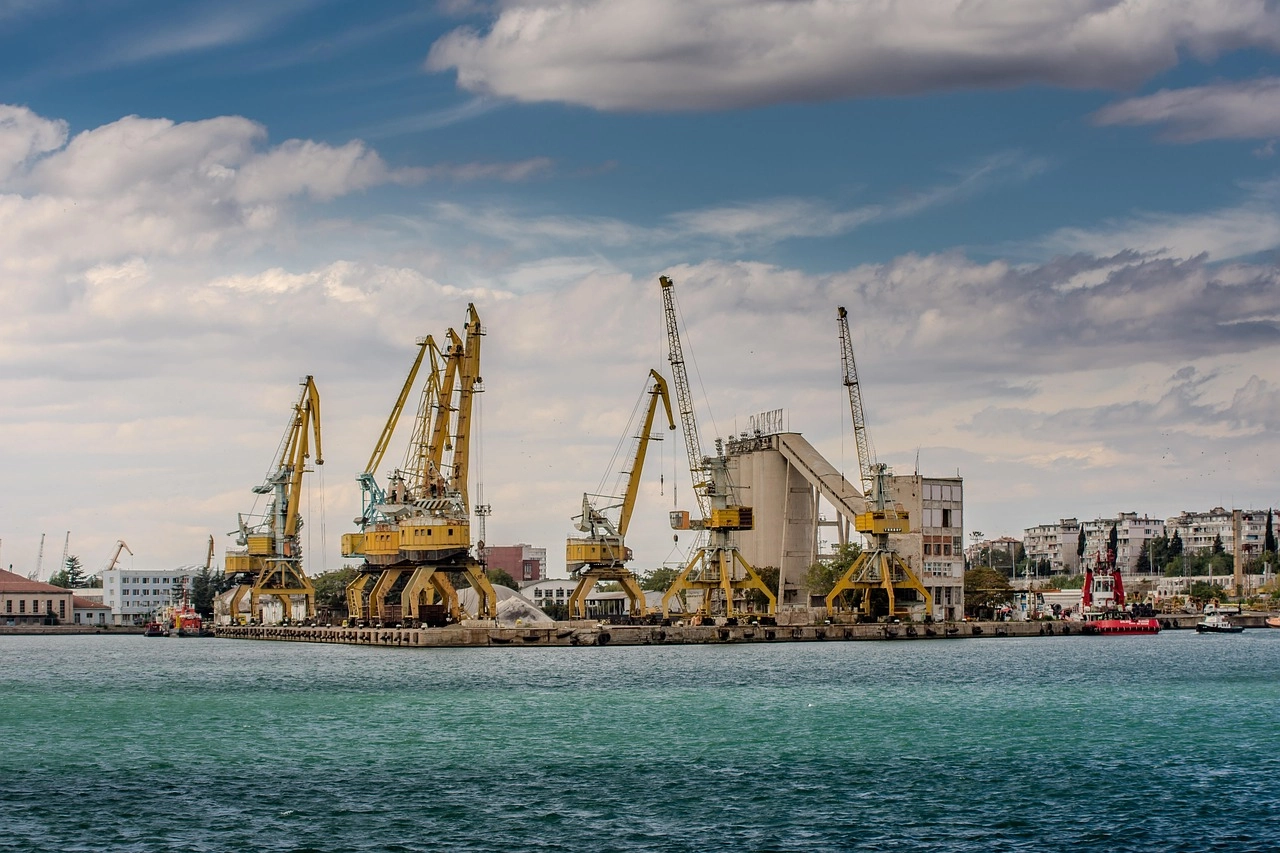
While the ports of Varna and Burgas were previously perceived primarily as traditional trading harbors, today they are becoming part of a much larger-scale logistics strategy.
The government intends to increase terminal throughput capacity, modernize infrastructure, and expand the use of the concession model for managing individual facilities. This approach allows private capital to be attracted without the full privatization of strategic assets.
Particularly important is the development of intermodal transport combining sea, rail, and road transport. One of the most notable examples is the construction of a new intermodal terminal in Ruse on the Danube, which will become part of the Rhine-Danube transport corridor and strengthen the position of northern Bulgaria in the European freight transport system.
In parallel, Plovdiv Airport is developing, gradually increasing the importance of Central Bulgaria as an industrial and logistics region.
Highways Are Becoming the Foundation of Industrial Growth
Railway projects are accompanied by the largest road infrastructure development program in recent years. Particular attention is being paid to the express route Vidin — Sofia, including the construction of a tunnel under the Petrohan Pass. This project is expected to significantly improve connectivity between the Danube region and the capital, where a significant share of the country's industrial production is concentrated.
Development continues on the Rila Motorway, which will connect Bulgaria's largest transport arteries — Hemus, Trakia, and Struma.
No less important remains the expansion of the Trakia Motorway — one of the country's busiest roads. The growth of international freight transport requires an increase in its throughput capacity, so this project is considered one of the key elements of the future transport system.
Most of the facilities are already at the preparation stage for implementation through public-private partnership mechanisms, creating opportunities not only for construction companies but also for investors in infrastructure financing.
Agriculture Is Changing Its Investment Model
Agriculture has traditionally held an important place in the Bulgarian economy, but today the sector is undergoing a qualitative transformation.
Approximately 41% of the country's territory consists of agricultural land, and the sector accounts for roughly 4.4% of gross domestic product. However, the main growth factor is no longer the area under cultivation but the improvement of production efficiency.
The European Union is effectively turning the modernization of Bulgarian agriculture into one of the largest investment projects in the region.
The Strategic Plan of the Common Agricultural Policy for 2023–2027 provides for funding of approximately 6.1 billion euros, including 4.1 billion euros in direct payments to producers and large-scale investments in processing, irrigation, environmental projects, and the digitalization of production.
Additional funds are being channeled through the Recovery Plan, which finances the introduction of digital technologies in the agricultural sector and the modernization of infrastructure.
Agrotechnology Is Becoming the Fastest-Growing Segment
The main investment trend is digital agriculture. Bulgarian farmers are increasingly adopting precision farming technologies, which allow decisions to be made based on data on soil conditions, weather, and projected yields.
Growing demand is being formed across several directions at once:
- GPS navigation for agricultural machinery;
- yield monitoring systems;
- soil moisture sensors;
- automatic weather stations;
- agricultural drones;
- digital farm management platforms.
In parallel, a unified electronic agricultural information system is being created, which is intended to integrate data on soils, precipitation, temperature, and land use.
For software developers and equipment manufacturers, this segment is becoming one of the country's most promising markets.
Irrigation Is Becoming an Independent Industry
Climate change is radically altering the structure of agricultural investment. Drought seasons in recent years have forced producers to reconsider their approaches to water resource management. In response, European programs are financing the reconstruction of existing irrigation systems and the construction of new facilities. Demand is growing particularly fast for automated irrigation systems, pumping equipment, digital water consumption monitoring, and soil moisture monitoring technologies.
This market is developing not only thanks to government support but also because modern irrigation systems directly increase crop yields and production resilience.
Processing Creates Greater Added Value
Just a few years ago, a significant portion of agricultural produce was exported as raw material. Today, the investment focus is gradually shifting toward processing.
Bulgaria maintains strong positions in the production of grain and sunflower, remains a world leader in the production of rose and lavender oil, and is also among the largest European exporters of processed sunflower products.
The most attractive projects are those related to the production of food ingredients, vegetable oils, specialized processing of agricultural raw materials, and modern product packaging.
It is precisely these segments that receive substantial support from European funds and demonstrate the most sustainable growth potential.
Agricultural Machinery Is Becoming Part of the Digital Ecosystem
The modernization of farms is directly reflected in the agricultural machinery market. The volume of wholesale trade in agricultural equipment already exceeds 630 million US dollars, and demand continues to grow thanks to European programs financing equipment renewal.
The most in-demand items remain next-generation tractors, soil-tillage complexes, harvesting machinery, loading equipment, and digital equipment management systems.
The segment of maintenance services, remote diagnostics, and the integration of machinery with farm management software platforms is developing particularly rapidly. In effect, the market is gradually transitioning from the sale of individual machines to comprehensive technological solutions.
The Food Industry Benefits from Growing Domestic Demand
The development of tourism is becoming an additional growth factor for the food industry. Rising household incomes and the expansion of the hotel and restaurant sector are gradually changing the structure of consumption. Growing demand is increasingly being formed for mid-range and premium products.
Particularly sustainable growth is being demonstrated by the categories of quality wines, nuts and health foods, fresh seafood, ready-made products, and functional beverages.
For producers, this creates an incentive to invest in modern processing capacity and the expansion of product ranges with high added value.
Where Long-Term Investment Potential Is Being Formed
The main feature of the current stage of Bulgaria's development lies in the combination of three sources of growth at once:
- First — large-scale government infrastructure projects planned through the end of the decade.
- Second — European funding, which already amounts to billions of euros in transport, agriculture, digitalization, and industrial modernization.
- Third — private investment, which is increasingly following the creation of new infrastructure and the expansion of domestic markets.
It is the combination of these factors that makes Bulgaria increasingly unlike a traditional economy of cheap production. The country is gradually transforming into a regional center of logistics, processing, and technological development, where transport corridors, agrotechnology, and modern industrial infrastructure are becoming the foundation of a new investment cycle designed for many years ahead.

 Telegram
 VK.com
 Facebook
 X (Twitter)
 LinkedIn
 Other topics:
 REAB Services
Initial business valuation
Business analysis and audit (Due Diligence)
Business pre-sale preparation
Initial assessment of the business being purchased
Audit of the purchased business (Due Diligence)
Company Registration — General Provisions

 News
 Useful tip
Since you've registered on the site, you can not only view other people's ads in the catalog, but also place your own there. And also get access to many other useful services.

